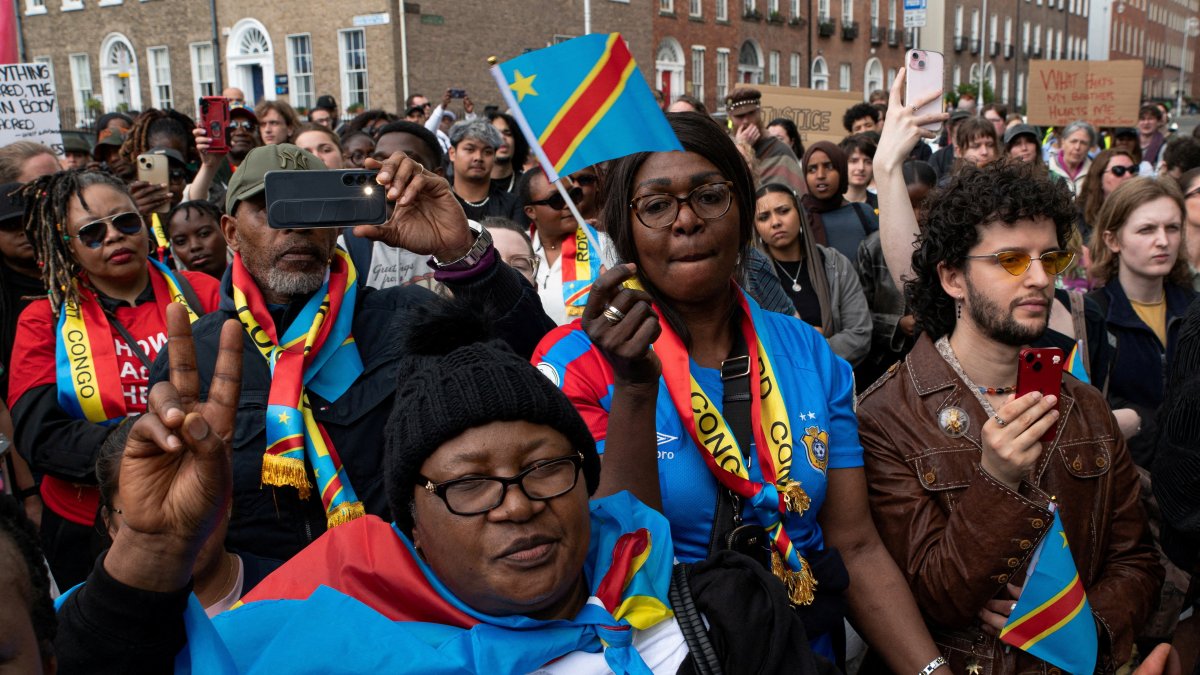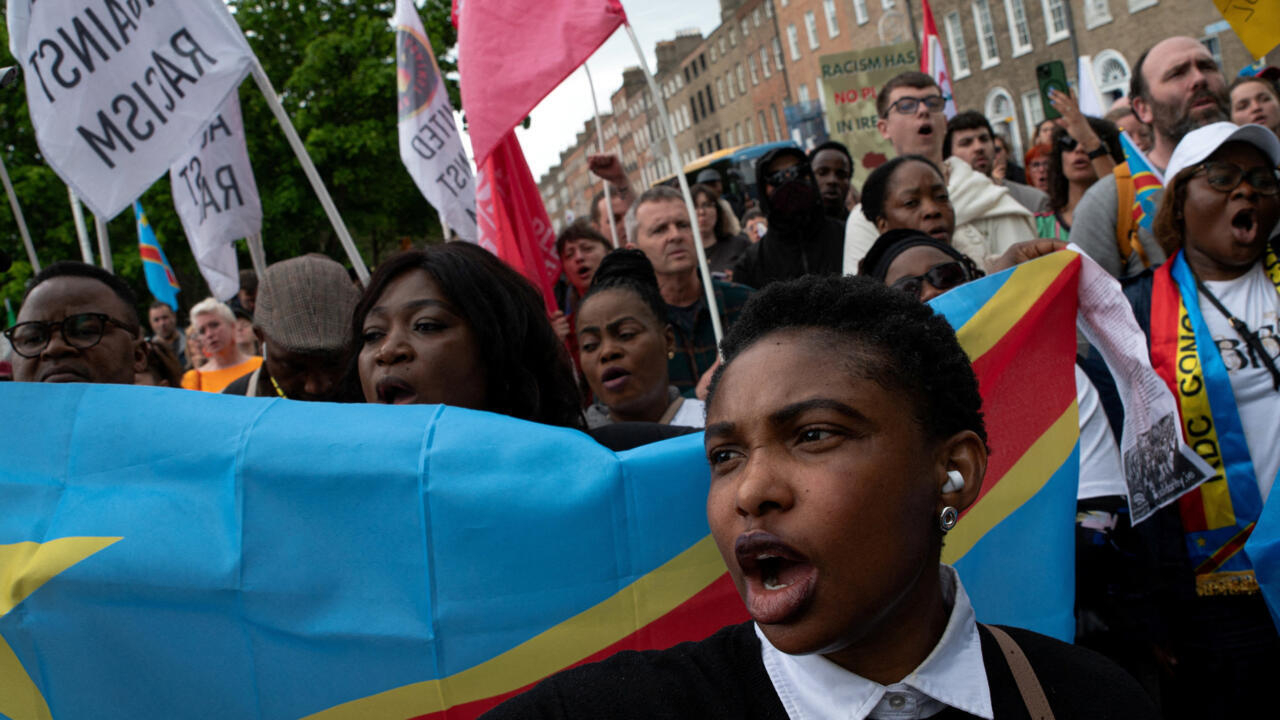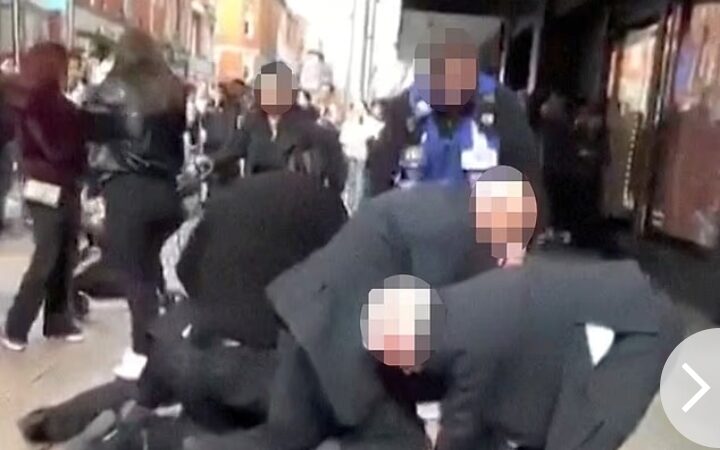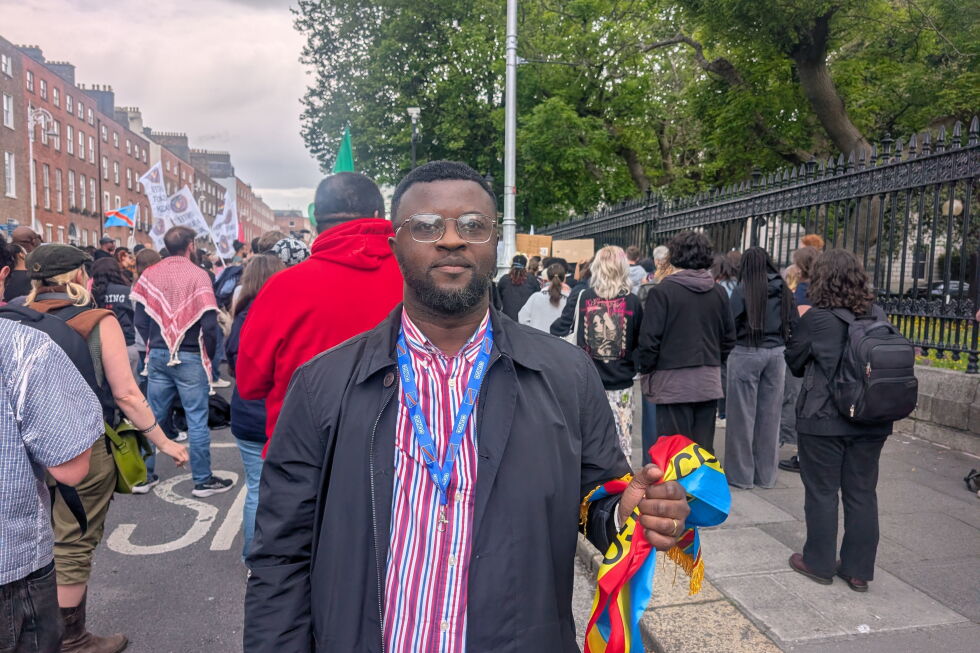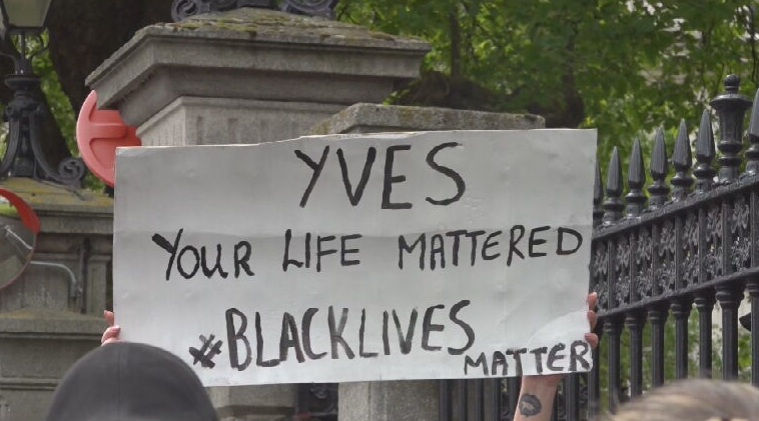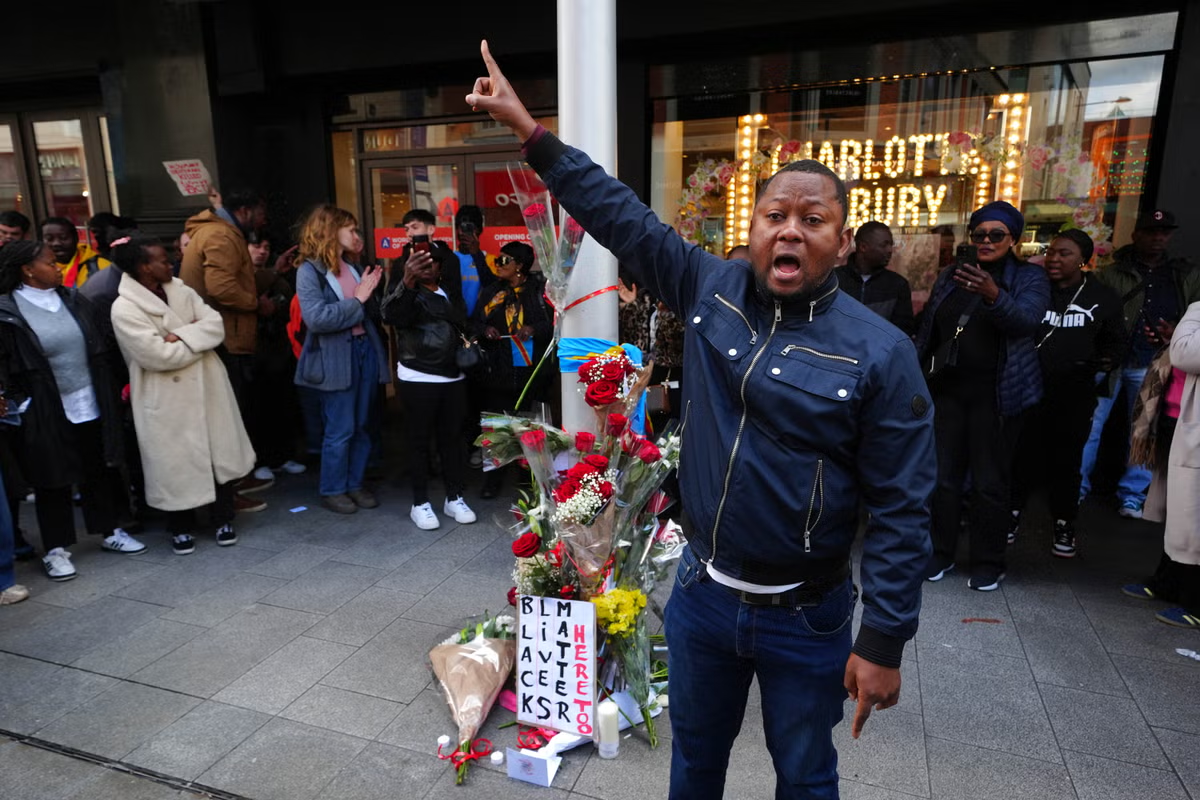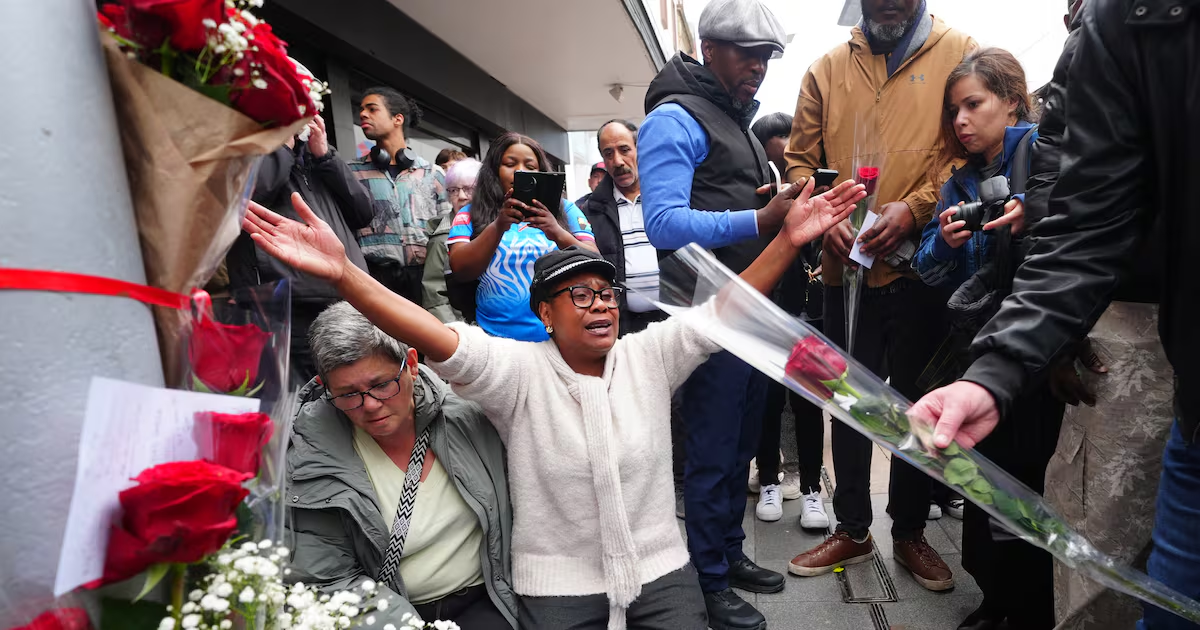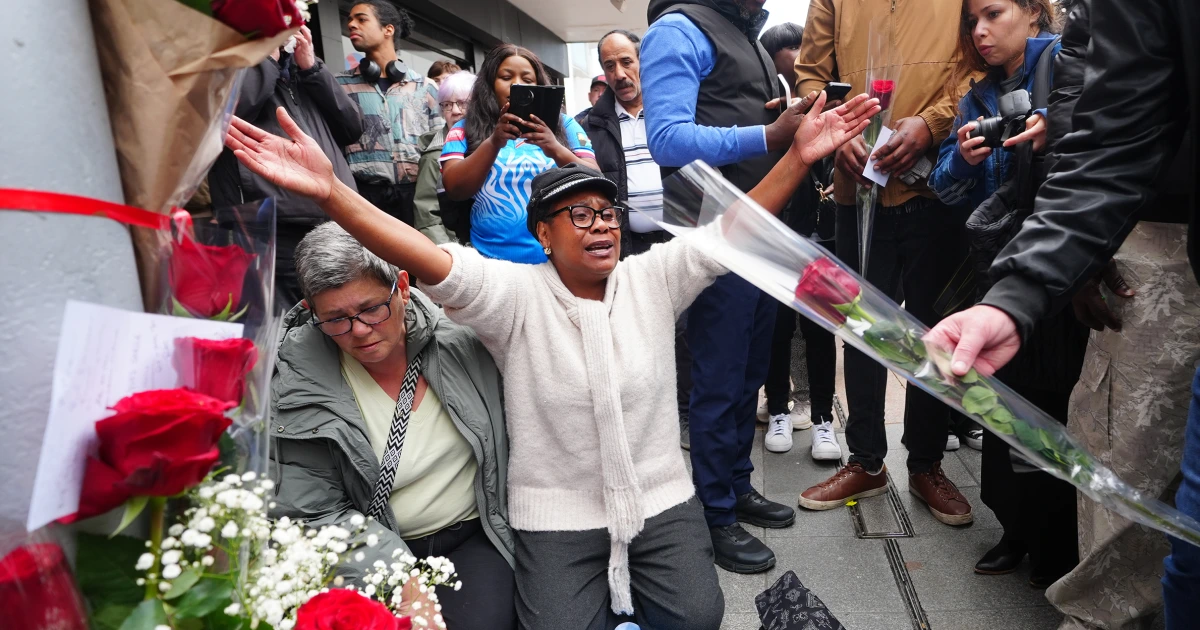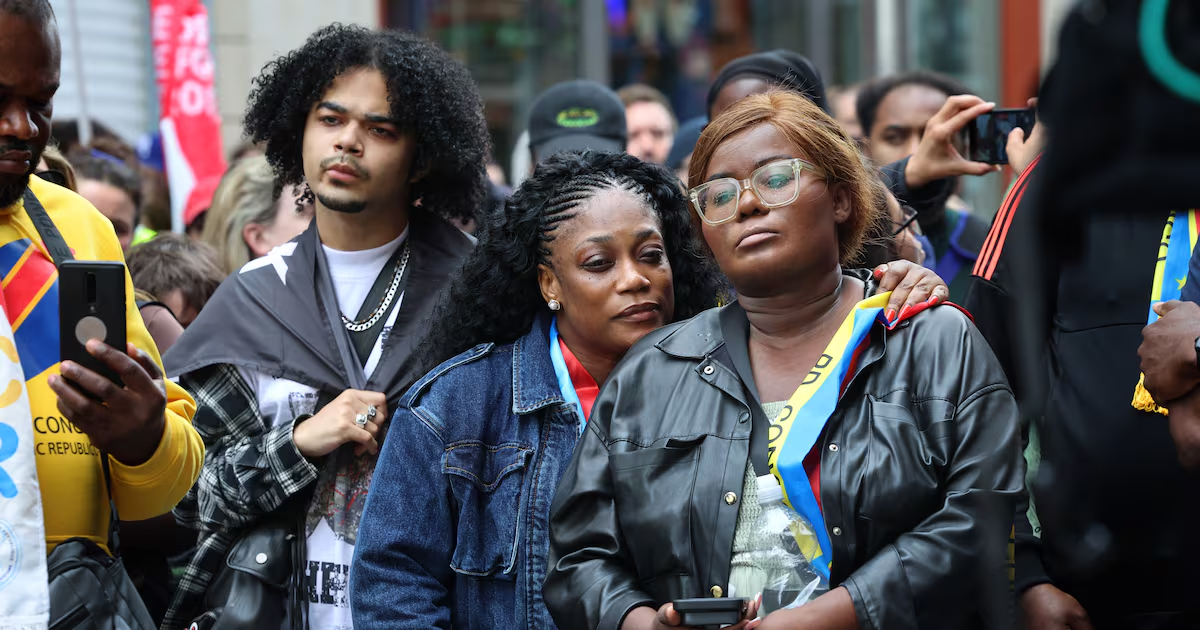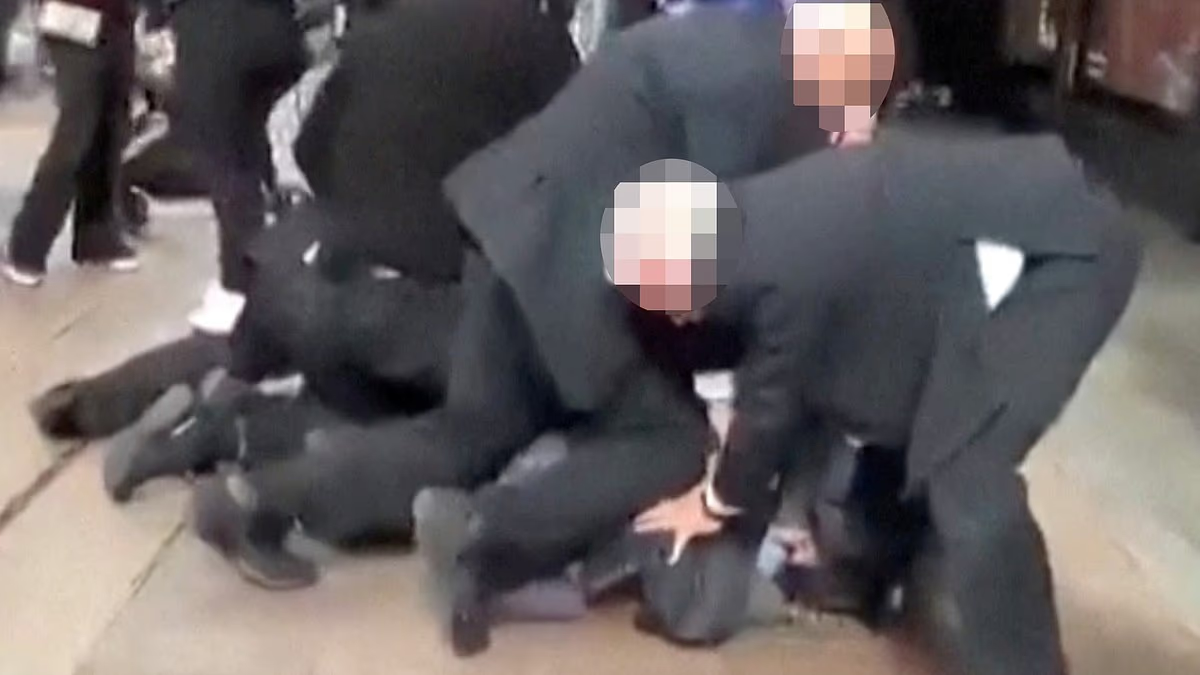
Hundreds have protested outside Ireland's parliament over the death of a Congolese man after he was restrained outside a Dublin department store in an incident compared to the killing of George Floyd.Yves Sakila, 35, was detained by security guards on one of the capital's busiest shopping streets last Friday in connection with an alleged shoplifting incident.Irish police said security staff restrained Mr Sakila shortly after 5pm before he became unresponsive at the scene.Mr Sakila, who had lived in Ireland since 2004, was taken to hospital where he was later pronounced dead.A video widely shared on social media showed Sakila pinned to the ground by at least five men for almost five minutes as bystanders watched.Two of the men held his face to the ground and at one point one of them appeared to kneel on his head or neck for a few seconds.'We call this a George Floyd moment,' said David Kaliba, a 35-year-old physics student who went to a north Dublin suburban high school with Sakila, referring to a Black Minneapolis man killed by a police officer in May 2020.Floyd's death fuelled the Black Lives Matter movement in the United States and sparked protests across the country against police brutality and racism. A video of the incident widely shared later on social media showed Sakila being pinned to the ground by at least five men for almost five minutes as bystanders watched People taking part in a protest outside Leinster House, Dublin, over the death of Congolese man Yves Sakila following an incident with security guards at a Dublin department store Prime Minister Micheál Martin repeated calls on Thursday for a thorough investigation and said the manner in which Mr Sakila died has caused huge concern across society'I can't believe it happened in America in 2020 and happened in Ireland in 2026,' said Kaliba, who like Mr Sakila moved to Ireland from the Democratic Republic of Congo at a young age.He described his former classmate, whom he said worked in IT before becoming homeless more recently, as a quiet and shy person who was not aggressive.Adenuga, a councillor for the governing Fine Gael party who became Ireland's first elected Black female politician in 2019, said the government had failed to put provisions in place to properly integrate the country's rising number of immigrants and that this was 'a recipe for chaos, anarchy and apathy'.There has been a sharp rise in anti-immigrant protests in Ireland in recent years. Anti-immigrant activists helped trigger large-scale rioting in central Dublin in 2023, close to where Mr Sakila died.The video of his death has shocked the nation and been described by lawmakers in parliament as 'distressing' and 'disturbing'. Prime Minister Micheál Martin repeated calls on Thursday for a thorough investigation and said the manner in which Mr Sakila died has caused huge concern across society.The protesters chanted 'no cover up, no delay' as they gathered outside parliament yesterday.Some held signs saying 'Justice' and 'cead mile failte (the Irish phrase for welcome) is for everyone'.Police said on Thursday that a post-mortem examination had been completed and that the results are not being released for operational reasons.Officers also said a man in his 80s was injured at the scene as Mr Sakila allegedly attempted to flee. Footage of Mr Sakila being detained has been described as 'deeply disturbing' and has sparked anger among Ireland's minority communities. The Irish Network Against Racism expressed concern that excessive force may have been used against Mr Sakila and said in a statement that 'the death of a black man in such circumstances is extremely worrying'. People stand near flowers laid outside a department store on Henry Street where Sakila was restrained by security guards last week and later pronounced dead in hospital in Dublin, IrelandPolice said on Thursday that they had recovered footage from CCTV and social media, and were looking to speak with anyone who was close to Arnotts, one of the country's best-known department stores. On Wednesday, passers-by stopped on Henry Street, where flowers were laid at the spot where Sakila was detained. The video of the incident has been widely shared online.'I couldn't sleep at night. I just kept watching it (the video) time over time,' said Sanaa Basit, a translator and mother of two who moved to Ireland from Sudan ten years ago.Laure Zoya, vice president of the Congolese Community in Ireland group, said its members, who she said were among the first black communities to move to Ireland, were shocked, disturbed and no longer felt safe.Sakila moved to Ireland when he was very young, she added.'The Ireland that they knew 30 years ago is no longer the same,' Zoya told national broadcaster RTE.
Hundreds gather over death of Congolese 'shoplifter'
Yves Sakila, 35, was detained by security guards on one of the capital's busiest shopping streets last Friday in connection with an alleged shoplifting incident.
778 words~4 min read