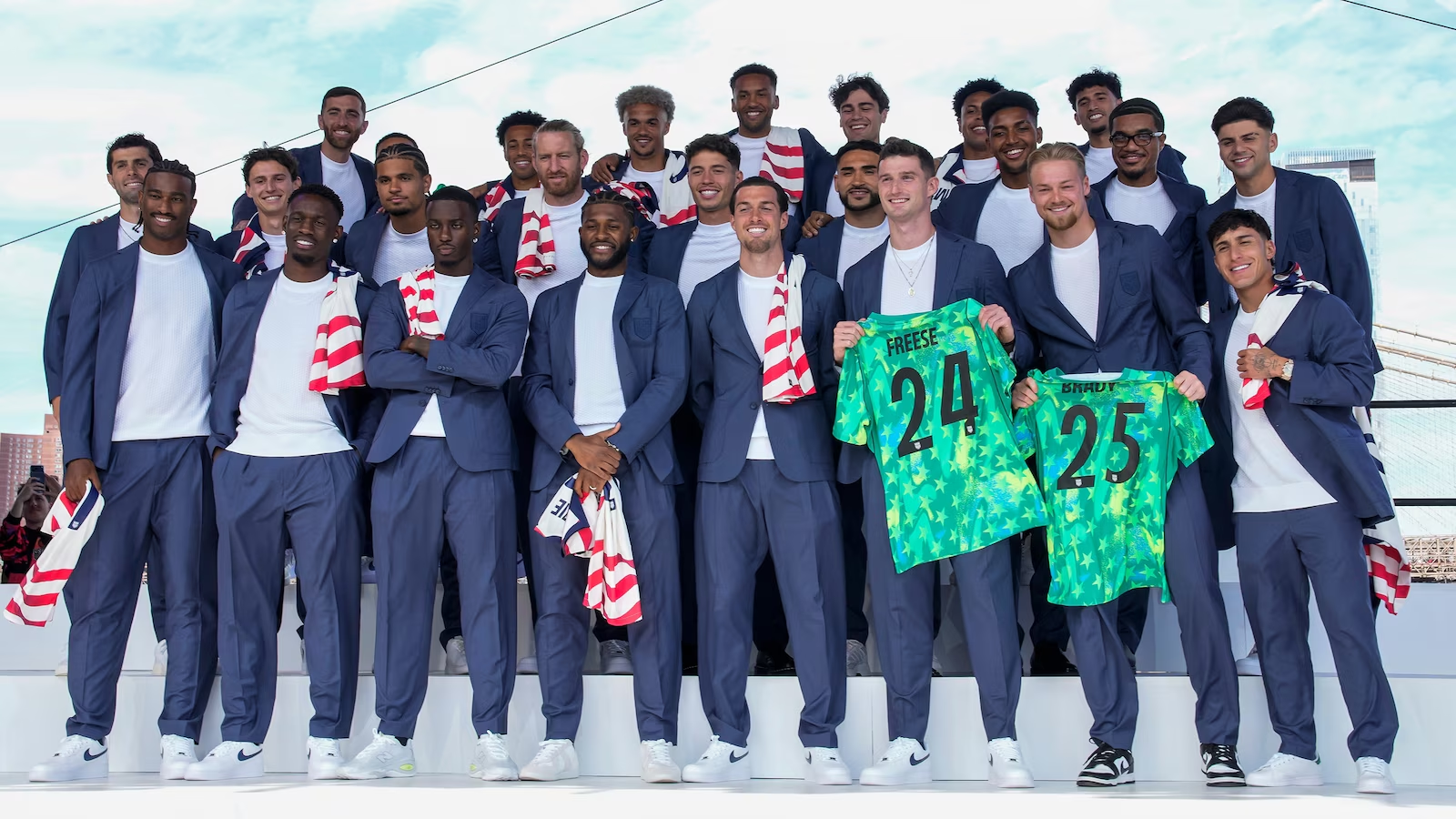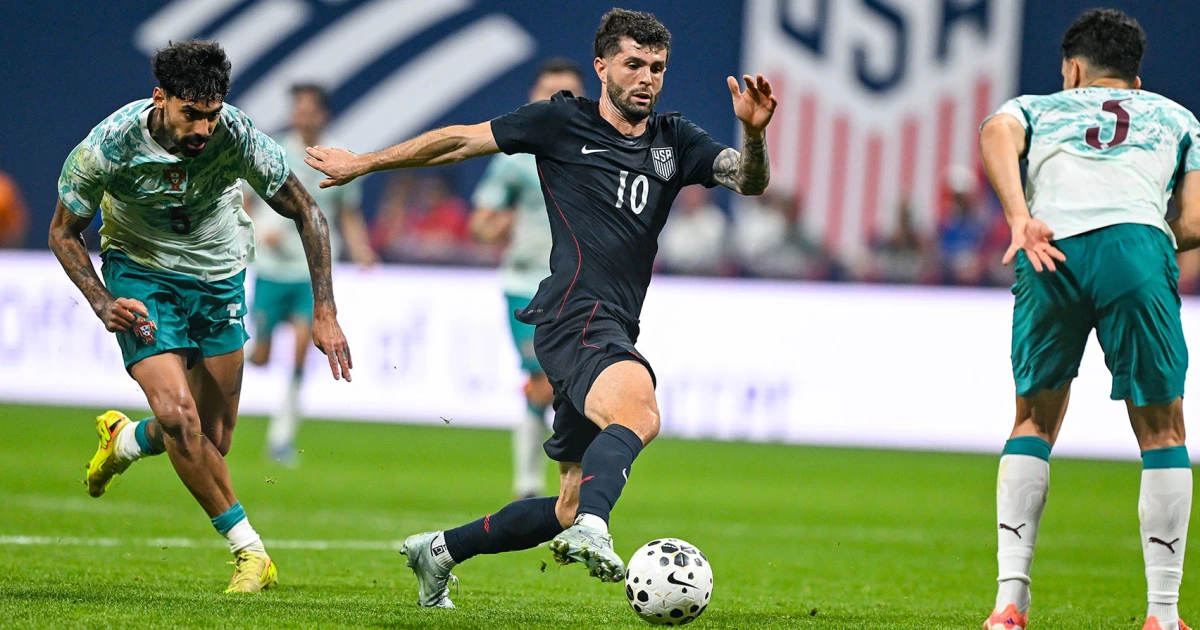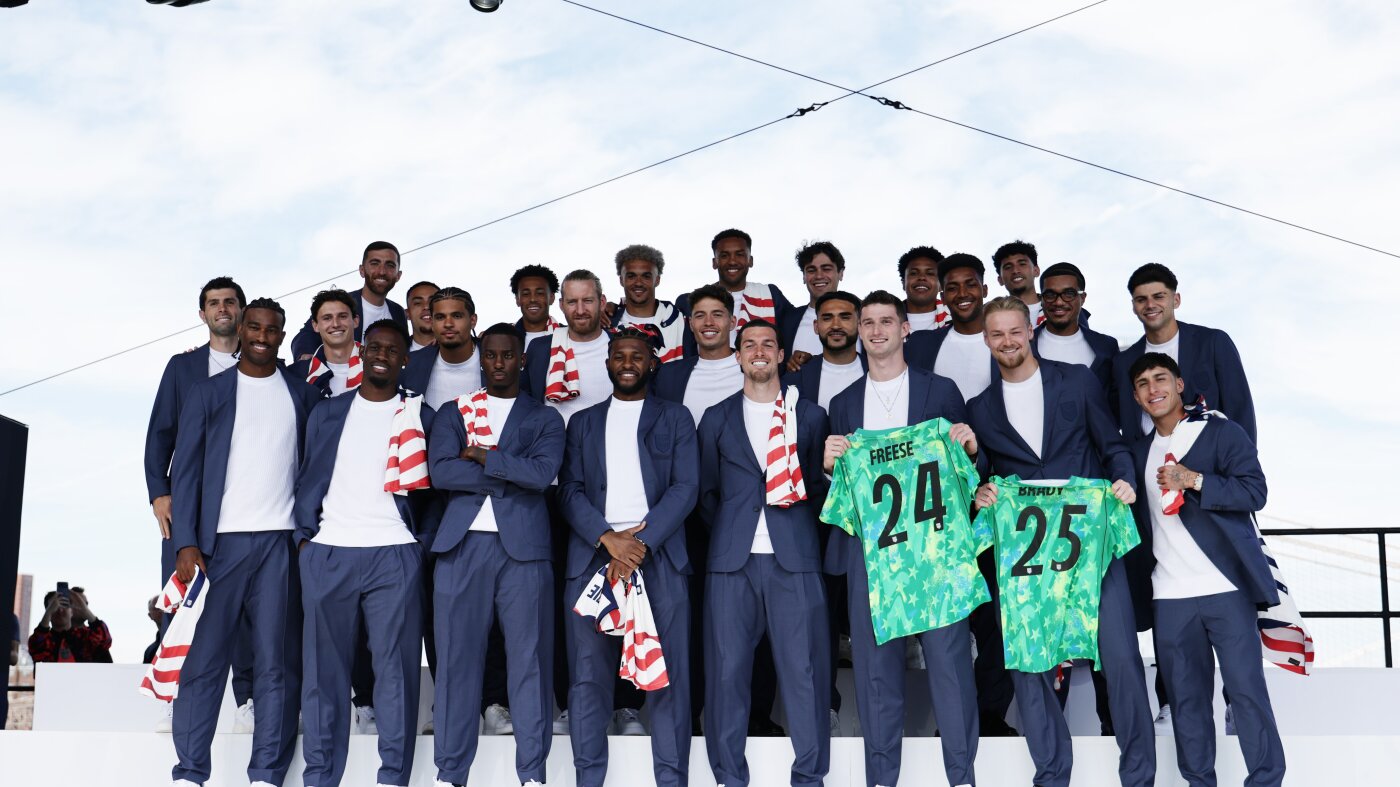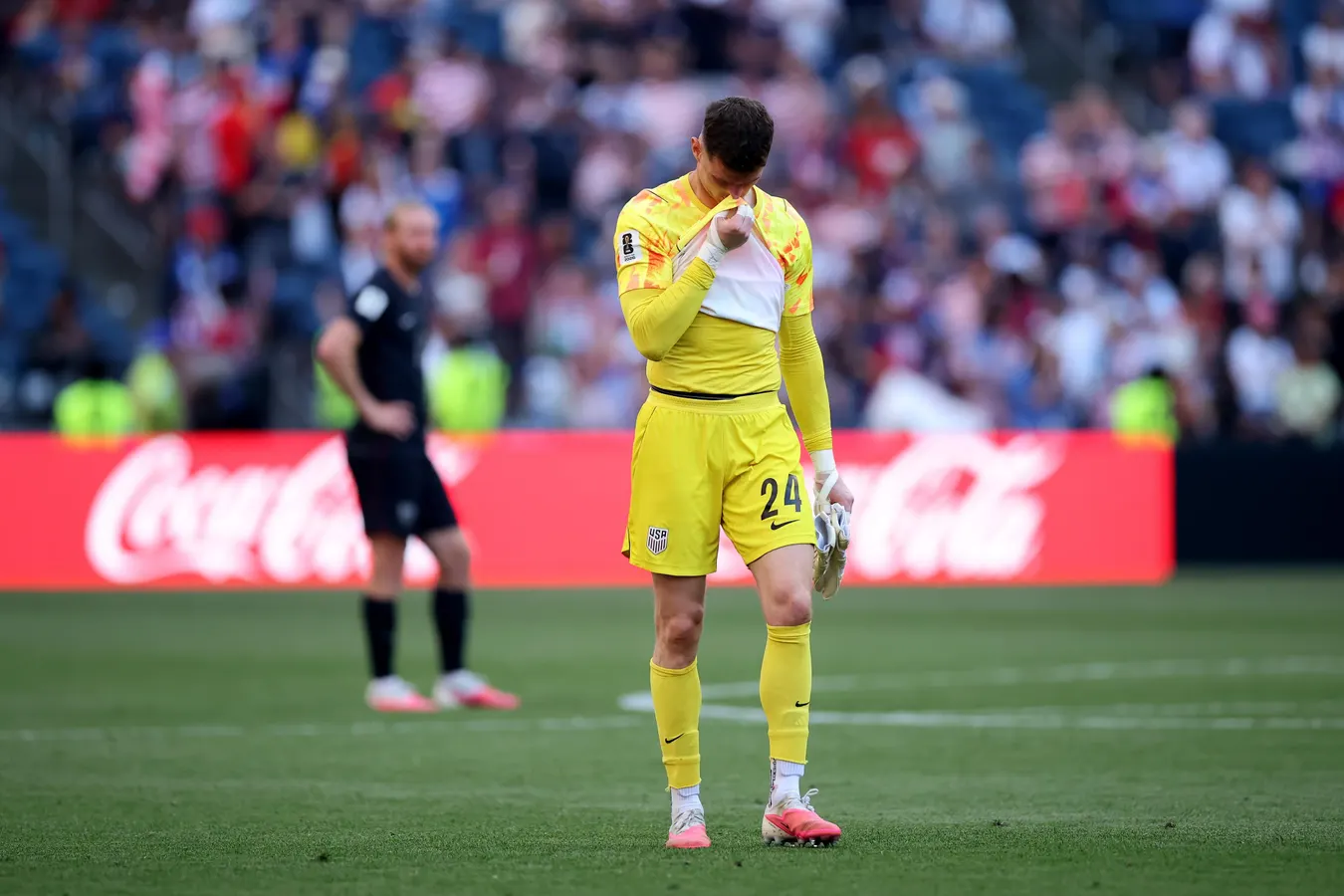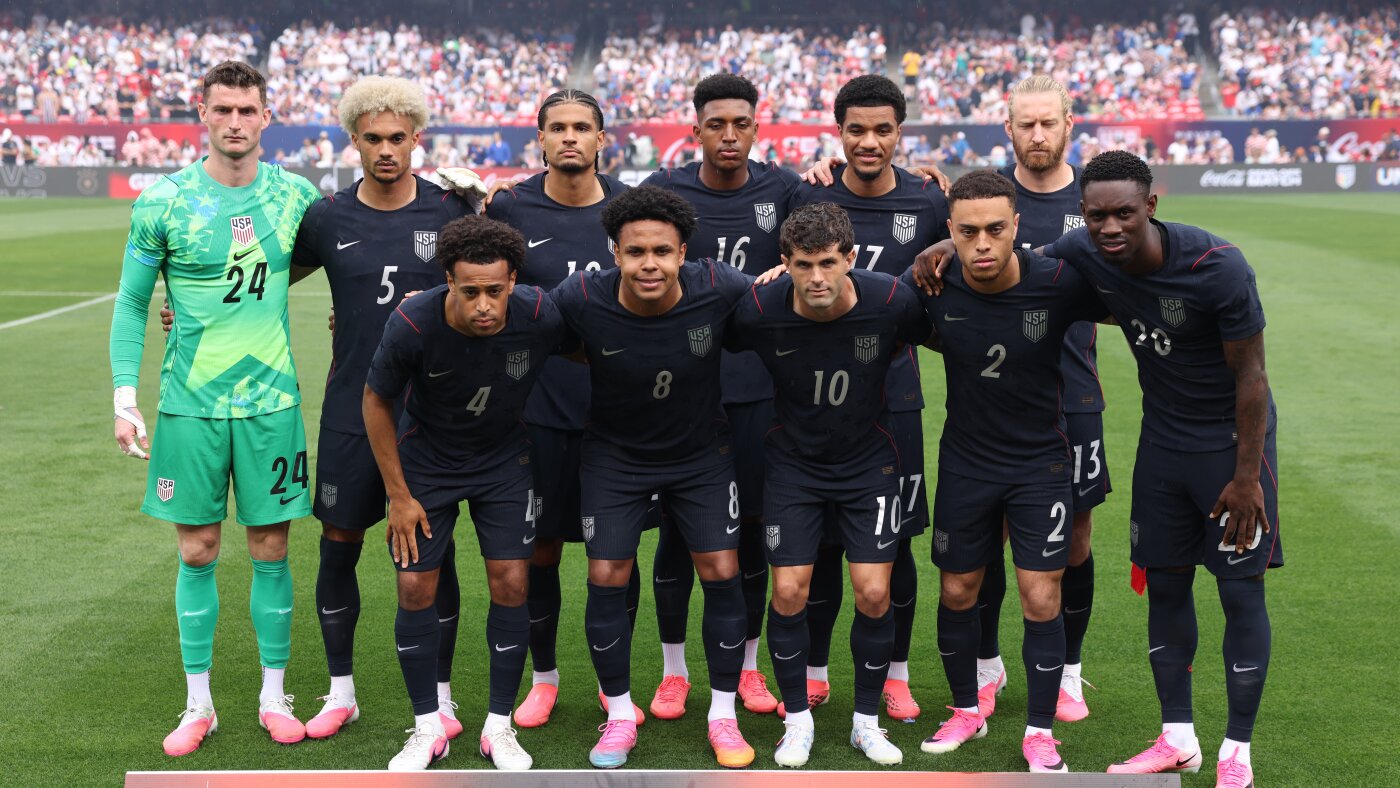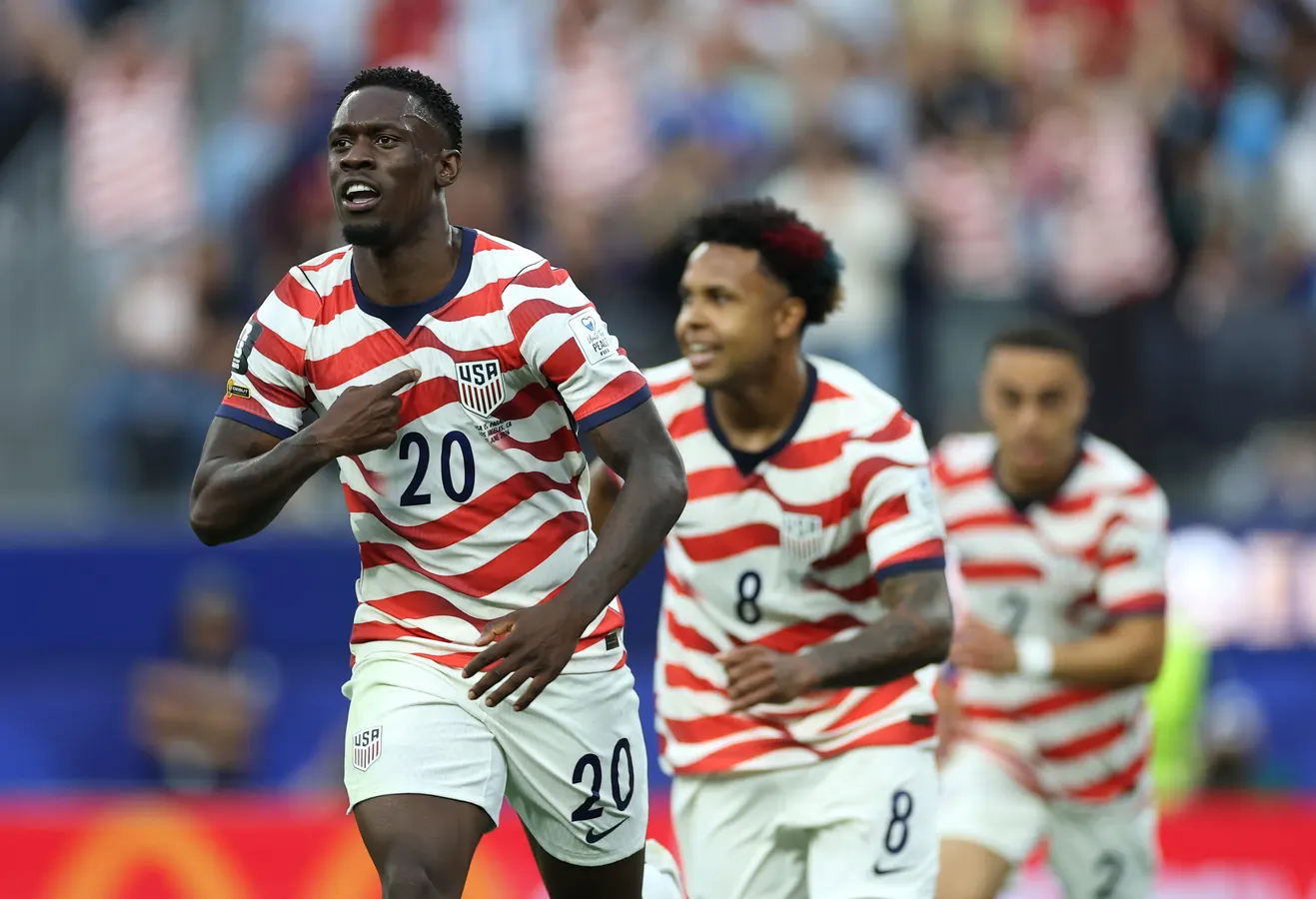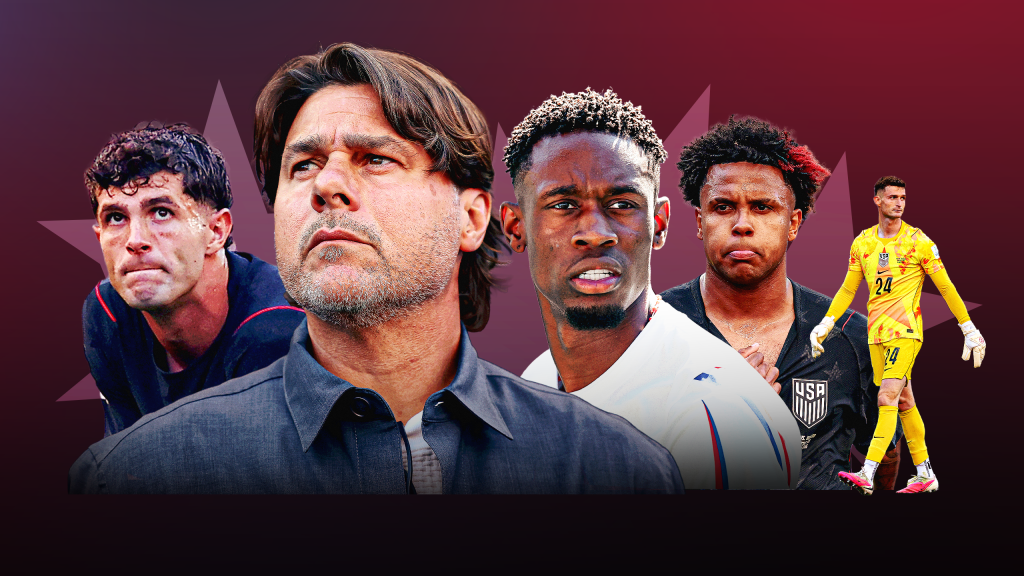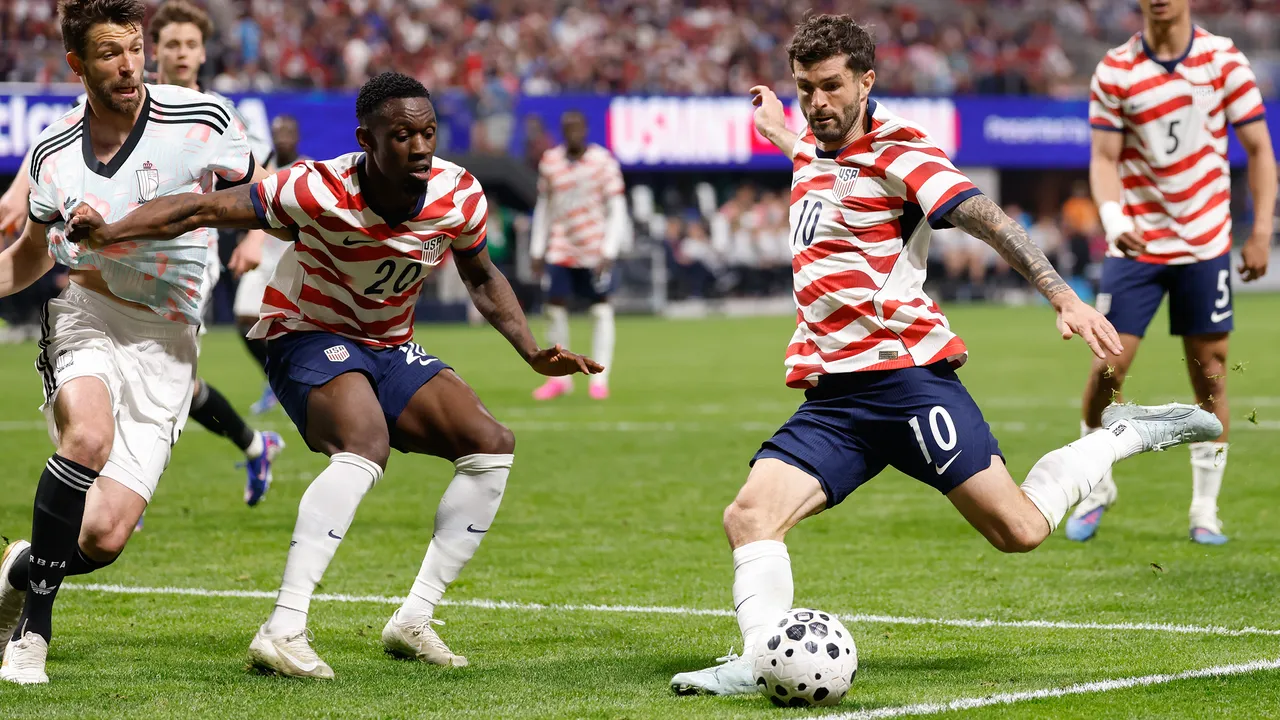
Back in 2022, Weston McKennie was one of the last members of the United States men’s national team to amble out of the Khalifa International Stadium in Al Rayyan, Qatar, after his team had been knocked out of the World Cup by the Netherlands. Ordinarily, the Texan midfielder is a relentlessly enthusiastic presence in the American locker room. But, at that moment, McKennie was sombre. The U.S.M.N.T.’s World Cup had ended abruptly. The second-youngest team at the tournament—and the youngest by an average of two years during the qualifying slog, before a few older players were added to the roster—had acquitted itself well, tying England and beating Iran to advance from the group stage. But, in the round of sixteen, the Dutch had seized on several defensive lapses from the American side, winning three goals to one. “We’re out, and it sucks,” McKennie said. “But a lot of us will use this as a chip on our shoulders.”Even with the loss, there had been something invigorating about this squad of young U.S. players, who were leading a new generation into international play, after the U.S.M.N.T., full of established players, failed to qualify for the 2018 World Cup—the first one the Americans had missed since 1986. Commentators agreed that this precocious group of youngsters would surely coalesce into their collective prime just in time for a 2026 World Cup, for which they would mostly have home-field advantage. “We have four years now to focus,” McKennie said, on his way out of the stadium. “I can’t wait.”But, over the next four years, the U.S.M.N.T. did not focus. And anticipation has curdled into anxiety. The team’s qualification for next month’s World Cup was assured from the moment the United States was granted co-hosting duties with Canada and Mexico in June of 2018. The North American bid received overwhelming support during a FIFA congress in Russia on the eve of the World Cup there, when a hundred and thirty-four national soccer federations voted for the joint plan, which, in a bit of hindsight hilarity, promised “UNITY” and “CERTAINTY” on the first two pages of its official proposal. The Moroccan bid garnered sixty-five votes, many of them animated by resentment over a series of U.S. Department of Justice indictments that had wiped out much of FIFA’s leadership three years earlier. Three voting nations abstained. Iran voted “None of the bids.”Automatic qualification is a huge advantage for host countries, and it meant that, like its co-hosts, the U.S.M.N.T. would be spared the eighteen-month ordeal of qualifying games against the other North American, Central American, and Caribbean nations that constitute the CONCACAF region. But it also meant that the U.S.M.N.T. would have hardly any competitive games to prepare for the World Cup in, with the bulk of its matches being exhibitions. (This is a bit like a baseball team rolling right from spring training into the World Series.)In fact, the only major tournament the U.S.M.N.T. played in the period between World Cups was the Copa América, a FIFA tournament among nations in the Western Hemisphere. And, almost immediately, all the momentum from the team’s overachievement in the 2022 World Cup seemed to disappear. First, there was a rift over playing time between the families of the team’s coach, Gregg Berhalter, and one of its young players, Gio Reyna. The disagreement between the families, who have long been involved in the U.S.M.N.T., and had been close friends for decades, metastasized into an embarrassing scandal and dug up accusations of a domestic-violence incident from long ago. The team ended up flaming out in the first round of the Copa América, and panic ensued. Just eighteen months before the World Cup, U.S. Soccer smashed the panic button and fired Berhalter, giving the team a hard reset.Berhalter was replaced by Mauricio Pochettino, an affable Argentine with the sort of résumé the U.S.M.N.T. would never have been able to afford were it not about to host a World Cup. Poch—pronounced “poach,” which is what everyone calls him—had most recently managed some of Europe’s biggest brand-name clubs, including Tottenham Hotspur, Paris Saint-Germain, and Chelsea. The U.S. job was his first foray into international play.Pochettino is fifty-four years old and a sophisticated strategist; unlike Berhalter, he possesses a full head of thick, dark hair. He is known for his unconventional approaches: he makes even the most esteemed players compete for playing time; he keeps a tray of lemons in his office because he thinks they are able to absorb negativity; and he believes he can read and manipulate players’ auras, which he calls their “universal energy.” In his short tenure, he has led the team to hopeful highs and alarming lows. The highs include a five-game streak of four wins and one tie against World Cup-qualified opponents, while the lows include a pair of lopsided losses to Belgium and Portugal in the final preparatory camp before the World Cup earlier this year.“The recent performances have caused a lot of people a lot of anxiety,” Landon Donovan, the U.S.M.N.T.’s co-all-time leading scorer, told me. “It’s not the way you want to be heading into a World Cup. When it’s on home soil, of course, it’s exacerbated because you feel the pressure to succeed.”Pochettino’s approach seems to involve preaching optimism and a “why-not-us?” ethos, channelling a dash of “Ted Lasso” into his sunny messaging. He insists that the key ingredient for World Cup glory is conviction, and has argued that American players don’t form an “emotional relationship with football” until they are teen-agers, while children in other countries develop it from the time they can walk. All he needs to do is get the players to buy in. But, with such a small sample size of Pochettino’s leadership, nobody seems entirely sure if this incarnation of the U.S.M.N.T. is any good—it still has no track record of beating the sport’s leading powers and has regularly lacked intensity against more physical opponents. Meanwhile, an existential angst seems to be running through the community of fans and pundits that orbits the U.S.M.N.T. Nobody has quite distilled this anxiety down to its chemical elements, but it seems to be some kind of mix of impostor syndrome in a sport where the U.S. remains an upstart, a fear of being embarrassed on home soil, and a sense that the opportunity to weave the sport deeper into the American fabric mustn’t be wasted.“The stakes are really high because soccer in this country has always felt like it has been on the precipice,” Trevin Wurm, one of the leaders of the American Outlaws, told me. The Outlaws are the largest fan club for the U.S. national teams, and count some twenty-five thousand members in more than two hundred chapters worldwide. “Soccer has always been the sport of tomorrow in this country. And, for people that have always been long-term supporters, having a home World Cup, having these games in prime time, having this team that’s spicy and fun, it’s such a big moment for soccer here. If there is an underperformance, or if they do crash out early, that sets back soccer. So that’s definitely the big anxiety.”And the roster does have potential. Forward Christian Pulisic, of Pennsylvania, is arguably the team’s best player and is a star in Italy’s Serie A league, capable of scoring goals from places that no prior U.S.M.N.T. players ever have. But Pulisic, playing for A.C. Milan, has found himself in the throes of an epic scoring drought, failing to score since late December. McKennie, the cheery Army brat, is also a star in Serie A, and is a versatile player with an unconventional body for soccer—squat, rather than lean—allowing him to bully opponents. Midfielder and sometime team captain Tyler Adams, hailing from upstate New York, is no-nonsense and is so intensely competitive that he refuses the traditional post-game jersey swap between teams on principle. Chris Richards, from Alabama, is an uncompromising defender whose Afro towers above the back line and whose lankiness masks a quickness that covers gaps in the American half. (Richards is, however, in a race to recover in time for the World Cup: he tore a pair of ligaments in his left ankle earlier this month.) Both Adams and Richards play in the English Premier League. Matt Freese, the presumptive starting goalkeeper, is also from Pennsylvania and is the son of a late, well-known neurosurgeon who pioneered gene therapy. Forward Folarin Balogun was born in New York but grew up in London, one of several players who were raised outside the U.S. Also up front, Ricardo Pepi is a sweetly shy striker from West Texas who reportedly agonized over his decision to represent the U.S. over Mexico.And in a touch of irony, the final roster may include both Reyna, the ultra-gifted son of two former U.S. national team players, whose petulance about being benched by Berhalter triggered the team’s crisis in the wake of the last World Cup, and Berhalter’s son, Sebastian, a hard-edged midfielder with a soft touch, who has apparently become one of Pochettino’s favorites.These players, and Pochettino, bear the burden of an entire country’s expectations. “Really, from the beginning—in 2019, 2020—they were already sort of tapped with the responsibility of building a project for 2026,” Tabaré Ramos, a pundit, a coach, and a veteran of three U.S. World Cup squads, told me. “There’s a tremendous amount of obligation for this group that, by the way, has not really delivered for the last six or seven years. They have been below expectations, I believe, the whole time. Now it’s down to these next couple of months.”Last December, at the World Cup draw in Washington, D.C., the U.S. was placed into Group D with Paraguay, Australia, and Turkey. They will play each country once, in that order, in matches from June 12th through the 25th in Inglewood, California, and in Seattle, Washington. Last fall, in international friendlies, the U.S.M.N.T. beat Australia and Paraguay; it lost to Turkey in the spring. After the three games, the two teams with the most points (three points for a win, one for a tie, none for a loss) will advance to the knockout stages. The eight best third-place teams from the twelve groups will also advance. Then, the thirty-two surviving teams will play a single-elimination tournament. The Americans are favored to win their group, and are largely expected to survive, at least, through the round of sixteen.The burden of these expectations echoes that of 1994, the only other time the United States hosted the World Cup. That year, the tournament set records that still stand for highest total and average attendance, even as a barely professional U.S. squad hoped merely to avoid the humiliation of becoming the first host team to lose in the group stage. The fans seemed to help: that U.S.M.N.T. valiantly scraped through the group stage before losing in the next round to eventual champions Brazil.Now more is demanded. “It’s a little different this time because these are, I believe, more accomplished players and because now we’re in a group that we’re supposed to win,” Ramos, a member of that ’94 team, said. “The responsibility is a little different. And, to be fair, it’s harder to play as a favorite than it is as an underdog. In ’94, we weren’t supposed to win any games. Every game, we came in thinking, ‘Hey, we have a shot here, but kind of have to play the perfect game.’ It’s hard on these players.”Similarly, Donovan argued that no other American team has faced anything like what the 2026 vintage will. “It’s not something I ever dealt with,” Donovan, who played on the 2002, 2006, and 2010 World Cup teams, told me. “Soccer just wasn’t as relevant as it is now.”It’s hard to pin down exactly what would constitute a success. The U.S.M.N.T. has won exactly one knockout game at a World Cup in its eleven appearances at the tournament—against regional rival Mexico, in 2002. In order to reach the quarterfinals, which, in some eyes, is necessary to make it a strong campaign, the U.S. will have to win two of those knockout games.“The performance of the U.S. team for the most part comes down to two games,” Sunil Gulati, the former president of U.S. Soccer, told me. “The first game is the round-of-thirty-two game. If we’re not playing in that game, I don’t think anybody is going to view the period as successful. And then the round-of-sixteen game. If we’re playing and win that game, I think most people would say that’s a good tournament.”As for going all the way? The U.S.M.N.T.’s record in the World Cup knockout stages suggests a likely answer to whether this team can win the World Cup, seeing as how that would take five straight knockout wins. Perhaps it’s a consolation that, of the two hundred and eleven countries that make up FIFA, only eight have won the World Cup. In fact, some of the tournament’s heavyweights—the Netherlands, Belgium, Portugal—have never won, while England’s World Cup drought will enter its seventh decade if it doesn’t win this summer.For many in the U.S. Soccer Federation, success at the World Cup also means pushing the sport into the mainstream. “You don’t always want to be the sport of the future,” Ramos said. “This is the time where soccer has to stick a little bit more to the American culture.” As Pochettino pointed out, creating an emotional attachment to the game among young people is critical to the progress of U.S. soccer. “What does the world look like the day after?” Gulati said. “If the U.S.M.N.T. can help accelerate the growth of the game, all parts of the game, then it’s mission accomplished.”Growth, in the end, may be the greater prize, and an outcome not as reliant on a few bounces one summer afternoon. So long as the team does well enough, that might suffice to sustain the sport’s velocity. “The progress is not linear with a positive slope,” Gulati told me. “It’s a tough competition. There are two hundred-plus countries that play the game very seriously.” I asked him if he was confident in the U.S. team. “I’m hopeful.” ♦
How Good Is the U.S. Men’s World Cup Team, Really?
Fans of U.S. men’s soccer are concerned about their team ahead of the World Cup. After a string of high-profile losses, it seems they have reason to fret.
2,357 words~11 min read