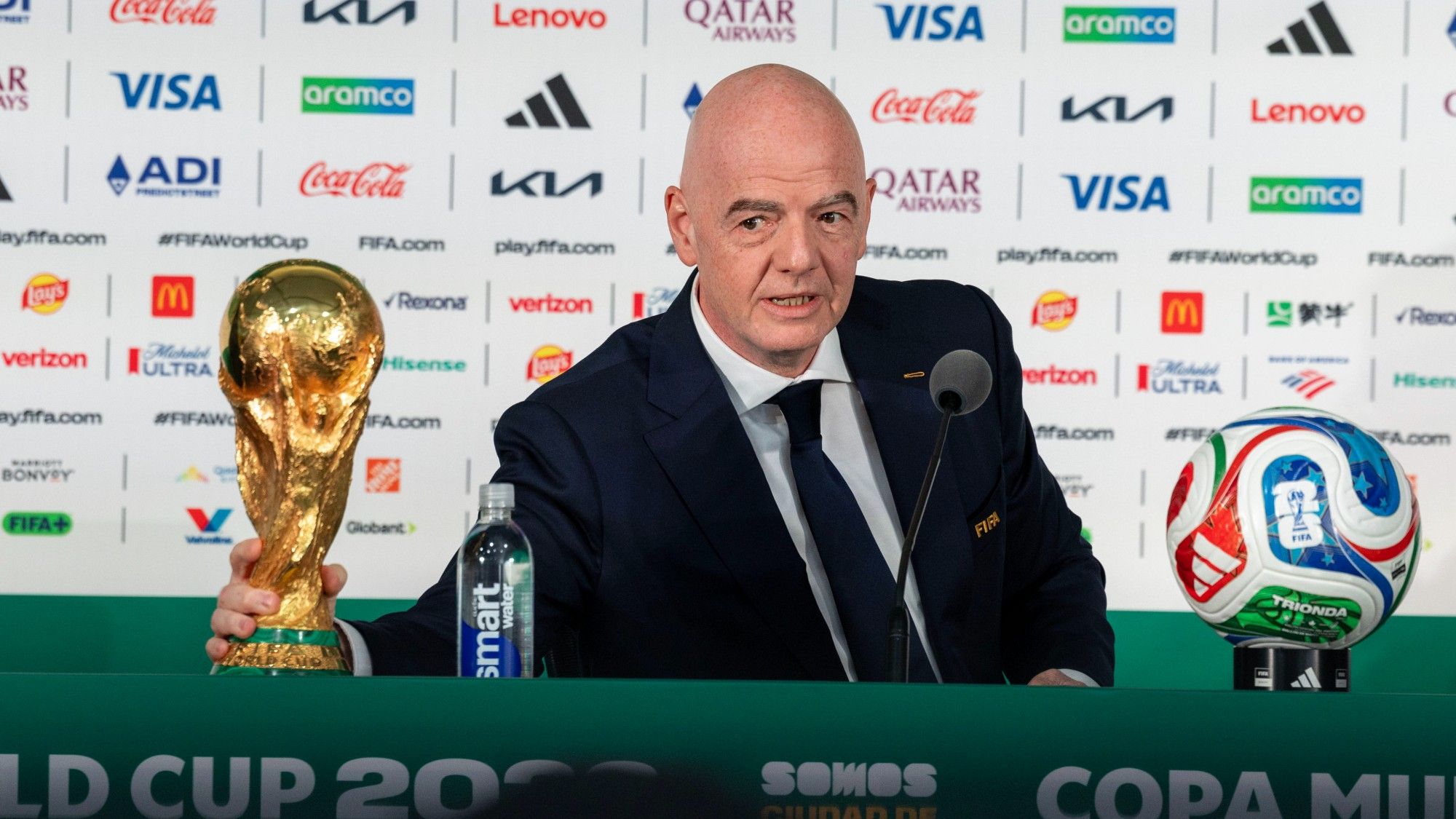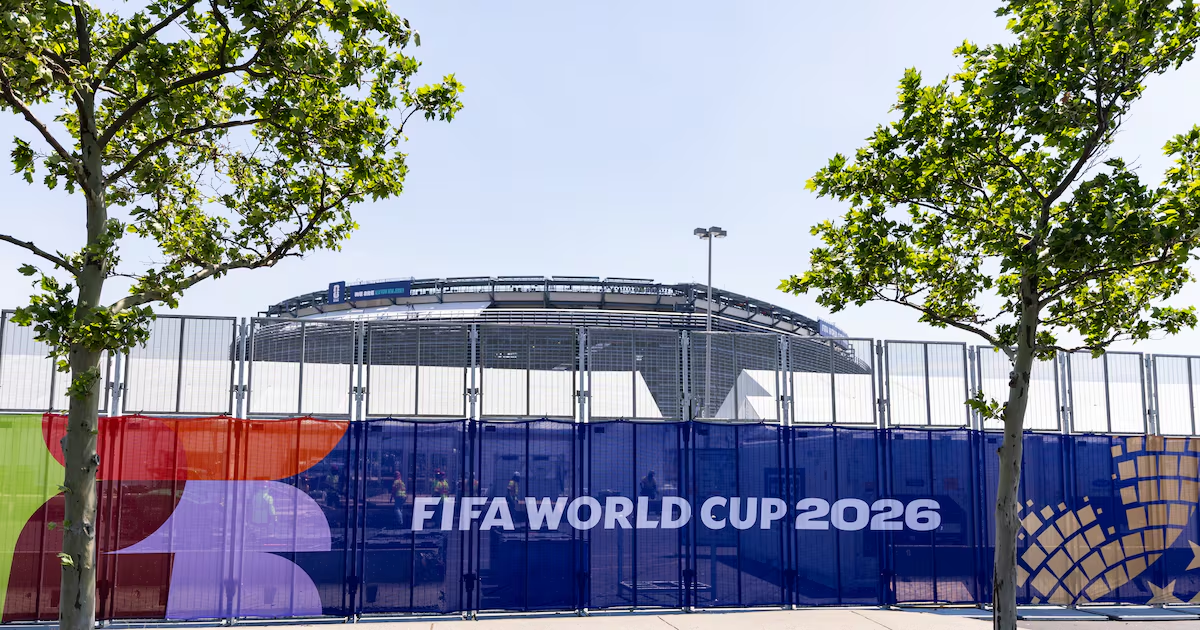
Banners have been hung on most main streets across the United States by now. Colourful flags and images portraying the main characters billow from lamp-posts. Public notices advertise gatherings at venues big and small that will allow people to participate in festivities, even if they live far from the main events. Yes, the US is getting all excited for the 250th anniversary of its founding in July. Meanwhile, evidence that the nation is also hosting something called the World Cup in just three weeks is in rather scant supply. The greatest show on earth? The biggest secret.At the cavernous Dick’s Sporting Goods in Lake Grove the other day, the prime real estate at the front of the store was piled high with New York Knicks’ paraphernalia. The blue and orange look like they might make a run all the way to the NBA finals next month and the tri-state area is going suitably demented at the prospect. Down the back of the store, the World Cup section includes an array of Argentina (Messi), Spain (Yamal) and, bizarrely, Italy shirts. The incongruous presence of Azzurri jerseys a metaphor for how this whole tournament is being organised. Everything seems slightly out of kilter around here. Just a little bit off. Over the past few months, there have only been two occasions when the build-up to the World Cup impinged upon the imagination of locals. Both incidents had more to do with logistics than football. In the first instance, they were greatly amused by New Jersey authorities going public to warn supporters coming from further afield that attempting to walk the nine-mile schlep from Manhattan to the MetLife Stadium was strictly prohibited. Then, just last week, a video went viral of cops in Massachusetts cautioning fans that cycling the 22 miles from downtown Boston to the Gillette Stadium in Foxborough was also illegal. Those crazy Europeans and their refusal to buy into car culture.Aside from illustrating the cultural disconnect between American and global sports in terms of expectations around affordable public transport to stadiums, those stories came in response to revelations that visitors are going to be charged exorbitant amounts just to get to matches. In New York, a train ticket from Penn Station to the former Giants Stadium, which usually costs $12.90 (€11.12), will now go for $98. In Beantown, a commuter rail pass to take the train to the home of the Patriots, ordinarily $20, will rise to $80. Parking a car in the vicinity of that facility will set you back $175, rather than the traditional $60 for an NFL game. Nothing personal, just the gouging business.A sign promotes train tickets to the Boston Stadium for the World Cup. Photograph: Sophie Park/Bloomberg via Getty Images This is in keeping with the “fleece ‘em all” spirit of Fifa and its commercial partners and may explain why, in a time when soccer has never been bigger here, so many American fans do not appear especially excited about the forthcoming attraction. In a country where the price of petrol has gone up 60 per cent in the past two months, regular folk have been priced out of the tournament. Battling an already inflated economy, there aren’t many families of four who can travel to a game in a different state when local hotels are charging $1,400 per night and sometimes demanding four-night minimum stays around key fixtures. An approach that explains why New York, Houston and Dallas, among other places, are reporting disappointing levels of accommodation bookings so far.[ Talk of New York-Jersey World Cup trek fuels one of history’s longest-running conflictsOpens in new window ]The music business here is currently suffering an outbreak of what has been termed ‘blue dot fever’ – where so many overpriced seats for big entertainment acts remain unsold that they are forced to cancel concerts. That is not an option for Fifa, but while there may be swathes of empty spaces at some lesser-spotted games, even US president Donald Trump has baulked at ticket prices for USA’s opener against Paraguay, currently going for $1,000. And there was an online spat recently about whether some shuckster broker wanted $2,400 or $1,670 for a single seat to witness Argentina v Algeria at Arrowhead Stadium in Kansas City. Either way, ludicrous money for Messi in his dotage.As decreed by Fifa president Gianni Infantino, even those who can’t afford to see the action in person are still subject to being shaken down. Some of the 11 cities hosting games are going to charge for entry to the traditionally free fan zones around the fixtures. Apparently, signing up to be part of the World Cup is costing local governments so much they must recoup money wherever possible. And then Fifa wonders about the lack of excitement around the place.FIFA president Gianni Infantino. Photograph: Charlt Triballeau/AFP via Getty Images Local apathy may also be down to the tournament being broadcast here by Fox Sports, whose coverage of football has long-ago been exposed as amateurish and lacking depth by NBC and CBS going full pelt at the Premier and Champions League. Politically-outspoken Alexi Lalas, still somehow spending capital accrued from a ground-breaking stint in Serie A in the 1990s, is the charmless face of that operation and something of an apologist for the relentless corporatisation of the sport.[ Trump’s World Cup has a strong whiff of the last days of RomeOpens in new window ]Yet, even the marketeers appear to be missing the mark. Strolling around the supermarket the other day, I came upon a single football-themed product promotion. Attempting to flog Butterfinger chocolate bars, Ferrero had a cardboard cut-out of a sportsman holding a soccer ball. Messi? Yamal? Christian Pulisic even? No, Tom Brady. The superannuated quarterback turned owner of Birmingham City cashing in on the beautiful game. World Cup, American style.
Dave Hannigan: The World Cup is three weeks away. Yet something in the US feels off
Many American soccer fans do not appear especially excited. Even Donald Trump has baulked at the ticket prices
969 words~4 min read