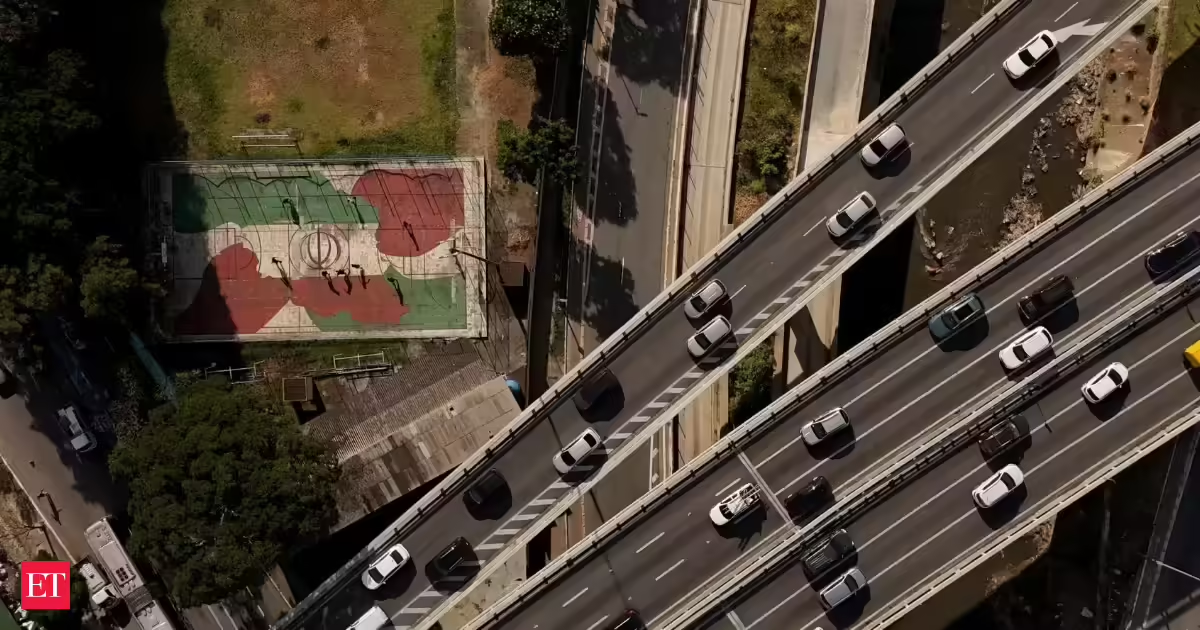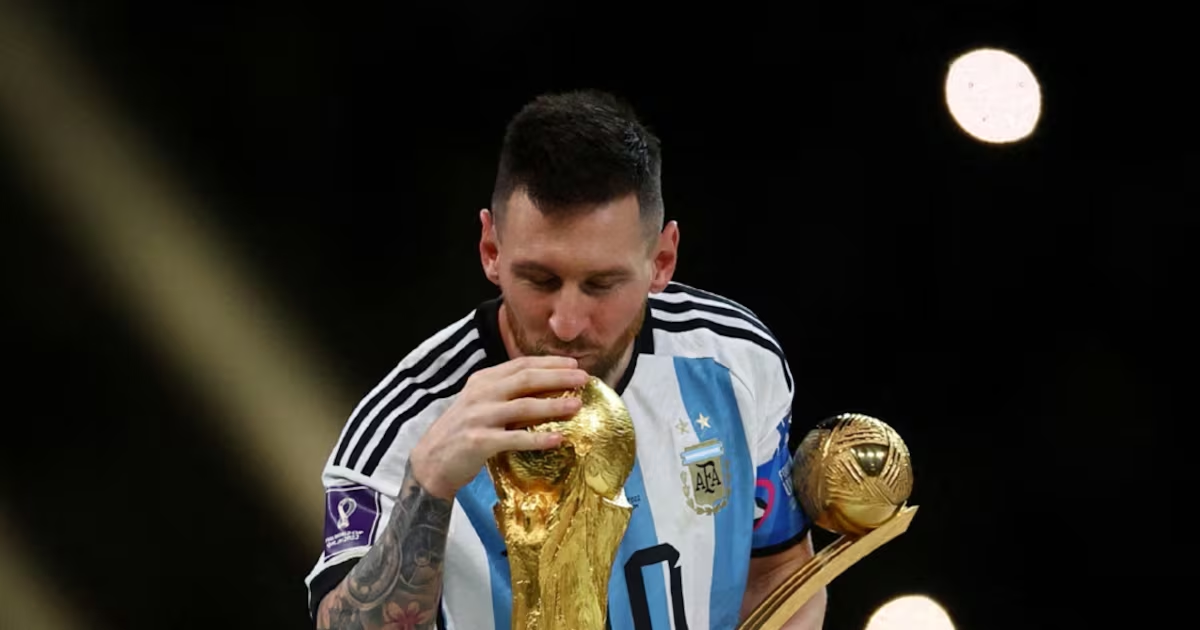
The 2026 Fifa World Cup is being sold as the most inclusive tournament in football history. For the first time 48 countries will compete. Sixteen cities across three countries in North America will host matches. More than 10-million people are expected to travel, spend and celebrate on the ground in the world’s greatest sporting spectacle ever. Yet behind the branding of global welcome sits a harder political and economic reality: the world is not equally free to arrive and can’t equally afford the high prices. In 2025 the Trump administration introduced and then expanded travel restrictions under section 212(f) of the US Immigration & Nationality Act. Today the policy affects 39 countries, including four World Cup countries ― Senegal, Ivory Coast, Haiti and Iran. Twenty-six of the affected countries are African. That number should disturb anyone who cares about what the World Cup claims to represent: one world, one game. This is not only an immigration story. It is a business story, a tourism story, a diplomacy story and a cultural story. The World Cup is movement on a vast scale: fans, journalists, sponsors, performers, entrepreneurs, families and diaspora communities converging around a shared global ritual. That movement is becoming increasingly expensive. Flights, accommodation, ticket pricing and internal transport costs are the highest yet, already placing the 2026 tournament beyond the reach of all but the wealthiest supporters. Even train fares between Manhattan and MetLife Stadium have surged to 10 times their normal rates. Access to the modern World Cup increasingly depends on possessing the right passport and the right bank account. The US wants the economic and symbolic benefits of staging the World Cup. It wants the tourism, hotel occupancy, broadcast spectacle, commercial partnerships and soft power. It wants the world to gather on its soil. But it is doing so while policies affecting about a fifth of the world’s countries cast a shadow over who gets to participate fully in that gathering. For Africa, the contradiction is particularly sharp. African football has never been more central to the global game. African players fill the Premier League, La Liga, Ligue 1, Serie A and Bundesliga. They are bought, sold, cheered, monetised and celebrated as some of the sport’s most valuable talent. African national teams are no longer romantic outsiders. Morocco’s 2022 semifinal run proved that. Senegal, Ghana, Ivory Coast, Tunisia, Algeria, Egypt, South Africa, Morocco, the Democratic Republic of Congo and Cape Verde all carry the weight this year of football cultures with deep emotional legitimacy. But the global economy welcomes African excellence more readily than it welcomes African people. That is the uncomfortable truth beneath this moment. Talent moves. Capital moves. Content moves. Data moves. A goal scored in Abidjan, Dakar or Johannesburg can circle the planet within seconds. But the ordinary human beings who give football its meaning still face exclusion. The modern world has got good at globalising culture while restricting people. Especially in America. I felt this personally recently when my Zimbabwean fiancée was denied a US visa. Her rights disappeared behind a national classification. That is what systems do. They turn people into probabilities. Every country has the right to manage immigration. No serious state can ignore security. But hosting the World Cup is not a normal act of border management. It is a public invitation to the planet. The World Cup’s power is that it allows humanity to imagine itself differently. Former colonies defeat former empires. Diaspora communities remember where they come from. For a few weeks people belong not only to their countries, but to the tournament itself. This is why the expansion to 48 teams matters. Fifa widened the field in the name of representation. Yet at the same historical moment entry into one of the principal host nations has become restricted for large parts of the planet. This isn’t a World Cup; it’s an 80% of the World Cup. • Lee is a US-based motivational coach, trainer, speaker, teacher, writer and expert in the mindsets of creativity, innovation and adaptability.
MICHAEL BRIAN LEE | Soccer World Cup’s open gates meet America’s closed doors
African teams rise on the pitch while fans face closed borders in the US
670 words~3 min read