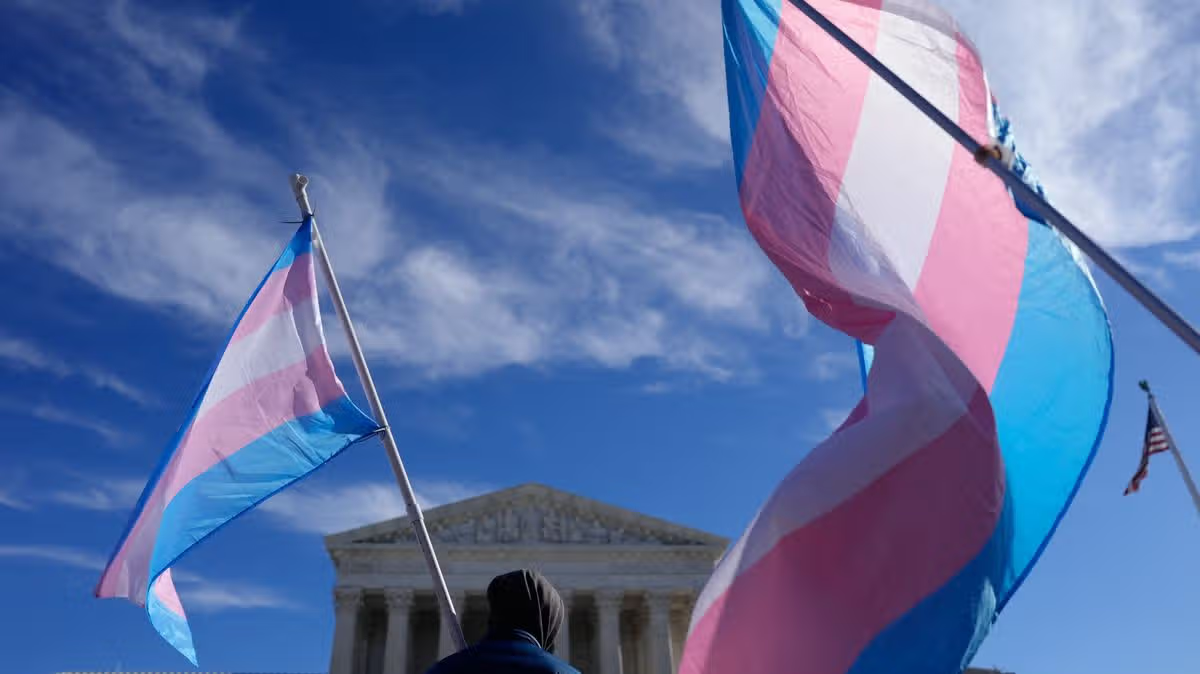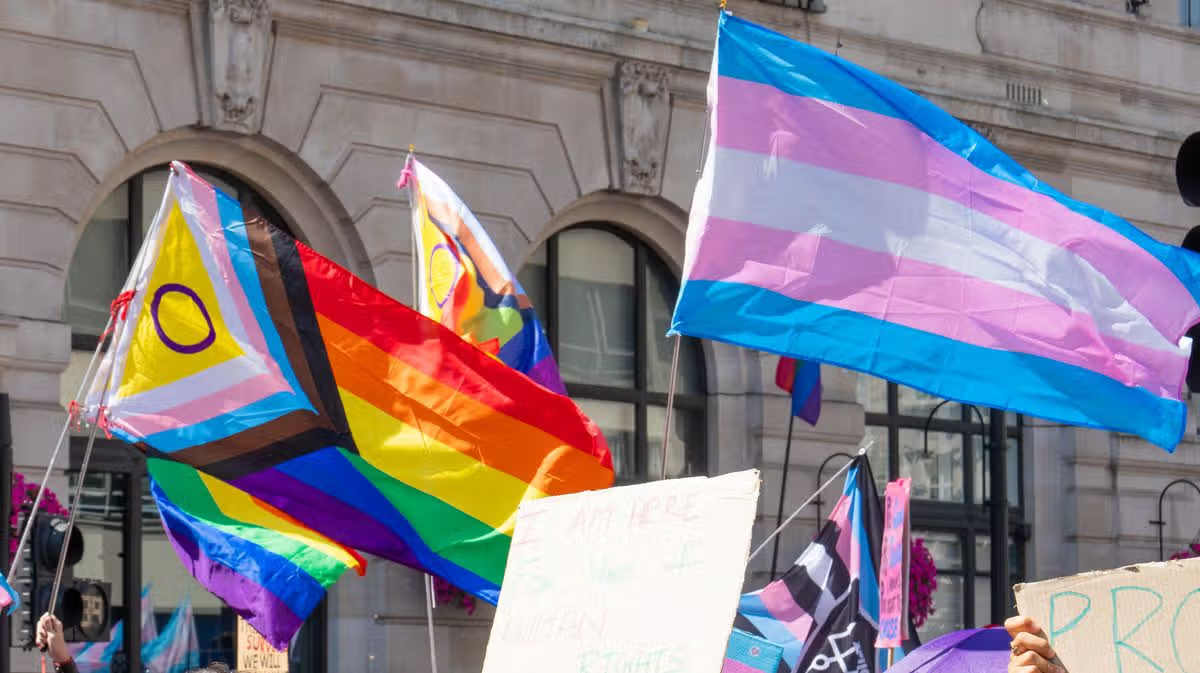
Great Britain's Equality and Human Rights Commission publishes updated Code of Practice on trans rights, prompting LGBT charity The Rainbow Project to urge caution in Northern Ireland11:22, 22 May 2026The Equality and Human Rights Commission (EHRC) revised its Code of Practice concerning the application of the Equality Act across employment, services, and the responsibilities of public bodies.The updated code has been published more than a year following a landmark Supreme Court ruling in April 2025, which determined the words "woman" and "sex" in the Equality Act 2010 refer to a biological woman and biological sex.The new code addresses a variety of scenarios from sport, where it states trans people should compete alongside others of their birth sex rather than gender identity, to hospital wards, which it says can lawfully exclude trans patients if single-sex. As outlined within the Code, these changes will be applicable to organisations across England, Scotland and Wales.The release of this Code of Practice comes in the wake of considerable political and media debate surrounding last week's Supreme Court ruling on Dillon & Ors v Secretary of State for Northern Ireland, and what implications this could have for the application of the 'For Women Scotland' judgment and the delivery of gendered services and facilities in Northern Ireland.READ MORE: How new single-sex space EHRC guidance will change daily life for trans communityREAD MORE: Campaigners divided as trans rights activists brand single-sex space rules 'a mess'In Dillon & Ors v Secretary of State for Northern Ireland, the UK Supreme Court delivered a landmark judgment determining the legality of the Northern Ireland Troubles (Legacy and Reconciliation) Act 2023.The judgment in Dillon & Ors v Secretary of State for Northern Ireland held that the term ‘civil rights’ in the ‘Rights, Safeguards and Equality of Opportunity’ chapter of the Belfast/Good Friday Agreement was too broad to be considered to have ‘direct effect’ in law.LGBTQ+ charity, The Rainbow Project, is calling on Government Departments, employers and service providers in Northern Ireland to hold off making any alterations to employment practices or service provision, including the provision of gendered spaces, until the outcome of the Equality Commission for Northern Ireland's forthcoming judicial review has been determined.Scott Cuthbertson, CEO of The Rainbow Project, said: "Following the publication of the updated Code of Practice by the EHRC in Great Britain we expect there may be calls from some quarters for this to be immediately implemented in Northern Ireland."It's important to note that Northern Ireland has different laws, a different Equality Commission, and an ongoing judicial review assessing whether the 'For Women Scotland' judgment may impact people here."There has also been significant commentary in recent days following the Supreme Court's 'Dillon' judgment, suggesting that this should lead to the full application of the 'For Women Scotland' judgment in Northern Ireland."It remains our view that trans people in Northern Ireland remain shielded from a diminution of rights under Article 2 of the Windsor Framework, and that in that judgement the Supreme Court reinforced that individuals can directly rely on the Framework in court to uphold those rights."Article 2 of the Windsor Framework bound the UK Government to guaranteeing 'No diminution of rights, safeguards and equality of opportunity' in Northern Ireland as a consequence of Brexit. This encompassed a specific pledge to 'keeping pace' with 6 EU Directives outlined in Annex 1 of the Windsor Framework – half of which are concerned with sex discrimination in the workplace, access to goods and services, and self-employment and contract work.Alexa Moore, Policy, Campaigns and Communications Manager at The Rainbow Project, said: "A series of cases at European level, including the recent 'Shipova' judgment at the Court of Justice, have solidified our view that EU law provides protection for trans people – and everyone else – in Northern Ireland. Nothing in last week's Supreme Court judgment has changed that view."European cases have continuously reinforced that transgender people should be considered to be their lived gender for the purposes of non-discrimination law. Northern Ireland is bound, under the Windsor Framework and the Withdrawal Agreement, to follow this case law in certain circumstances.Article continues below"The Supreme Court last week, while somewhat limiting the scope of these 'Article 2' protections, has actually reinforced that individuals in Northern Ireland can directly rely on the Windsor Framework in the courts to ensure their rights are upheld."
NI LGBT charity draws on EU law to protect trans people amid new EHRC guidance
Great Britain's Equality and Human Rights Commission publishes updated Code of Practice on trans rights, prompting LGBT charity The Rainbow Project to urge caution in Northern Ireland
719 words~3 min read