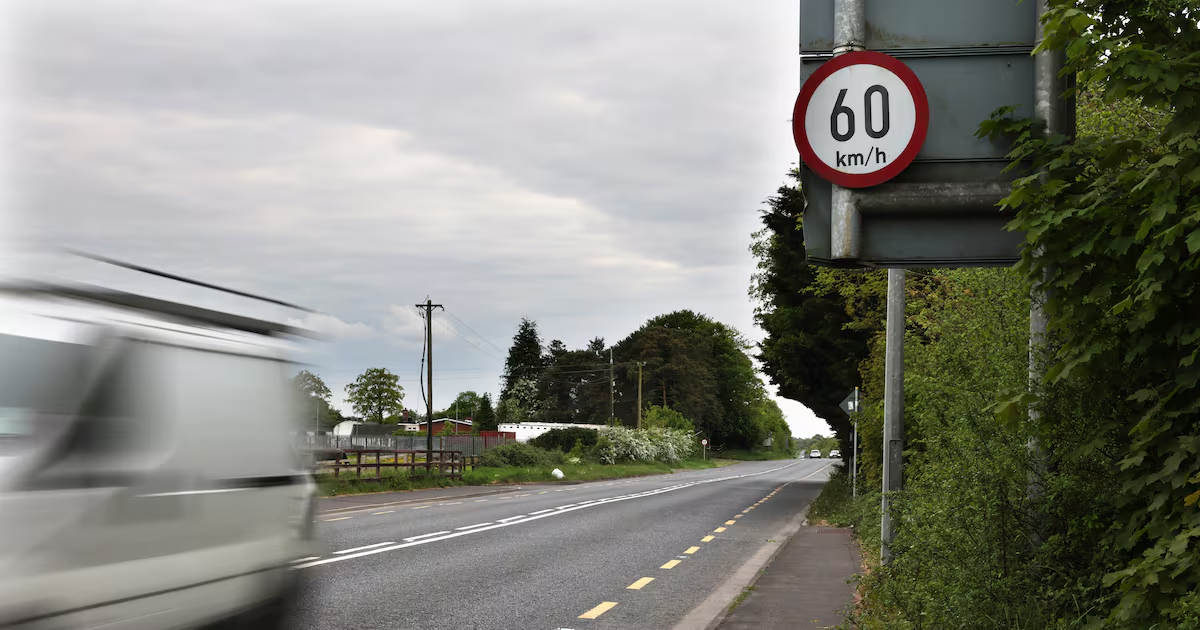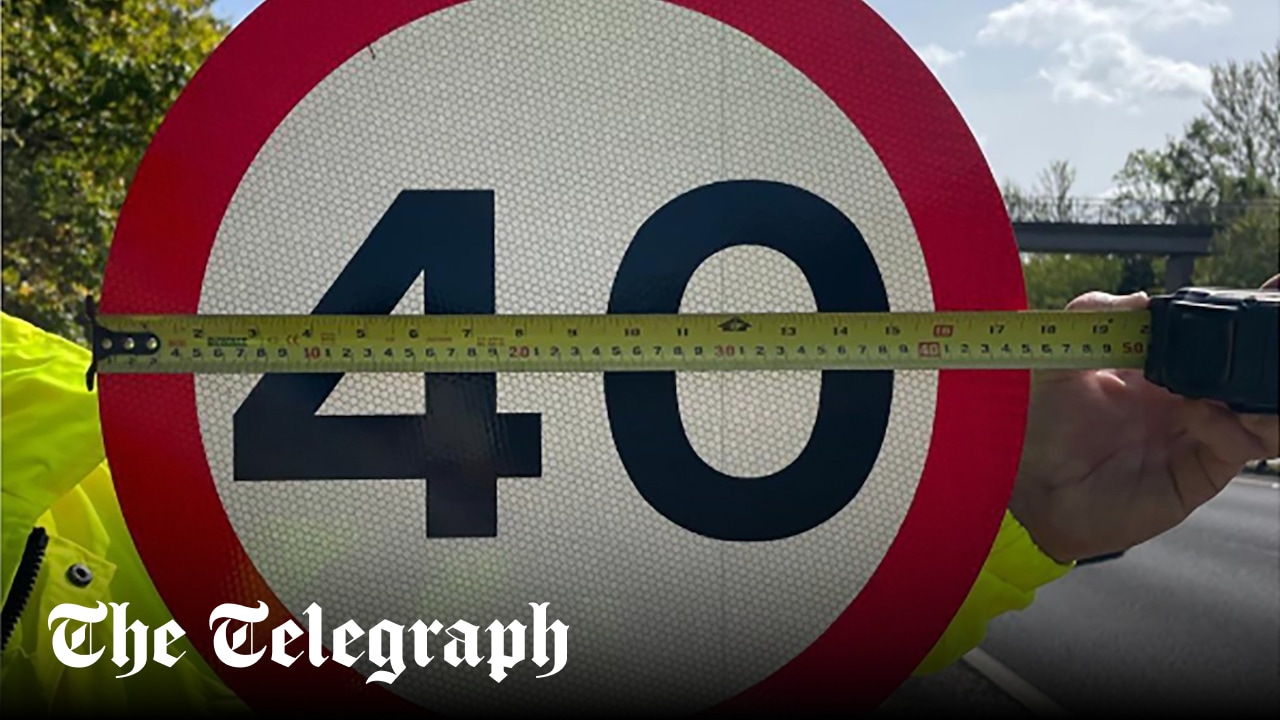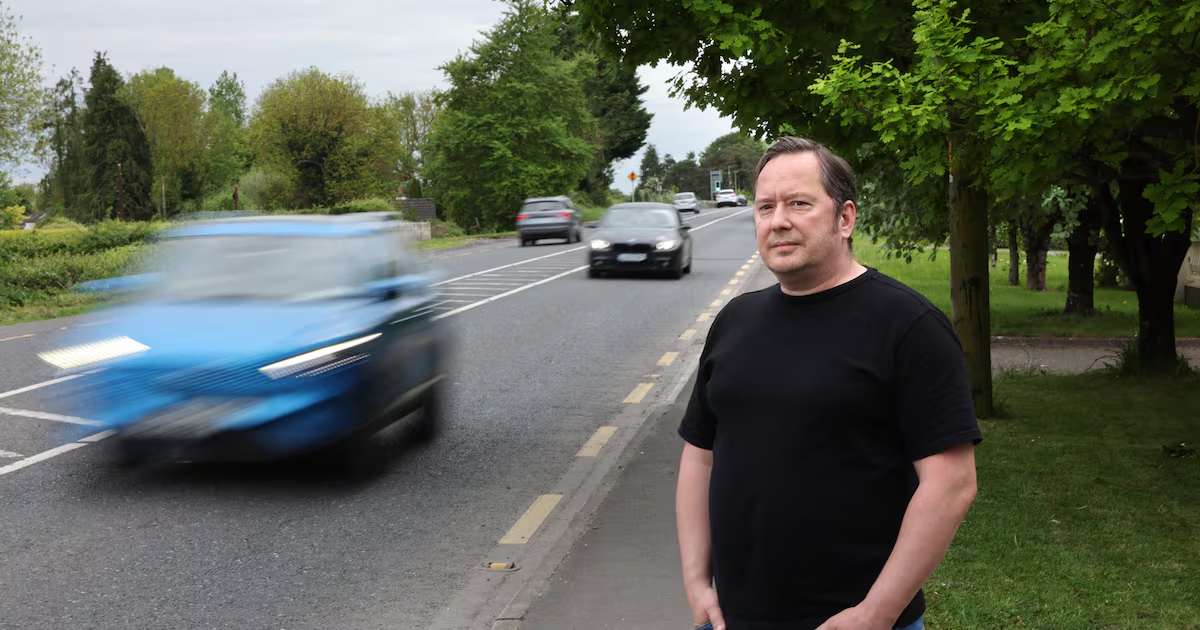
“I couldn’t believe it,” says Mario Tommadich, describing his reaction to a judge’s failure to convict 34 drivers of speeding on the road approaching Monasterevin in Co Kildare, where Tommadich lives. “I couldn’t understand the motivation of the judge. It doesn’t hurt anyone to slow down a little bit before entering the town.”“Otherwise, what are rules for?” asks Tommadich, a father of two young children. “What kind of society do we want to live in?”He welcomes that the Director of Public Prosecutions (DPP) this week won a judicial review over District Court judge Andrew Cody’s failure to convict the 34. Cody claimed Go Safe speed detection vans on a 60km/h section of the R445 road at Clogheen near Monasterevin were “shooting fish in a barrel”. The DPP went to the High Court after Cody, sitting at Laois District Court on December 19th, 2024, did not convict 34 drivers who had not paid fixed-charge speeding notices, which require imposition of five penalty points each.In written comments at the outset of the hearing, Cody claimed GoSafe vans “deliberately targeted an unjust speed zone”. Cody said he had been “very concerned” for some two years about “excessive” prosecutions by GoSafe for exceeding the 60km/h limit in the zone in Clogheen covering 700m of the R445. Total fines for Clogheen were €108,240 in 2022, when fines for the entire county of Laois were €53,320, he said. The Clogheen zone was “exactly” the type of wide two-lane road where the speed limit, in line with Department of Transport guidelines, should be 100km/h, Cody said. While any speed limit was “entirely” a matter for Kildare County Council, he was asking it to review the Clogheen limit “as a matter of urgency”. People had been convicted over the past two years of travelling in the Clogheen zone at speeds “as low as 67km/h”, he added. The main road at Clogheen, Monasterevin, Co Kildare. Photograph: Dara Mac Dónaill While saying he should take into account that Clogheen townland had historically been a location of fatalities, Cody said he believed the “huge number” of prosecutions for the 60km/h zone had “little to do with road safety” and was rather driven by “targets, statistics and finance”.Cody proceeded to deal with 40 speeding cases individually, refusing to record convictions in 34. He convicted six drivers whom he considered not to have been driving at “a safe speed”.The DPP’s judicial review related to four of the 34, with one, whose speed was recorded at 75km/h, selected as a lead case. None of the drivers opposed the proceedings.This week, High Court judge Cian Ferriter quashed Cody’s refusal as invalid and in breach of fair procedures. Cody’s approach, he said, was wrong in law and “manifestly inappropriate” for a judge.Setting speed limits, stressed Ferriter, is a matter for the legislature, not judges.A judge’s role is “to faithfully apply the law as it is, not as he or she thinks it should be, however well-intentioned any criticisms of the policy behind that law might be”.Ferriter said it was “not generally appropriate” for a judge to express views calling into question legislative policy, as Cody had sought to do when he criticised the council’s setting of speed limits on the road. Cody’s approach was wrong on a number of legal bases, including having regard to irrelevant or illegitimate factors, he said. Cody breached fair procedures by making remarks that gave a “reasonable apprehension of predetermination”. Judicial predetermination is contrary to law and to the “core judicial obligation” of impartiality, Ferriter said.The DPP did not seek to have the 34 cases returned to the District Court, with the effect those drivers have avoided conviction and the accompanying five penalty points. Tommadich, who contacted The Irish Times after the initial conviction refusal to express his concerns, says he does not expect the judgment to change driver behaviour, “but at least it means they will get convicted in some shape or form”.“Let’s see what comes out of it,” he says.He says he has not seen a GoSafe van on the road for some time and hopes the vehicles will return “and that speeding tickets will not be thrown out”. He would particularly like to see speed bumps installed to help slow traffic as it approaches the residential 50km/h zone.Originally from Germany, Tommadich bought his house, a “fixer-upper” on the outskirts of Monasterevin, eight years ago and has put considerable investment into it. The property is just a few hundred metres from the 60km/h zone, which is intended to slow down drivers as they approach the town’s 50km/h zone. Approaching Monasterevin from the Portarlington direction, the speed limit on the wide and very busy R445 gradually falls from 100km/h to 80km/h to 60km/h. The road narrows as the 60km/h zone is coming to an end and the 50km/h zone begins. On the roadside verge, a headstone remembers a young couple, Jerry and Norma Prenderville, both aged 31, and their 21-month-old daughter Joanna, who died after their car was in a collision with a lorry on September 10th, 1996. A headstone by the R445 at Clogheen, Monasterevin, Co Kildare. Photograph: Dara Mac Dónaill The R445 narrows as the 60km/h zone is coming to an end and the 50km/h zone begins in Clogheen, Monasterevin, Co Kildare. Photograph: Dara Mac Dónaill As drivers exit Monasterevin heading towards Portarlington, some are doing speeds of up to 100km/h even before they leave the 50km/h zone, says Tommadich.Having been overtaken at speed by some vehicles while driving in the 60km/h zone, this reporter can support his claims. A steady number of pedestrians use the footpaths on each side of the R445 out of Monasterevin just before the Clogheen zone, including families with young children living in a direct provision centre for asylum seekers. Tommadich says his concerns are for the safety of his children and his family’s quality of life. His family, for now, divide their time between his home in Monasterevin and his partner’s home in the midlands.“I would be terrified if the kids, when they’re in the garden playing, somehow got out on to the road,” he says. “I put a lot of work into the house just to make it a home, but [for] my kids, being now three and four years old, it’s starting to become dangerous.”The road is noisy from about 4am with hauliers going through, and traffic continues throughout the day well into the night, he says. Motorbike couriers are especially noisy, “like screeching harpies”, and always in a hurry. They only slow down once they get to the first bend into the town, he says. “I have made a considerable investment but moving has crossed my mind,” says Tommadich. “I could have done my due diligence a little better on the house in general when I bought it but I was under pressure and it was the only property that was available at the time that I could move into at short notice.”He has double glazing and aims to install triple glazing but neither is of much benefit when you open the windows, he says.Asked whether the situation contrasts with Germany, he says speed is “not so much a problem” in built-up areas there. “The rules are a little bit more strict, and they are enforced a bit more than here. It’s almost too much, there’s a happy medium.”In a residential area, it makes “absolute sense” to slow down, he says. There have been at least three fatalities on the road, he notes. His claims of some drivers exceeding the speed limits on the approach to the town are echoed by two women who also live on the road.Neither wish to be named. One says she is concerned about excessive speeding on the road but believes Cody “has a point” in his claim the GoSafe vans were positioned for “easy pickings”.“Some of the drivers are nearly flying,” the second woman says. “I haven’t seen the [GoSafe] van in a while, maybe they thought ‘What’s the point?’ if the judge is just going to throw out the case.” Catherine McKenna, a regular commuter from Portarlington to her work in Dublin, speaks to The Irish Times while taking a break at the garage in Monasterevin. She says she understands the residents’ safety concerns. Her own view of the 60km/h zone is that it is “a minor inconvenience” for drivers.
‘What are rules for?’: Town blighted by speeding drivers baffled by judge’s dismissal of 34 cases
High Court has ruled Judge Andrew Cody’s approach was wrong and ‘manifestly inappropriate’
1,388 words~6 min read