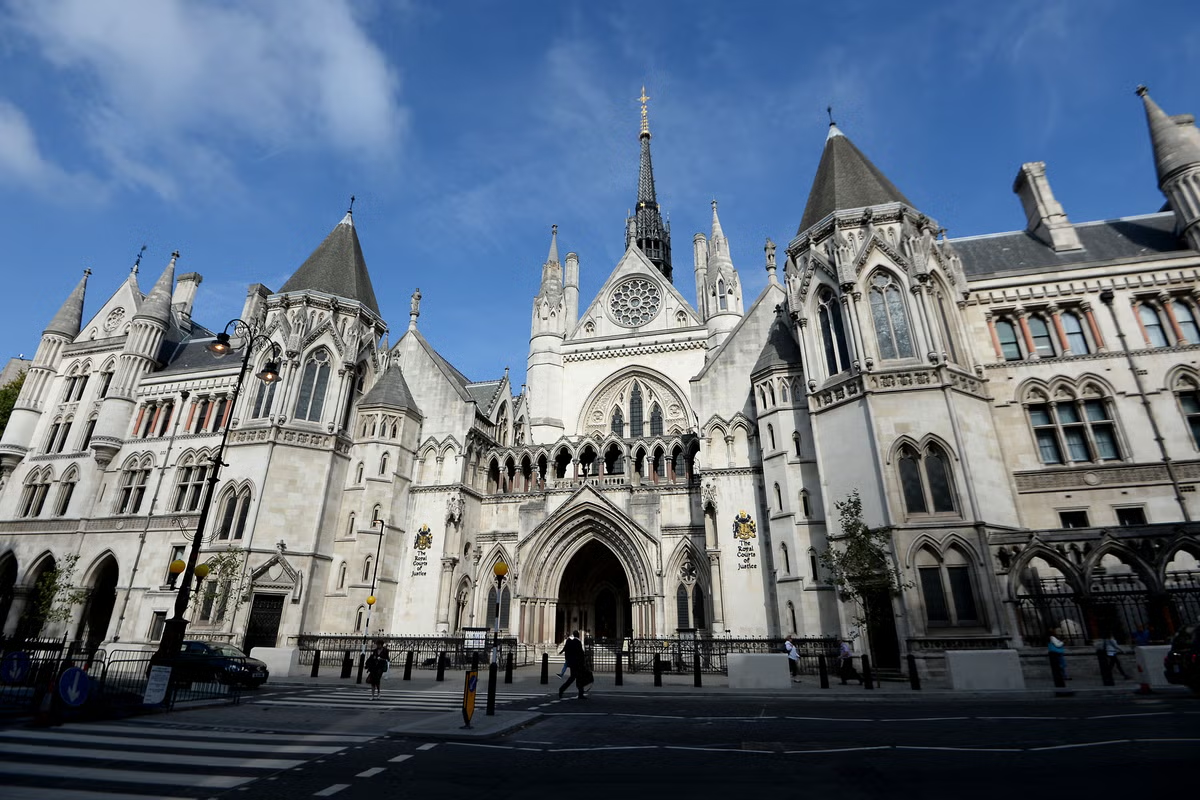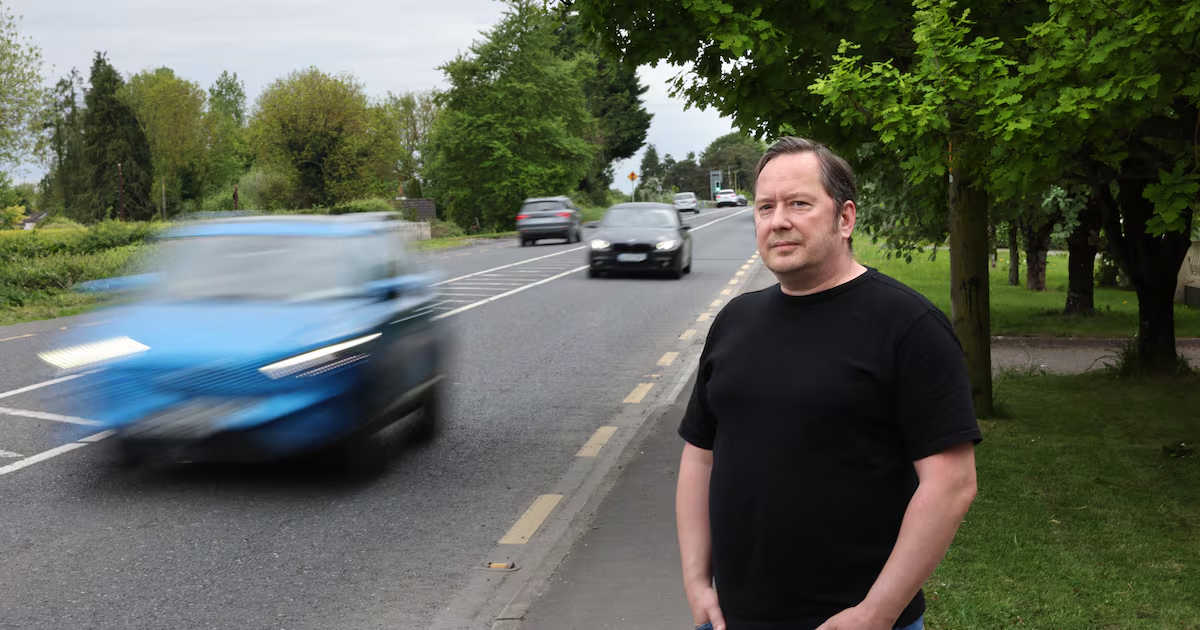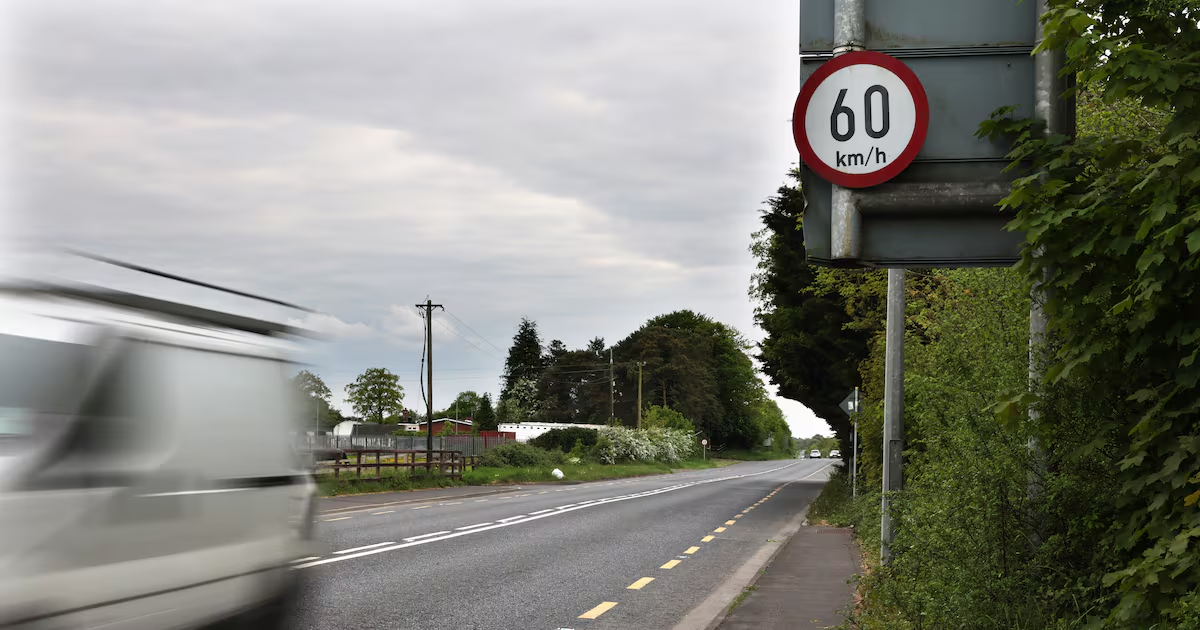
A District Court judge’s refusal to convict more than 30 drivers speeding in what he described as an “unjust” 60km/h zone on a road in Co Kildare is invalid and breached fair procedures, the High Court has ruled.Judge Andrew Cody’s approach to the cases was “wrong” in law and “manifestly inappropriate” for a judge, High Court judge Cian Ferriter said on Thursday. The role of a judge is not to express a view as to the wisdom or correctness of speed limits in criminal cases and deal with such cases with that view, he said. The judge’s role is “to faithfully apply the law as it is, not as he or she thinks it should be, however well-intentioned any criticisms of the policy behind that law might be”.Fixing speed limits is a matter for the legislature, not the judiciary, he said.He made the findings in a judgment upholding a lead challenge, involving a motorist detected driving 75km/h in a 60km/h zone in November 2023. The Director of Public Prosecutions (DPP) had challenged Cody’s refusal to convict.In the circumstances, including that none of the drivers opposed the DPP’s proceedings, the DPP had adopted a “sensible approach” of not seeking to have the cases remitted to the District Court, Ferriter said. None of the 34 drivers involved will be convicted or get penalty points. The case arose after Cody, when sitting at Laois District Court on December 19th, 2025, found the facts proven against 34 drivers subject to fixed charge speeding notices. He refused to convict them, saying to do so would be “unjust”.In written comments circulated at the outset of the hearing, Cody said Go Safe speeding vans “deliberately targeted an unjust speed zone” at Clogheen, Monasterevin, Co Kildare, and were “shooting fish in a barrel”. The DPP’s unopposed judicial review proceedings concerned four of the 34, with one selected as a lead case. In submissions for the director, barrister David Staunton said Cody had effectively said he was “not going to enforce the law”. Ferriter agreed that Cody, having found the facts proven, was obliged to record a conviction and impose a penalty in accordance with the statutory scheme. The law relating to fixed charge offences included a requirement for five penalty points to be applied.The evidence was that Cody dismissed the complaints for 34 offences and entered convictions in six others, apparently on the basis he regarded the speeds involved in those six as meriting a conviction.The judicial review of that decision addressed impartiality, said Ferriter. Cody was not a respondent. Unless accused of bad faith or personal misconduct in a judicial challenge to their decision, judges are not respondents or notice parties. .There was no question of bad faith or misconduct on Cody’s part, Ferriter said. The allegation was that he legally erred in his approach.Ferriter said the law is clear: once the prosecution proved the speed limit was exceeded, Cody was obliged to convict. Cody’s approach was wrong on a number of legal bases, including having regard to irrelevant or illegitimate factors, he said. Cody also acted in breach of fair procedures by making remarks, which gave a “reasonable apprehension of predetermination”. Judicial predetermination is contrary to law and to the core judicial obligation of impartiality, Ferriter said.The Judicial Conduct Guidelines also describe the principle of impartiality as “essential to the proper discharge of the judicial office”, he said. The principle applies not only to the judge’s decision but also the process by which it is made.There is no suggestion Cody has been the subject of any judicial conduct complaint in relation to his remarks in this case, Ferriter said. Breach of the guidelines does not amount to misconduct and he had no doubt the judge made his remarks in good faith in an attempt to call out what he regarded as an unjust setting of a speed limit based on the experience of his court.Ferriter said it is “not generally appropriate” for a judge to express views calling into question legislative policy, as Cody had sought to do when he criticised the local council’s approach to speed limits on the road. It was also inappropriate for Cody to impugn the good faith of those involved in collecting evidence regarding commission of speeding offences and their prosecution. Cody’s statement that Go Safe’s approach had little to do with road safety and was driven by “targets, statistics and finances” was “manifestly not appropriate” where Go Safe was about to give evidence for the prosecution in “perfectly proper discharge” of their duties to the court.
Judge’s refusal to convict 34 speeding drivers was wrong, High Court rules
District judge’s refusal is quashed but drivers will avoid conviction and penalty points
756 words~3 min read