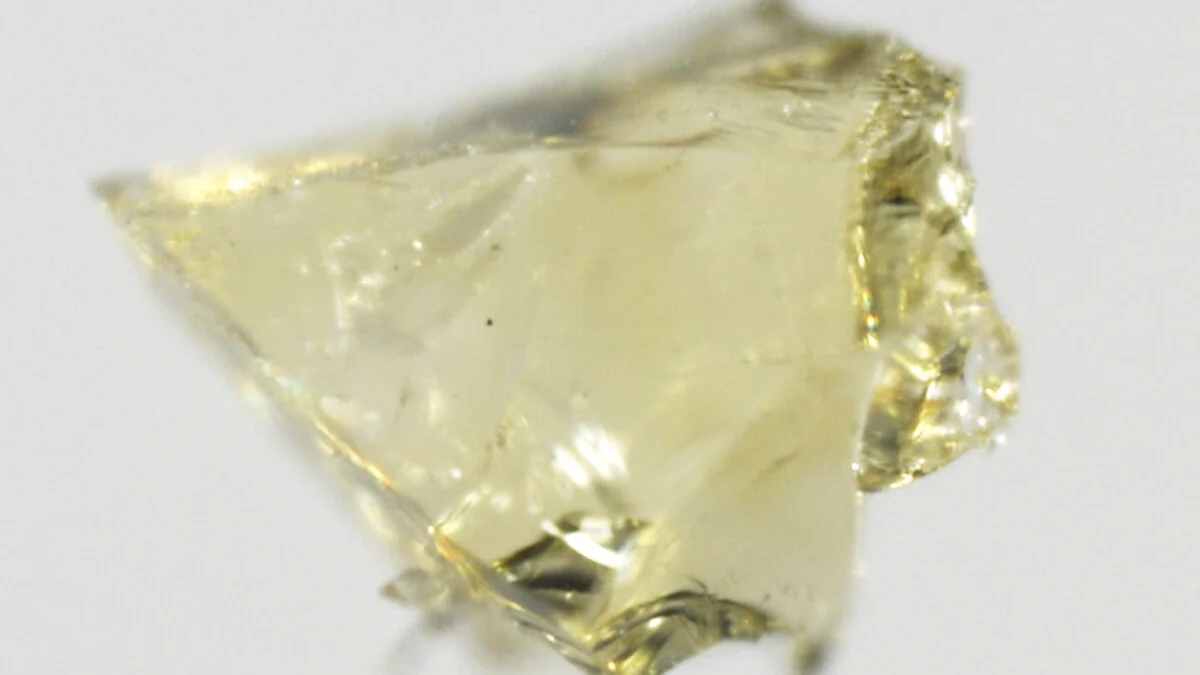
Scientists have adapted a chemistry technique used in traditional glassmaking to improve a futuristic material known as metal-organic framework (MOF) glass. These materials are made from metal atoms connected by organic molecules and are valued for their ability to trap gases such as carbon dioxide and hydrogen, and even capture water.
The international research team, which included scientists from TU Dortmund and the University of Birmingham, reported the findings in Nature Chemistry on May 4. Their work shows that MOF glasses can be adjusted and engineered using methods similar to those long used for conventional glass.
Researchers found that introducing small chemical compounds containing sodium or lithium changes both the structure and behavior of the material. The additives lower the temperature at which the glass softens and make it flow more easily when heated, which could simplify manufacturing.
The discovery creates a new framework for designing customized MOF glasses for advanced technologies. Potential applications include gas separation, chemical storage, advanced coatings, and clean energy systems.
Dr. Dominik Kubicki from the University of Birmingham said: "Glass has been part of human civilization for millennia. From ancient Mesopotamia to modern fiber-optic cables, small amounts of chemical modifiers make it easier to process glass and change its functional properties.