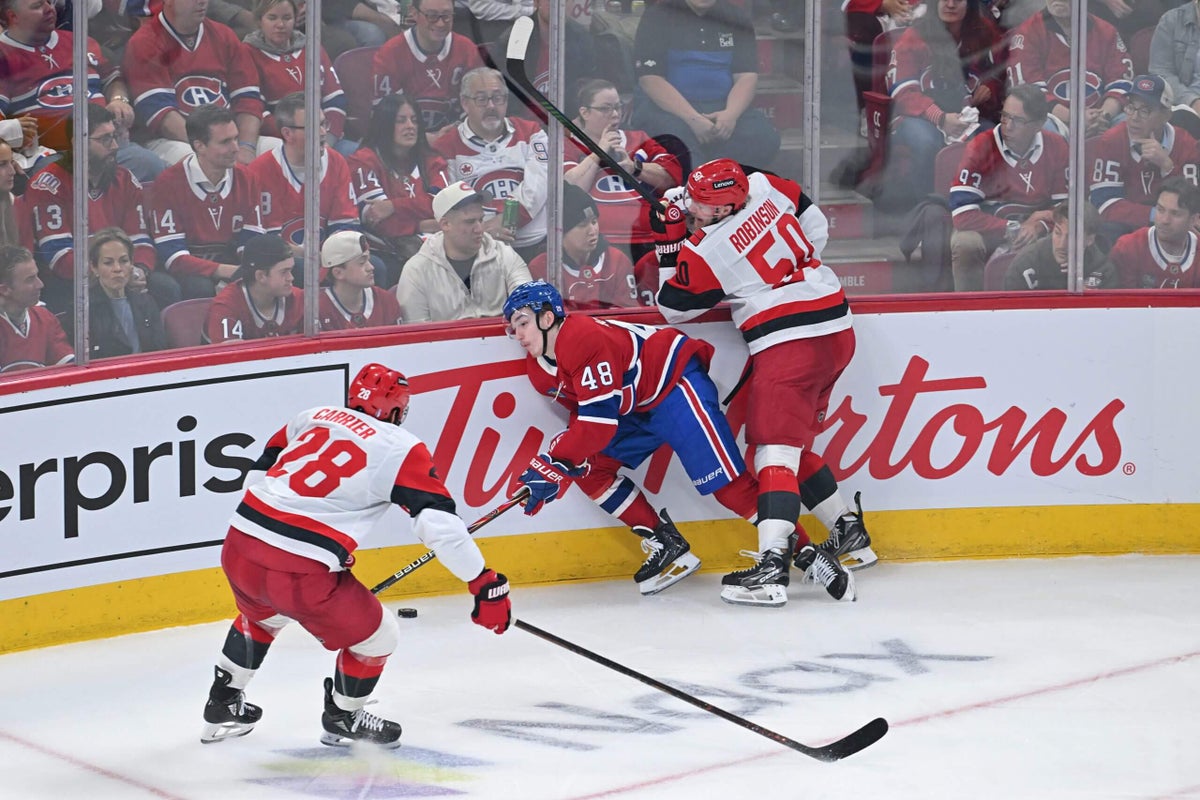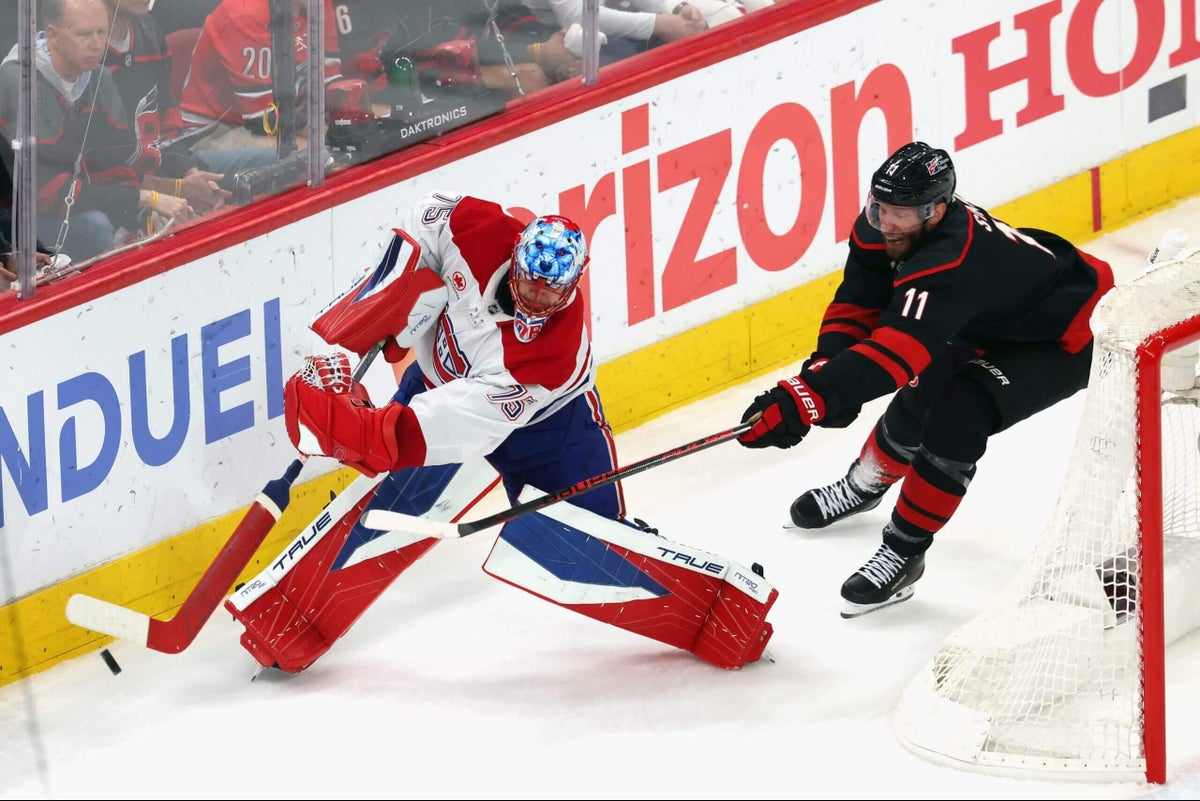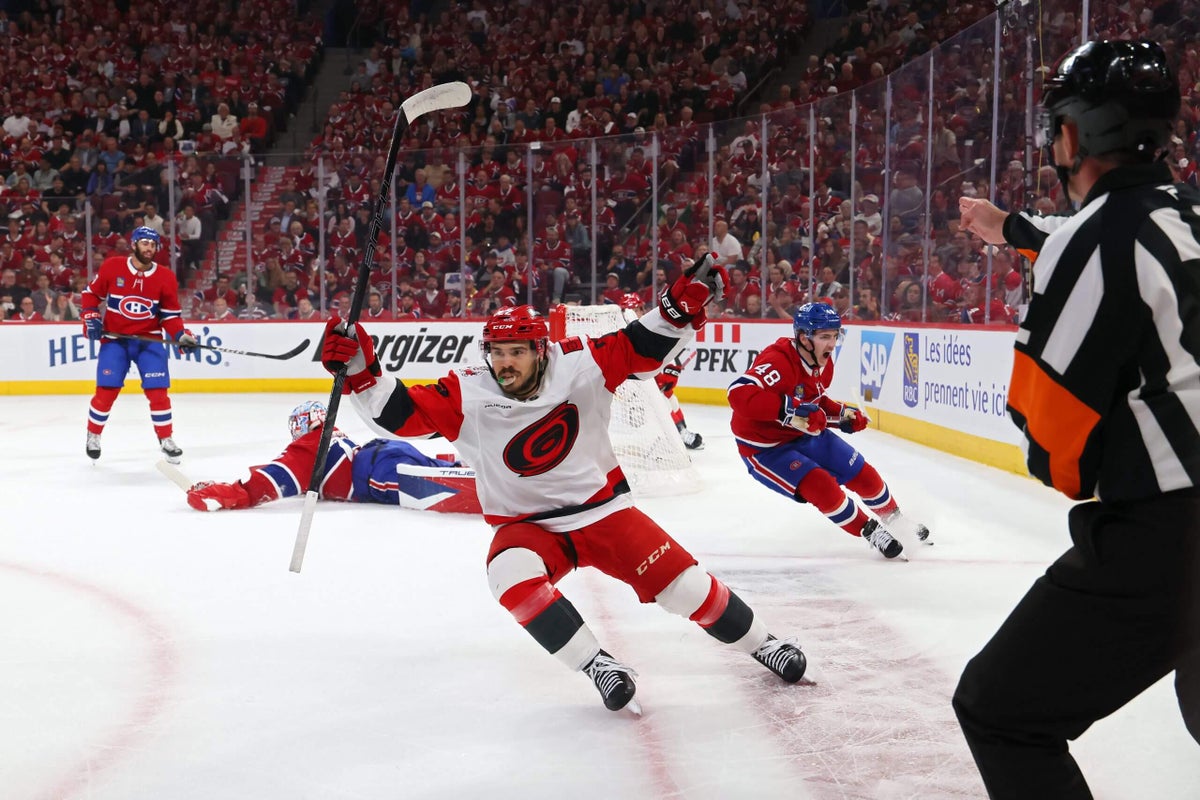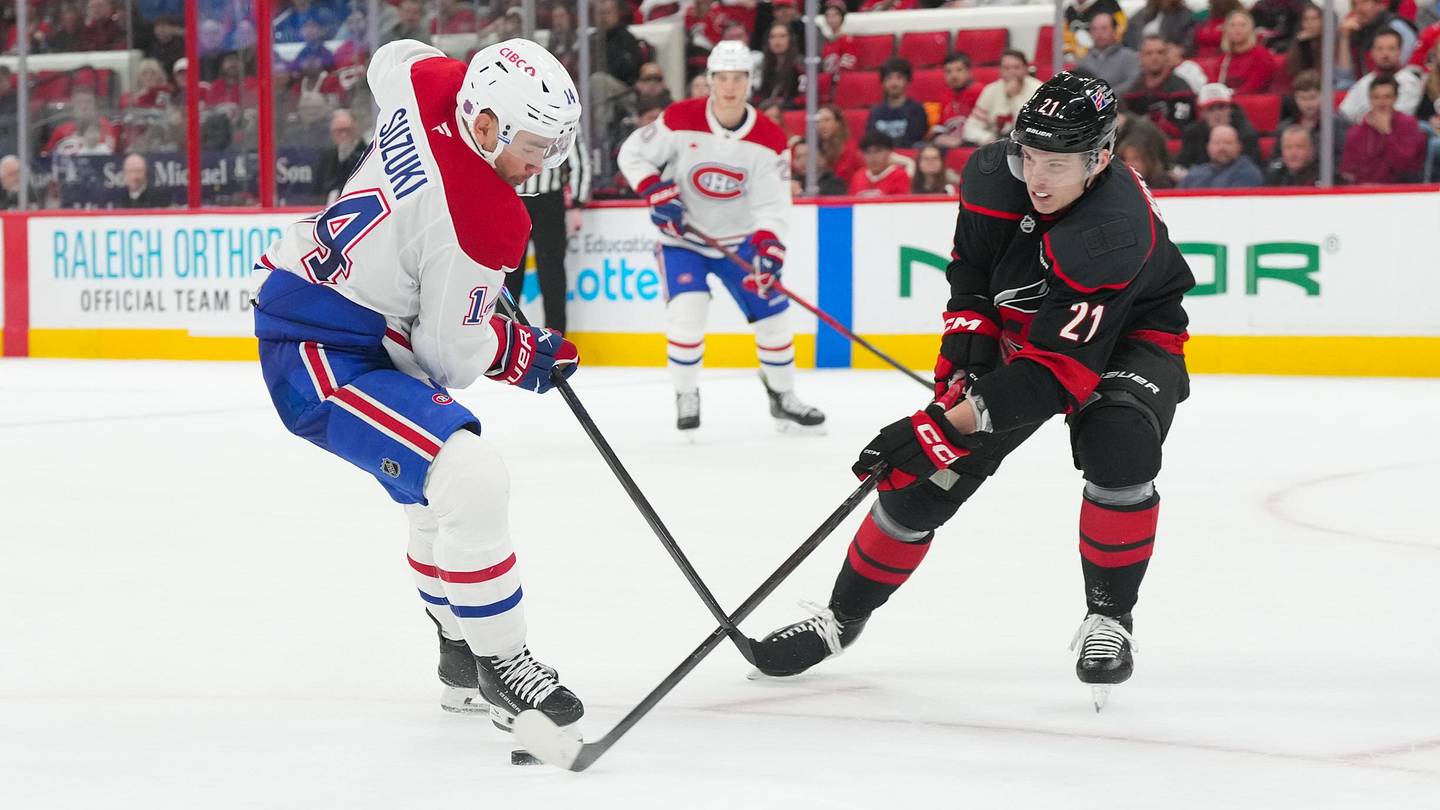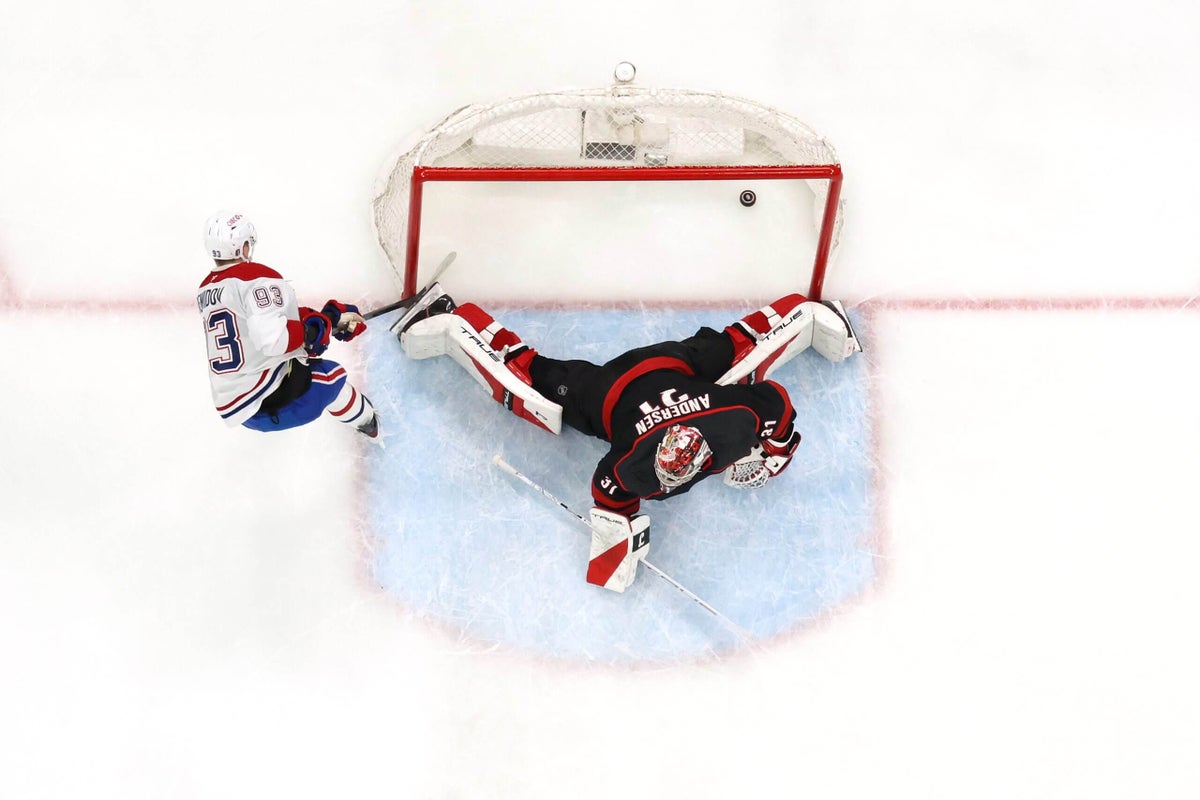
RALEIGH, N.C. — It’s highly possible, even plausible, that what we witnessed in the first 11 minutes and 32 seconds of the Eastern Conference final was all about a long layoff for one team and a nonexistent one for the other.The Carolina Hurricanes, the favorite in this series, certainly seemed to look more Hurricane-like from that early inflection point on, controlling play and using their high-pressure forecheck to make things more uncomfortable for the Montreal Canadiens. But then again, even in those moments of control, it never felt like the sustained territorial dominance we frequently saw against the Ottawa Senators and Philadelphia Flyers as the Hurricanes swept through the first two rounds.And the young Habs were still able to find ways to break through, as evidenced by Juraj Slafkovský’s scoring on yet another Montreal breakaway seven minutes into the third period to essentially salt the game away at 5-2.Overall, what Montreal managed to introduce in its 6-2 win in Game 1 was some early seeds of doubt in a veteran Carolina team that has been so self-assured and unflappable all season. The Hurricanes seemed to come away with a newfound understanding of just how slippery this opponent could be, as they found gaping holes in Carolina’s supposedly stifling defensive shield and made some of their best players (i.e., Jaccob Slavin) look uncharacteristically horrible.“They have the ability that if you give them a little room — it’s over,” Hurricanes coach Rod Brind’Amour lamented after the game. “That’s what happened tonight.”“There wasn’t enough respect for them, and they played a great game,” Hurricanes captain Jordan Staal said. “We just weren’t really aware of them sneaking in behind us. It’s a different style (than other teams we’ve faced) and different pace. (But) not necessarily the pace, more just the awareness (of where they are), really. I don’t know how many breakaways we gave up right off the bat. We’ve got to find ways to obviously defend better and give them nothing, be hard on them … They’ve got some talent.”At least some of that “sneaking” was planned on Montreal’s part. The Canadiens had just the two off days — compared with an absurd, record-setting 11 for Carolina — between Monday’s elative Game 7 overtime win over the Buffalo Sabres and the start of this round. But what they were able to use was the advance knowledge that if they moved on, it would be the well-rested Hurricanes sitting there waiting for them.Habs coach Martin St. Louis explained how they deployed player development consultant Alex Burrows on the Carolina scouting mission as Round 2 wore on. They then attempted to be very targeted and strategic in what information they gave their players about the Hurricanes — a team they beat three times during the regular season — the past two days.They knew Carolina would be a unique challenge from the teams they had already faced, given their tendency to overwhelm opponents, so they primarily focused on how to counter that pressure.“We knew for a long time that if we got through Buffalo, that we were playing Carolina,” St. Louis said. “Obviously, our analytics people (worked on that challenge), but Alex Burrows does a lot of that grunt work for us. He worked hard while we were trying to close a series against Buffalo. You’ve got to be careful in giving so much information to players in such a short amount of time. You’ve got to pick a couple of things and try to address that, and that’s what we did.”According to Canadiens center Jake Evans, their primary goal was to attempt to disrupt the Hurricanes forecheck and not allow them to control the offensive zone and dictate play, which was especially evident in those fraught first 11 minutes and change.“Usually when you come here (to Raleigh, N.C.) … they always start strong,” Evans said. “And they play a really hard style. For us, it was just keeping that momentum going. … The execution was great. That was why we won. They’re known as a hard team to play, but it’s their forecheck. They’re always connected. And if you can somehow break that down, it’s a large part of their success.”When then asked by one reporter how the Canadiens accomplished that to open Game 1 so convincingly, Evans slyly offered: “Oh, I can’t tell you that.”“It really does just take a high level of execution,” he added. “And having some poise with it. It’s obviously a tough building and a tough team to play, but you have to want the puck and want to make a play with it.”“Tampa and Buffalo play way different than them,” Canadiens teammate Nick Suzuki added, referencing their first two opponents this postseason. “Buffalo and Tampa like to clog the neutral zone a lot, and these guys are coming and they play pretty much exactly like us. So you can create a lot more. I think that played into our hands a little bit tonight.”Even with Carolina’s second-period push, Montreal was the team that created more big plays in Game 1, and many of them originated with some of those neutral-zone counters. They piled up 10 high-danger chances in the first period en route to that early 4-1 lead and then simply weathered the Hurricanes’ shot-attempt storm the rest of the way. A lot of what Carolina generated in the game’s second half was from distance, too, including a dull third period when they had 18 shot attempts but zero high-danger chances.With young Canadiens netminder Jakub Dobeš playing as well as he has and Montreal throwing bodies in shooting lanes again and again — the Hurricanes had 32 attempts blocked and missed the net another 23 times — that wasn’t going to be good enough to overcome even a two-goal deficit.Especially when they were still constantly having to look over their shoulder to ensure the Canadiens’ counterattack wasn’t about to bury them again.“They blocked a lot of shots,” Brind’Amour said. “You’ve got to give their team a lot of credit. They did what they had to do. So obviously that’s a big part of it, but I didn’t think we made it very difficult for them. So that’s something that has to change.”It’s possible the Canadiens’ revised game plan for this series was merely a one-off success — a case of catching a rusty team off guard, making them pay for half a period and then holding on. But the results were convincing enough that it sets up an intriguing Game 2 in which the pressure will be on the veteran Hurricanes to prove they aren’t about to suffer yet another third-round letdown after a monster 113-point regular season.For their part, Montreal’s veterans said they expect a much different look right from the start Saturday. If it wasn’t just the rust and there was an element of surprise at play, that is now gone.“Probably a start (of the game) like they had in the second period,” Evans said of what they’re going to face in Game 2. “They work really hard. They’re a really good team.”And the Hurricanes are. But they’re also up against a better opponent than they’ve seen so far this spring — one with an excellent coaching staff, a few new tricks to throw at them and a confidence that is building by the game.
How did the Canadiens’ game plan catch the Hurricanes so off guard in Game 1?
Whatever the Hurricanes were expecting, it wasn't four goals in their own net in just 11 minutes and 32 seconds.
1,218 words~6 min read