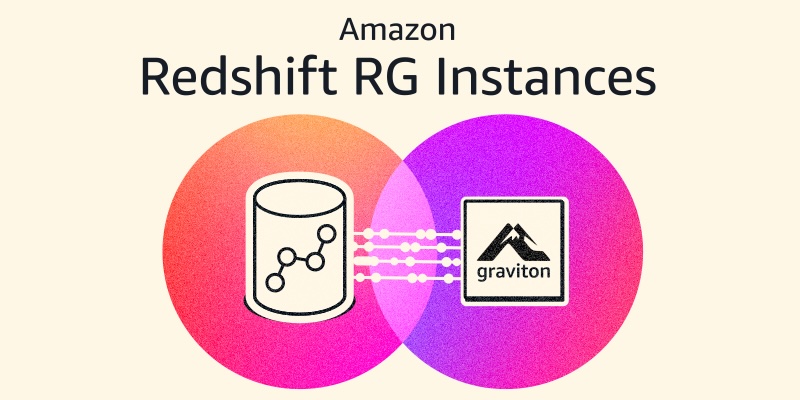
AWS News Blog
Since 2013, Amazon Redshift has given the full power of a data warehouse in the cloud, at a fraction of the on-premises cost. Every architectural generation—from dense compute to Amazon RA3 instances, from provisioned to Amazon Redshift Serverless—has made each query cheaper, faster, and more efficient than the last.
For over a decade, as data volumes have grown and analytics requirements have evolved, organizations increasingly leverage both data warehouse tables for structured, frequently-accessed data and data lakes for cost-effective storage of diverse datasets. Add AI agents to the mix and they query your data warehouse at a scale that dwarfs typical human usage, leading to spiraling operational costs.
Amazon Redshift has doubled down on its core strengths to meet the demands of any workload — whether driven by humans or AI agents. For example, in March 2026, Amazon Redshift improved the performance of business intelligence (BI) dashboards and ETL workloads by speeding up new queries by up to 7 times. This significantly improves the response times of low-latency SQL queries, such as those used in near-real-time analytics applications, BI dashboards, ETL pipelines, and autonomous, goal-seeking AI agents.


 aws.amazon.com