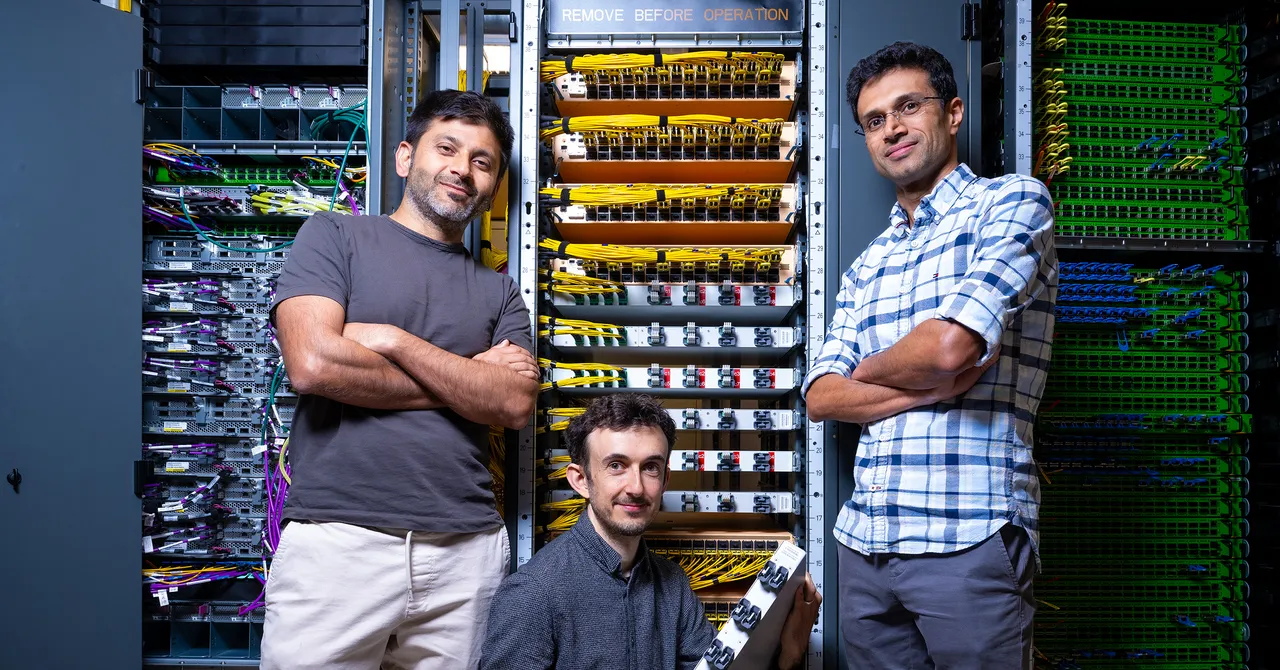
Amazon Web Services (AWS) is reshaping its underlying network foundation, a move that could redefine how enterprises approach cloud technology, costs, and operational efficiency. As enterprises contemplate next-generation workloads, from generative AI to globally distributed applications, AWS’s end-to-end custom networking stack is a new calculus for cloud economics, agility, and security.
Let’s take a deeper look at what AWS has announced, why it matters, and how smart enterprise technologists should plan to navigate the landscape of opportunities.
Let’s begin with AWS’s new networking philosophy, which focuses on making network connectivity nearly invisible to users and administrators alike. For AWS, networking needs to be as reliable as flipping a switch—it simply works, and no one notices unless it fails. To meet this lofty goal, AWS spent the past decade moving away from traditional, proprietary network hardware and has built a unified, custom stack that spans everything from silicon to software.
At the heart of this innovation is the decision to use a single switching application-specific integrated circuit (ASIC)—the silicon “brain” at the center of every network switch—across its aggregation, core, and border networks. Rather than the old industry practice of mixing and matching hardware from various vendors (each with its own firmware, bugs, and scaling challenges), AWS has network engineering and operations teams focus on a single, consistent foundation. This not only simplifies procurement and troubleshooting but also enables scalable, reproducible deployments that surpass the speed of conventional enterprise or cloud architectures.


 aboutamazon.com