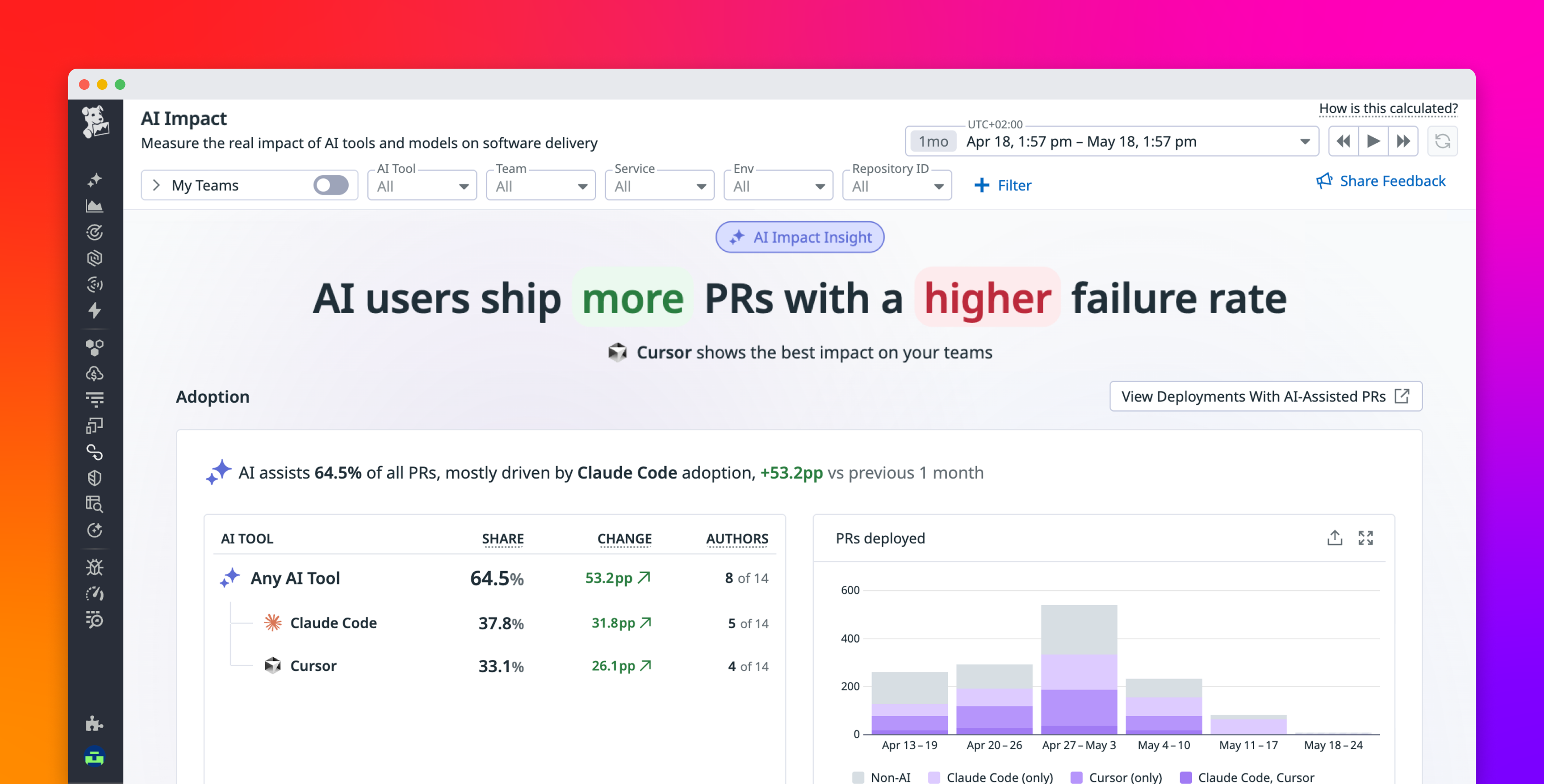
Platform engineering teams have access to hundreds of metrics, yet over 40% of platform initiatives cannot demonstrate measurable value within the first year. Teams that cannot quantify their impact fail to obtain executive sponsorship, risk being defunded, and ultimately, face deprecation. To accurately calculate a platform’s ROI, platform engineering teams need to differentiate between signals that measure platform effectiveness and those that should be used solely for investigative purposes.
In this post, we use a tiering system to categorize metrics and explain how to contextualize them. We clarify which metrics demonstrate the platform’s value, reveal pain points, or aid in investigations. We also describe common pitfalls to avoid when tracking and analyzing these metrics.
A hierarchy for understanding platform metrics
Whether you’re using DORA’s software delivery metrics, SPACE, DevEx, HEART, or the DX Core 4 framework, concrete recommendations on the types of platform metrics to collect and how to interpret them can guide your platform investments. Platform metrics can be organized into a three-tier hierarchy: outcomes, drivers, and diagnostics. Outcome metrics appear at the top of the hierarchy, providing a high-level view of overall platform health. Driver metrics explain the conditions that cause the outcomes, and diagnostic metrics help you trace issues to their source. The hierarchy reflects a sequence of dependency, where each tier relies on the one above. Without outcome metrics, driver metrics lack organizational context; without driver metrics, diagnostic metrics lack investigative direction. When combined, the metrics in the hierarchy enable you to make informed decisions and targeted interventions.