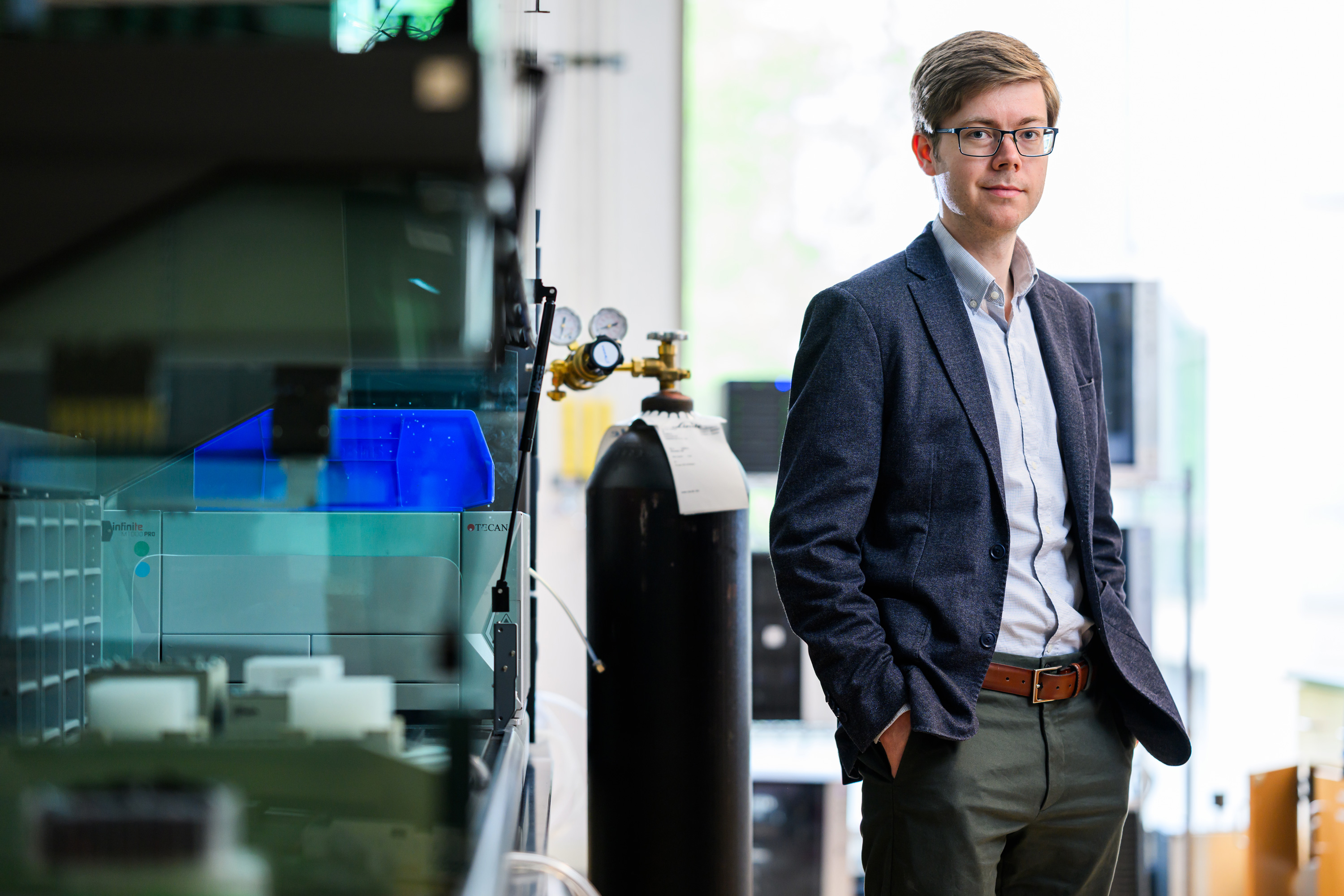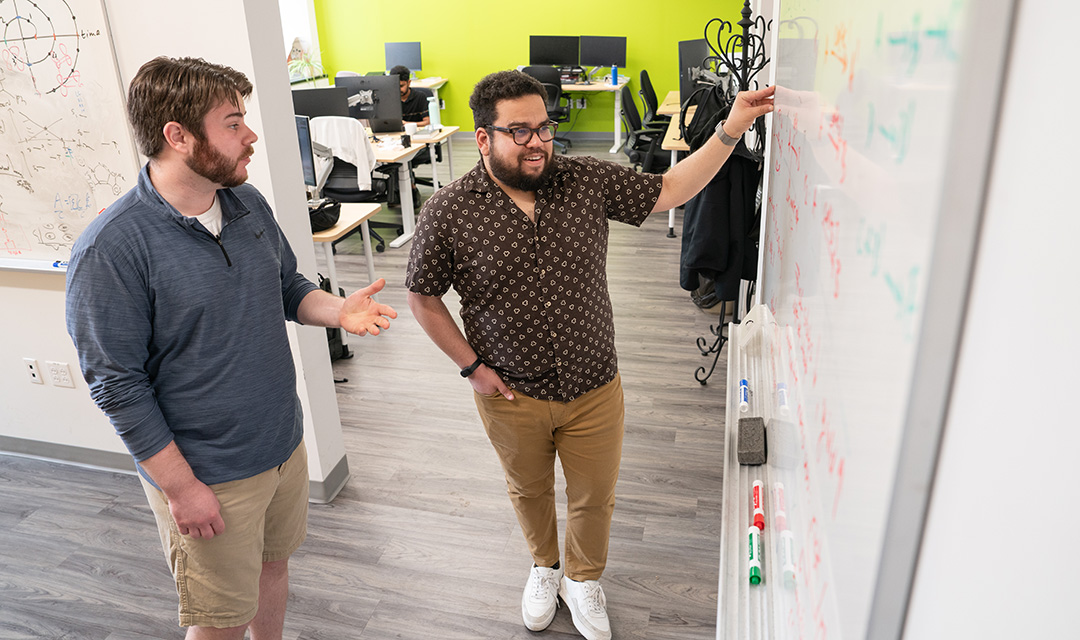
“There is a common misconception that using large language models in research is like asking an oracle for an answer. The reality is that nothing works like that,” says Gabe Gomes.
Gomes, assistant professor of chemical engineering and chemistry, does believe that large language models (LLMs) can transform chemical research, if they are adopted thoughtfully. In Nature Computational Science, Gomes and his coauthors offer a roadmap toward more strategic implementations of LLMs.
The current state of chemical research is generally separated into computer modeling and laboratory experiments. Scientists might spend months using computers to predict how a molecule can be made and will behave. Other scientists might spend months in the lab actually making and testing that molecule. The two approaches are not well-integrated.
“This is where LLMs become exciting,” says Robert MacKnight, a Ph.D. student in chemical engineering. LLMs have the potential to remove the silos between computer predictions and real-world testing, ultimately accelerating discovery.
In 2023, Gomes and his research group published Coscientist, an LLM-based system that can autonomously plan, design, and execute complex scientific experiments. As LLMs are increasingly implemented in scientific research, Gomes sees the role of the researcher shifting toward higher-level thinking: defining research questions, interpreting results in broader scientific contexts, and making creative leaps that artificial intelligence (AI) can’t make. Rather than replace human creativity and intuition, AI systems can amplify our ability to explore chemical space systematically.