A novel chemoselective strategy explores one of biology’s most elusive processes, how cells rebuild the world around them. Developed by Carnegie Mellon University and University of Wisconsin–Madison researchers, the method introduces a new way to tag, enrich, and analyze cells’ newly synthesized extracellular matrix proteins with unprecedented precision.
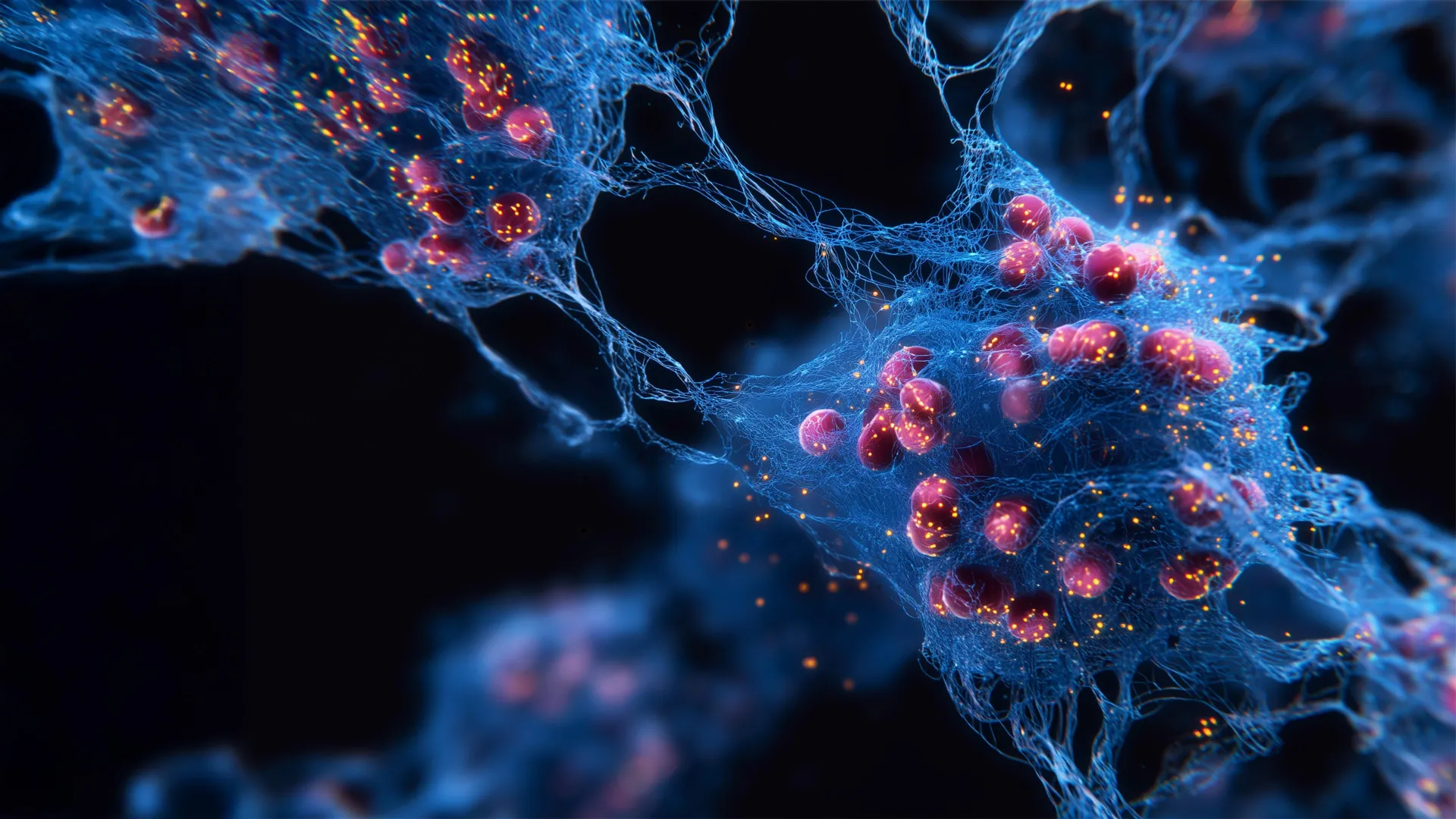
The extracellular matrix (ECM) is the intricate web of proteins surrounding nearly every cell in the body. It provides structure, transmits signals, and helps determine how tissues form and function. In both natural and engineered tissues, cells are constantly modifying this matrix by digesting old components and depositing new ones.
Tracking this activity has been notoriously difficult. Conventional methods struggle to distinguish between the vast number of existing matrix proteins and the much rarer, newly made ones.
“When you’re engineering tissues, you’re always combining cells and materials,” explained Xi (Charlie) Ren, associate professor of biomedical engineering at Carnegie Mellon. “We know materials influence how cells behave, but we can also ask the reverse: how do cells respond to and modify their materials? That interaction tells us how the cells are feeling and what they’re going to do, whether that’s repair tissue or, in this case, progress tumor growth.”