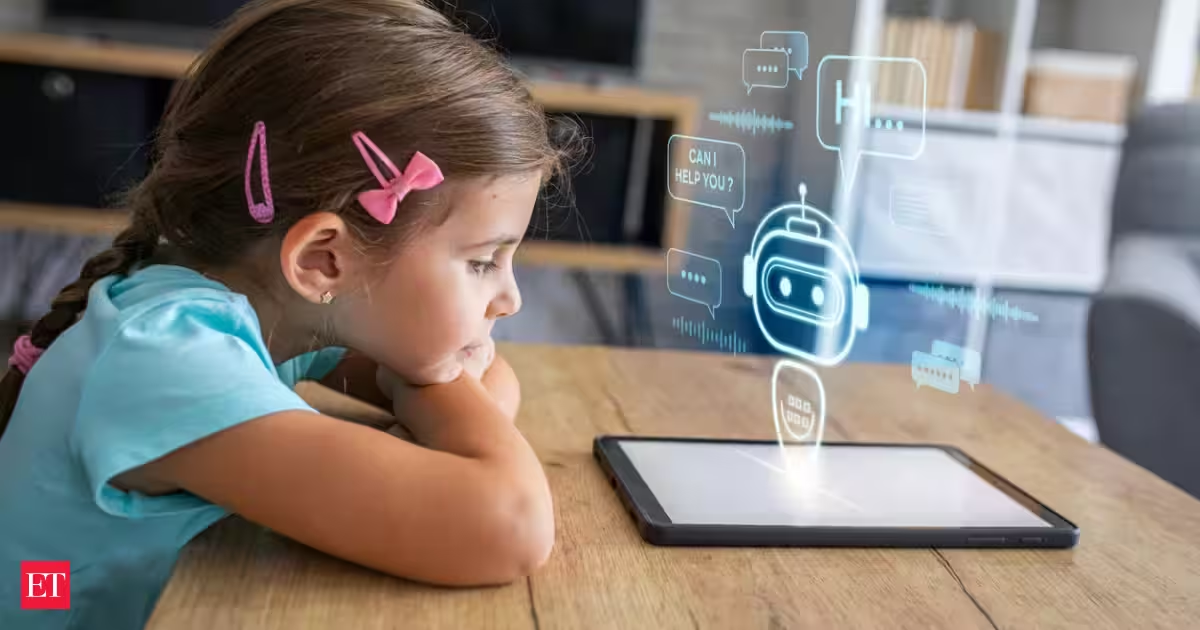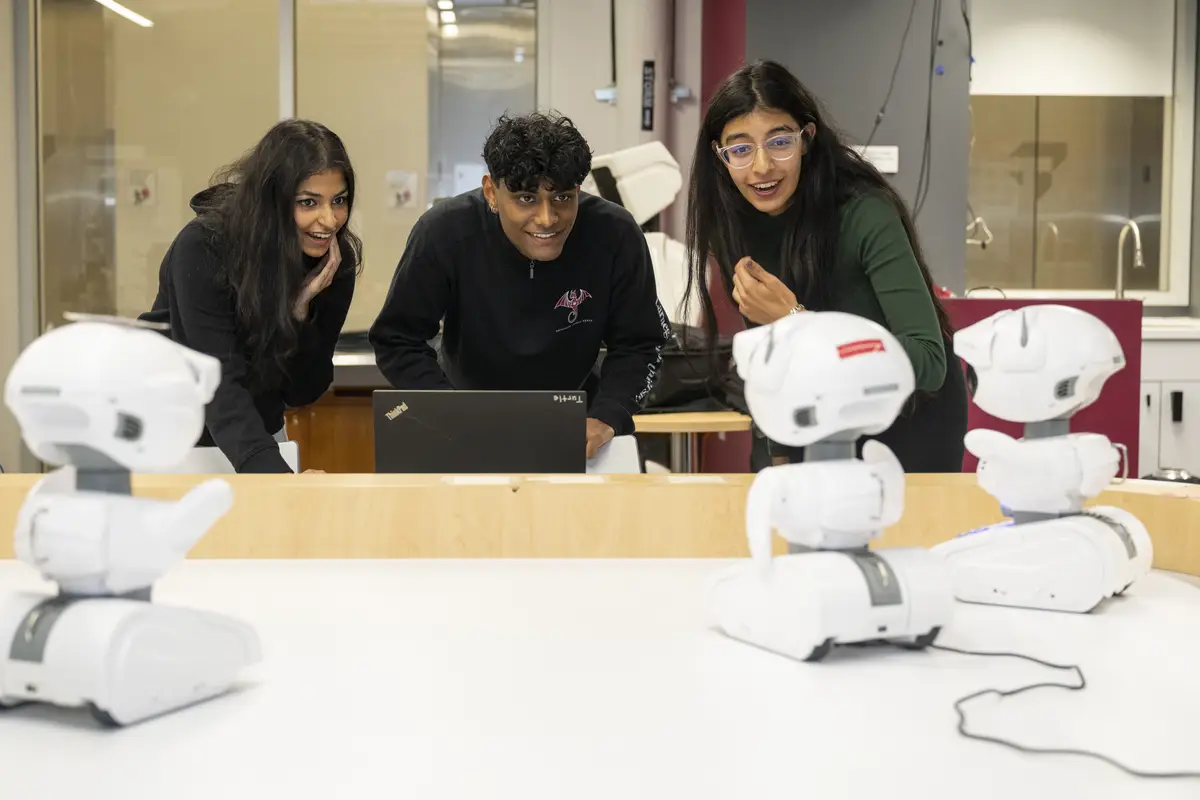
In Chris McComb’s Mechanics II: 3D Design course, artificial intelligence isn’t the expert or a shortcut to producing perfectly polished designs. Instead, AI plays a far more interesting role. It is forcing students to think more critically and, in the process, become the experts themselves.
“In education, a lot of people are finding ways to turn AI into a tutor,” said McComb, associate professor of mechanical engineering and director of the Human + AI Design Initiative. “But it’s not capable enough to handle the nuance of specialized engineering topics yet. So, instead of asking AI to teach my students, I asked my students to teach AI.”
Building on the “see one, do one, teach one” learning paradigm—which has demonstrated that teaching material to others enhances information processing, performance, and motivation—McComb and MIIPS student Giovannia Natasha prompted Microsoft CoPilot to function as a tutee in McComb’s14-week mechanical engineering course. Throughout the semester, students interacted with the genAI tool on eight homework assignments, using pre-engineered prompts that instructed the AI to make specific mistakes and to act like a novice student. Each prompt was given to the students in Indonesian so that they were unaware of what mistakes to lookout for.