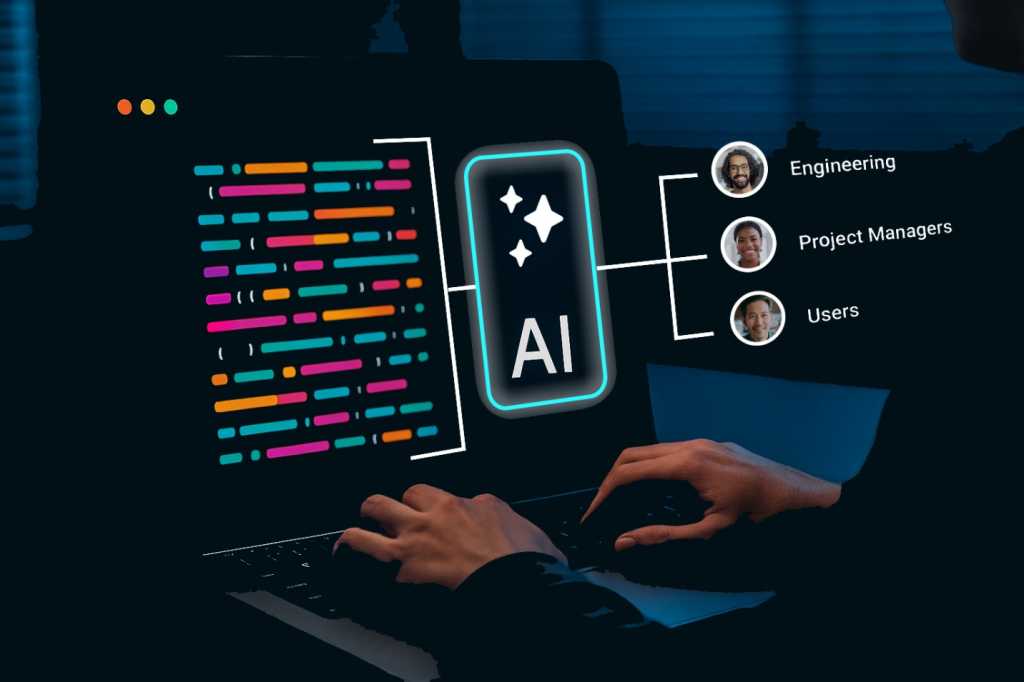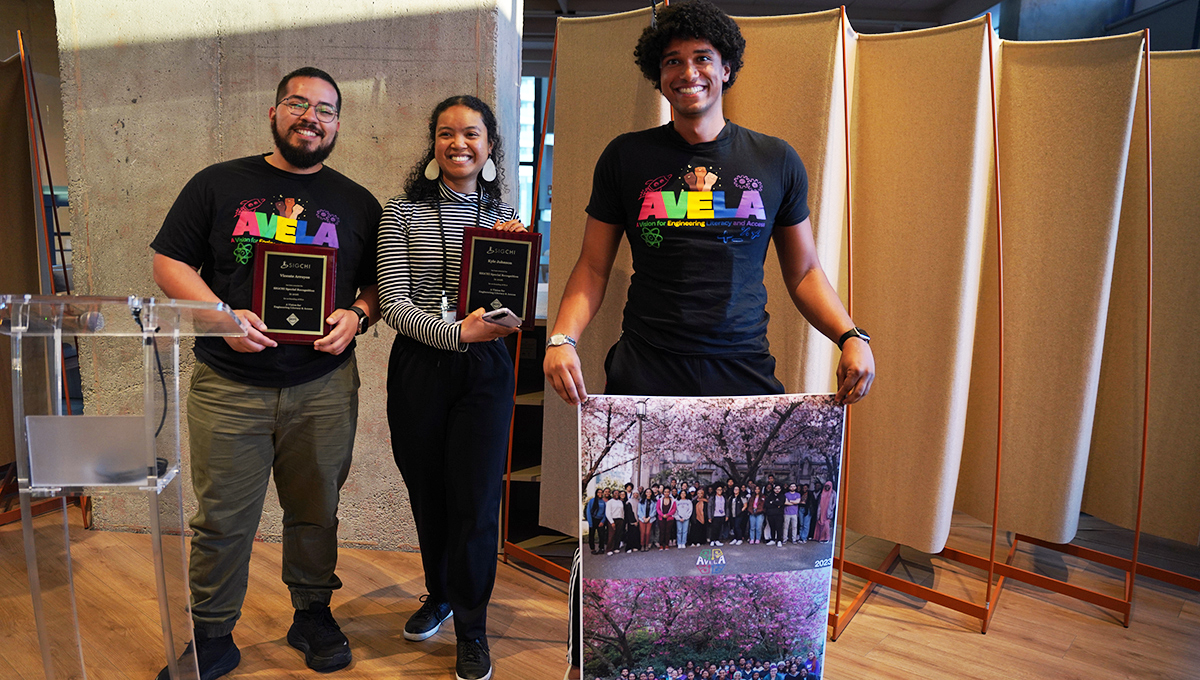
At the recent ACM CHI Conference on Human Factors in Computing Systems (CHI 2026), Allen School researchers brought home multiple accolades for their innovative work in human-computer interaction (HCI) and artificial intelligence. Their projects ranged from interactive systems that allow users to collaborate with AI agents with more flexibility, to an AI-based tool that helps screen-reader users make sense of geovisualizations, to a method for customizing LLM outputs based on user objectives — and much more.
Best Paper Award: Cocoa
As AI agents take on more complex tasks that require sophisticated planning and execution, such as writing research reviews or analyzing complex documents, there is a need for more users to work together with AI to tackle these problems. However, existing agentic research tools only focus on supporting human-AI collaboration either before or after task execution.
A team of researchers including Allen School professor Amy X. Zhang introduced Cocoa, an interactive system that enables scientific researchers to co-plan and co-execute alongside AI agents in a document editor to tackle open questions and tasks within their research projects. With Cocoa, users and AI agents can jointly complete plan steps and then re-execute steps as desired — similar to executing code cells in a computational notebook.