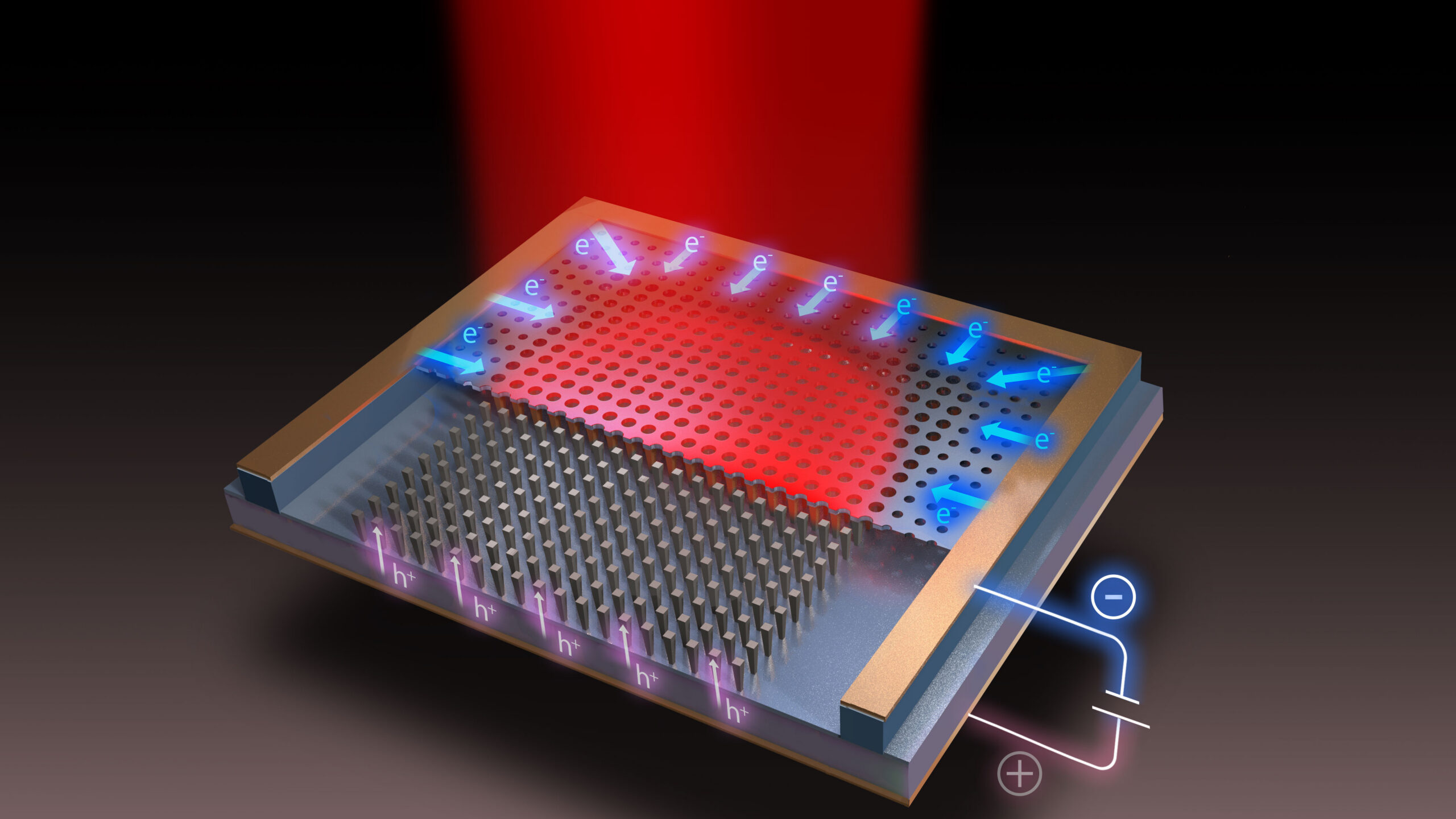
A team of researchers from UC Berkeley’s Department of Electrical Engineering and Computer Sciences (EECS) and Lawrence Berkeley National Laboratory’s Materials Sciences Division has made a significant leap toward building compact and scalable quantum networks. The work, published in Optica, details a new chip-based system that can control multiple quantum light sources simultaneously using a single optical bus. This innovation, based on a novel silicon photonics platform, paves the way for efficient, long-distance distribution of quantum information.
A Novel Architecture for On-Chip Quantum Control
The paper, titled “Multiplexed Color Centers in a Silicon Photonic Cavity Array,” was authored by Lukasz Komza, Xueyue Zhang, Hanbin Song, Yu-Lung Tang, Xin Wei, and Professor Alp Sipahigil from UC Berkeley EECS and Berkeley Lab’s Materials Sciences Division. The team’s innovation lies in its unique architecture: a silicon-based photonic platform that combines arrays of microscopic cavities with embedded “T centers”—light-emitting defects that are ideal for quantum communication because they emit photons at a wavelength compatible with standard fiber-optic cables.
Multiplexing: A Key to Parallel Operations