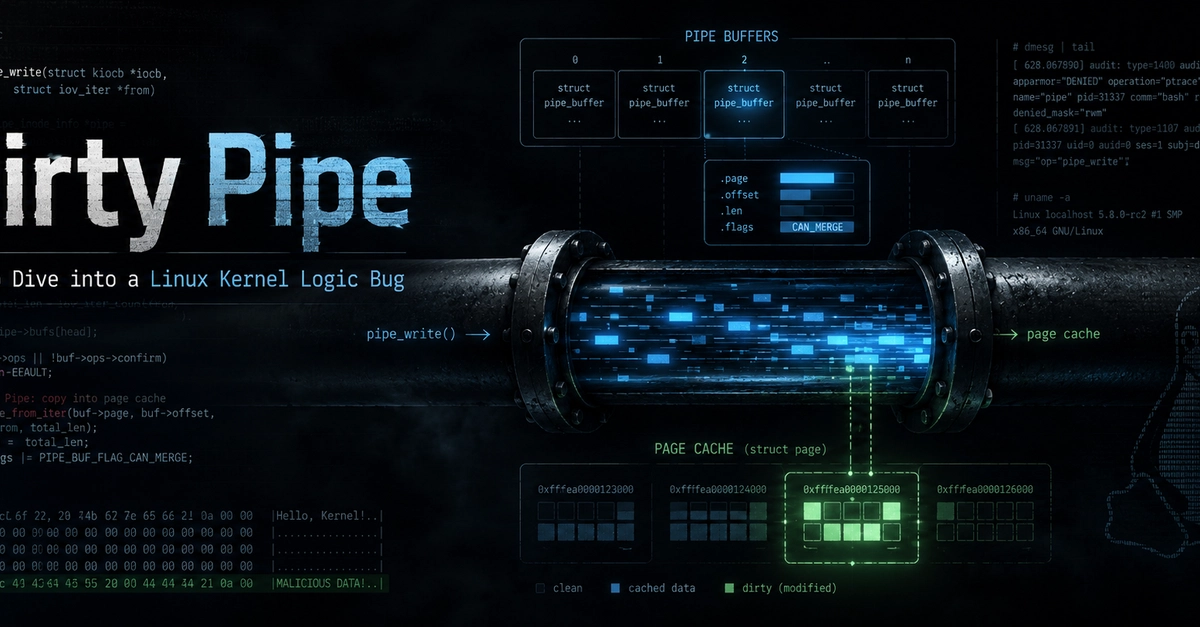
As developers, we often think of kernel exploits as highly complex assembly-level wizardry, heap grooming, or race-condition battles. But recently, I decided to sit down, pull up the Linux kernel source code, and trace the infamous Dirty Pipe vulnerability, CVE-2022-0847, line by line.
What I found was mind-blowing: a simple, uninitialized struct member in the core memory-management path allowed an unprivileged local user to write into read-only files through the Page Cache.
No race conditions.
No classic memory corruption.
No heap spraying.