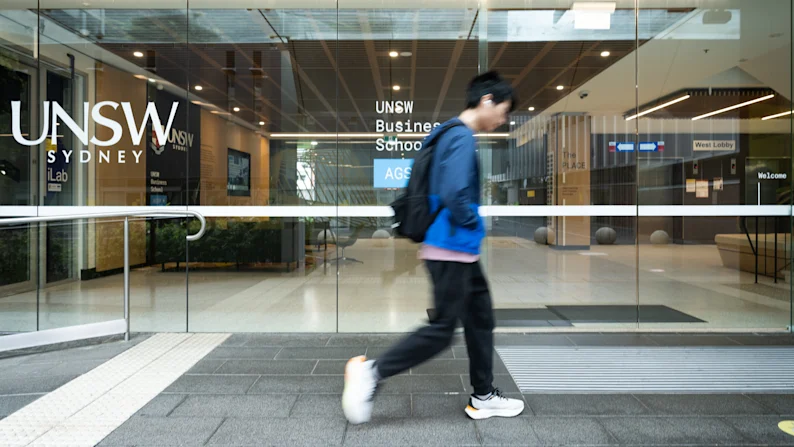
EditorialMay 22, 2026 — 4:33pmForeign students proved a godsend when Canberra turned away from adequately funding universities, but exporting education may have peaked as a ready source of income and hard decisions now lie ahead for our halls of knowledge and the Albanese government.The University of NSW and the University of Sydney illustrate how our best and brightest institutions have become dependent on exporting education: they each reported revenue of $1.7 billion from international students, gobbling up 68 per cent of the state’s $5.1 billion haul from foreigners. The Herald’s higher education reporter Sally Rawsthorne also noted nine of NSW’s 10 universities reaped an increase in revenue from international students.The University of NSW has become dependent on exporting education.Louie DouvisJust how long the parents of Beijing and elsewhere can be prevailed upon to pay for the education of their own children and assist Australian families meet the cost of a tertiary degree is open to conjecture: not only are other nations’ universities opening their intake, but foreign student numbers are being conflated with political and community concerns about immigration. The Albanese government has responded by attempting to reduce the intake and refuse visas. Meanwhile, applications from China have fallen about 25 per cent this year.Once, federal governments used to contribute three-quarters or more of the sector’s funding. Now it’s down to about 40 per cent. Canberra has been cutting support since the move to end free university education for Australian students in the 1980s and charging HECS fees was complemented with some fee-paying international students. But federal funds continued to shrink, and with research unable to generate enough income, universities discovered the goose that laid the golden egg and opened the doors so wide to foreign students that the institutions became addicted to the income stream.Under the Coalition’s Job Ready Graduates policy, the cost of humanities degrees soared and universities became more transactional places where scholarship, intellect and academic tradition preserved and passed down to new generations appeared to take second place to vocational degrees to train individuals for the workforce.With tertiary education competing for market share and ratings, universities have taken on the hallmark of a commercial product being sold overseas, so it’s little wonder some no longer feel a sense of ownership of Australian universities.The overseas education industry is worth about $53 billion annually, an export trailing only iron ore, coal and natural gas. Australia was once a desired destination for study, but competition is fierce among the world’s universities.As applications fall, the days of mounting revenues may be over. Having enjoyed decades of significant growth, universities now face restrictions on foreign student numbers, imposing intolerable burdens on their budgets, research and infrastructure. The impact will also be felt across the national economy.If that brought about a recognition of the universities’ importance for Australia’s future, it might be no bad thing. Far better, though, if, before that, the federal government had stepped up and seen where its extreme parsimony is leading our universities, and changed course.Jordan Baker sends an exclusive newsletter to subscribers each week. Sign up to receive her Note from the Editor.The Herald's View – Since the Herald was first published in 1831, the editorial team has believed it important to express a considered view on the issues of the day for readers, always putting the public interest first.From our partners
Foreign students can no longer be relied upon to bankroll our universities
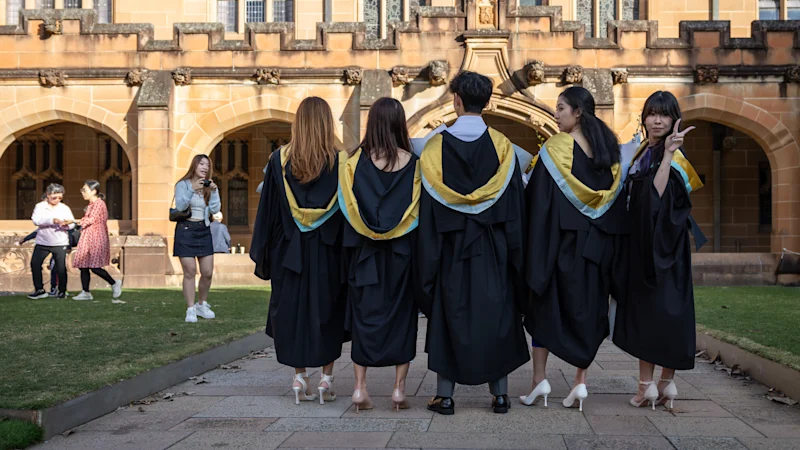
Australia was once a desired destination for study, but competition is fierce among the world’s leading institutions.
555 words~3 min read