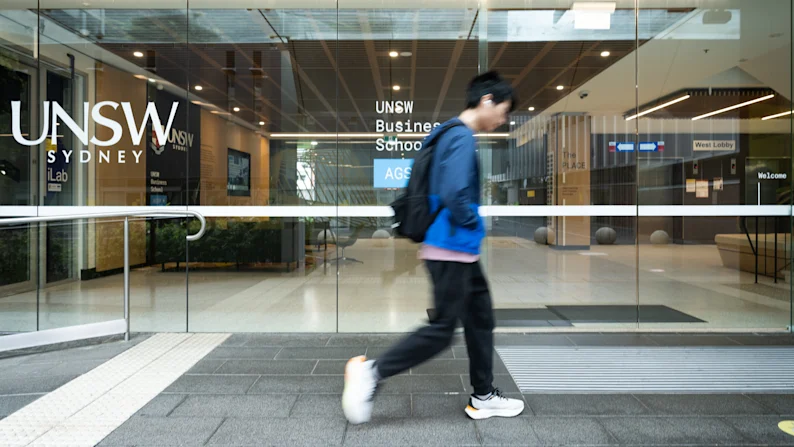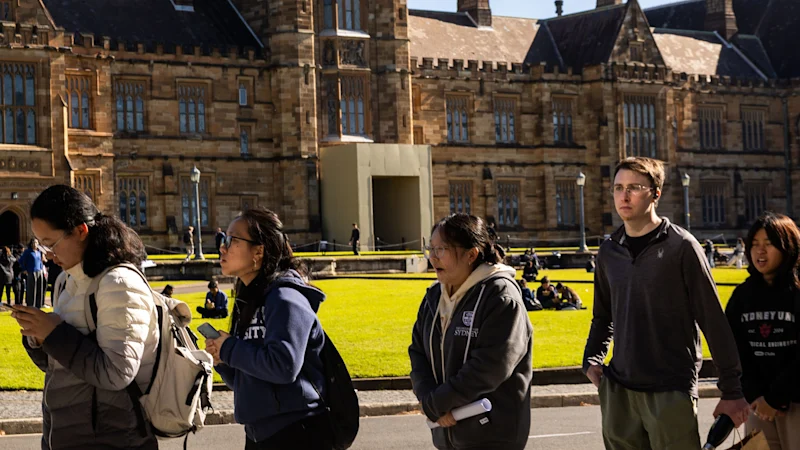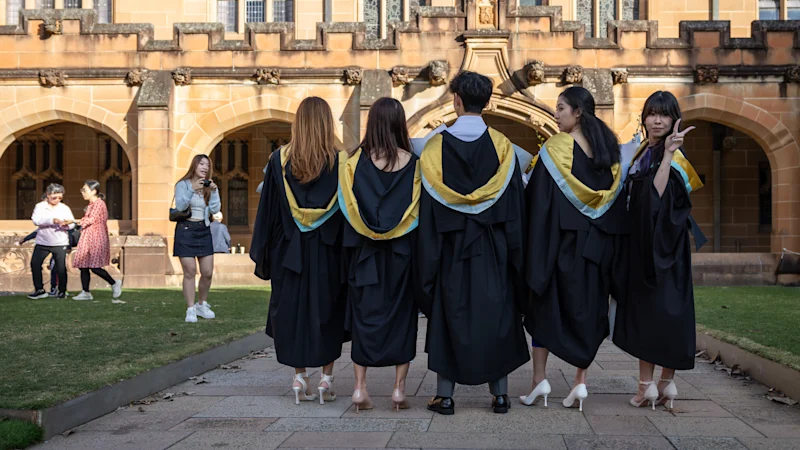
May 22, 2026 — 10:00amThe state’s top two universities have each reported $1.7 billion in revenue from international students, at a time when the federal government is attempting to reduce the number of international students, visa refusals are up and community concern about immigration is growing.The University of NSW and the University of Sydney each reported $1.7 billion in such revenue, together raking in 68 per cent of the state’s $5.1 billion made from international students.The University of Sydney posted a surplus of $194 million in 2025; it is the only NSW university to report a surplus for the past seven years.Louie DouvisNine of NSW’s 10 universities reported an increase in revenue from international students. Annual reports tabled to state parliament on Friday show heavy reliance on international students.The peak body for international students slammed reliance on international student fees, saying it represents an existential threat.“There has been a drift … towards using international tuition as a quasi-tax base,” said Weihong Liang of the International Students Representative Council of Australia.“Erosion of trust poses a lasting reputational risk … to the integrity and legitimacy of the entire NSW higher education sector.”International Education Association of Australia chief executive Phil Honeywood said reliance on international students made universities vulnerable.“Overseas student revenue cross-subsidises domestic student funding shortfalls, research and infrastructure,” he said. “Further restrictions would likely lead to significant budget shortfalls, potentially impacting many domestic student-focused activities.”The University of New England was the only institution to record less overseas student revenue, falling 30 per cent to $20 million last year from $29 million in 2024.While revenue from international students is positive almost across the board, the state’s universities have disparate financial positions. The University of NSW has recorded its biggest-ever surplus of $422 million and the University of Sydney recorded a surplus of $194 million – a significant decrease on last year’s $545 million.“Our results for 2025 reflect the challenging financial environment in which Australian universities are operating, and the ongoing impact of federal government policy, changing international student demand, reduced public funding for research and increasing operating expenses on our bottom line,” said a message to staff at Sydney University.Deficits were recorded for the fourth year running at the University of Technology, Sydney ($54 million), the University of Western Sydney ($133 million), Charles Sturt University ($12 million), University of New England ($21 million) and the University of Wollongong ($17 million).Presiding over these loss-making universities are vice chancellors earning up to $1 million per year.Despite a $100,000 drop in maximum remuneration from last year, the University of Sydney’s Mark Scott remained the state’s best-paid vice chancellor at a salary of $1.2 million.“The vice chancellor’s total remuneration comprises a fixed base salary, superannuation contributions, performance-based incentives, and other [leave] adjustments,” a spokesperson said.Also in the $1 million salary club are UNSW’s Attila Brungs ($1.1 million), Newcastle’s Alex Zelinsky ($1 million), Macquarie’s Bruce Dowton ($1 million), Wollongong’s Max Lu ($1 million) and Southern Cross’ Tyrone Carlin ($1 million).Start the day with a summary of the day’s most important and interesting stories, analysis and insights. Sign up for our Morning Edition newsletter.More:UniversityFor subscribersUniversity Of SydneyCampus NSWFrom our partners
Revealed: How much your university made last year
The state’s tertiary institutions made a total of $5 billion in revenue from international students, but experts are questioning how long this can continue.
521 words~2 min read