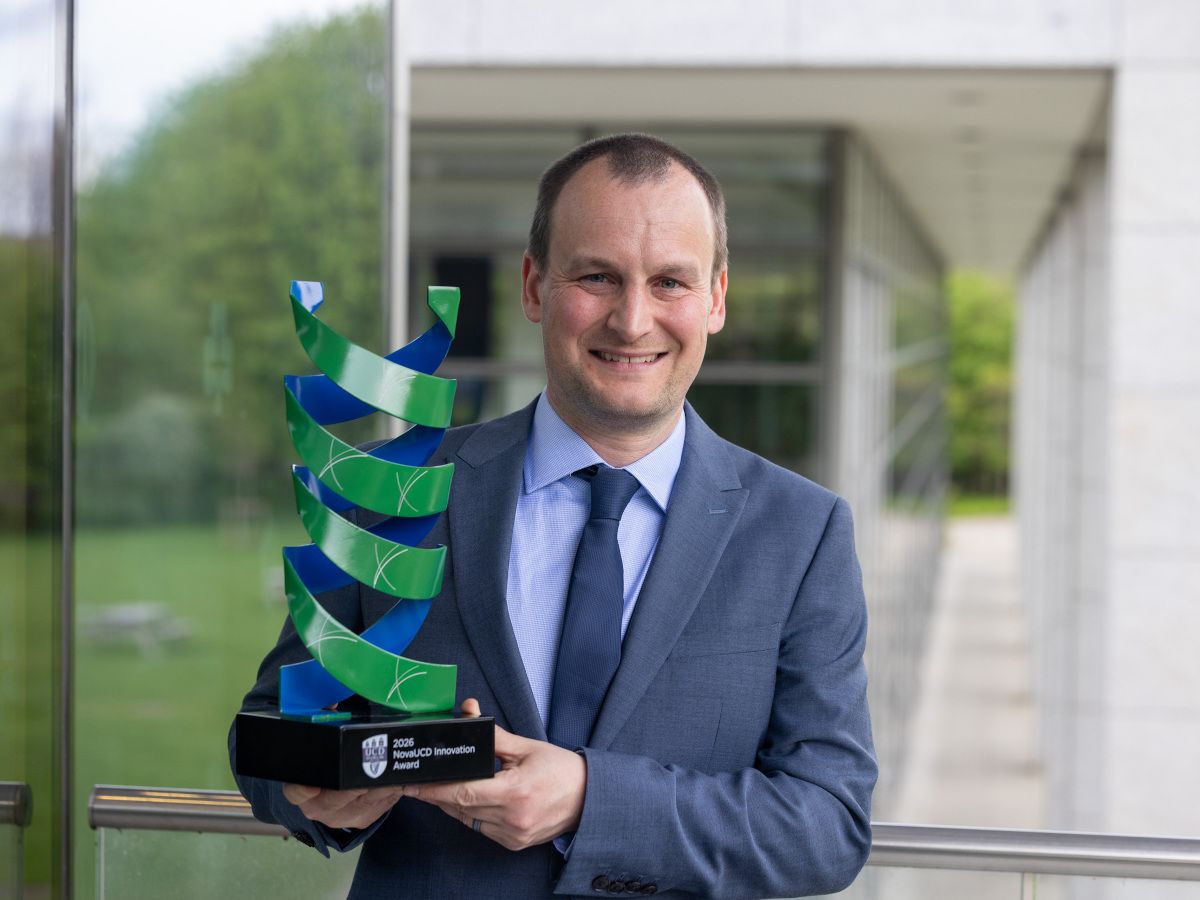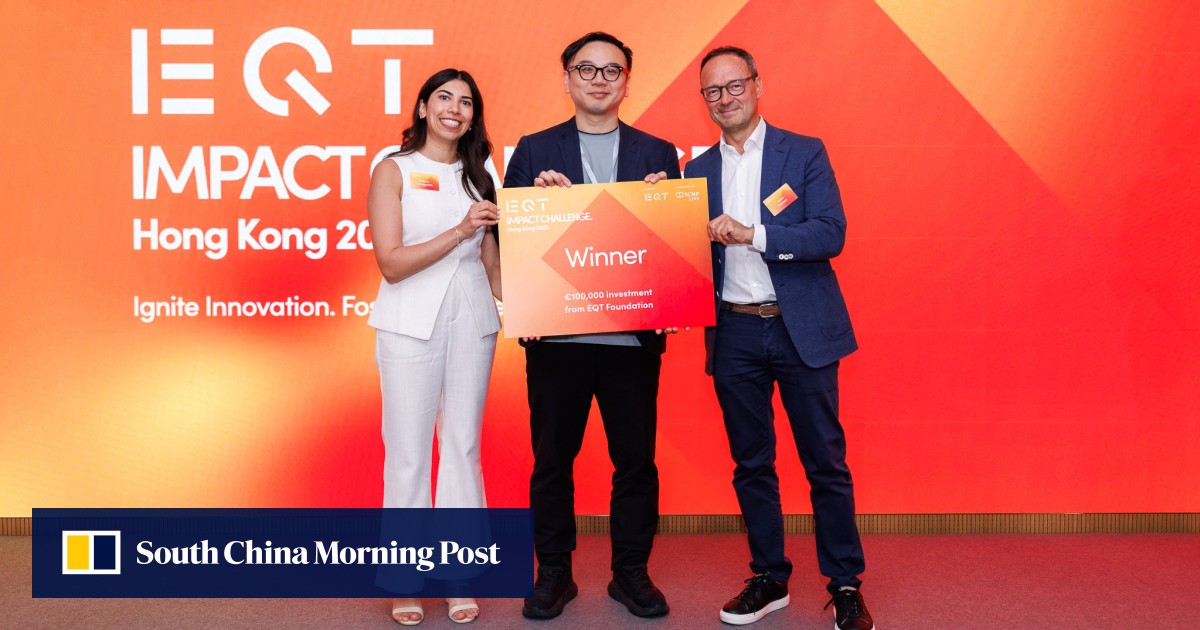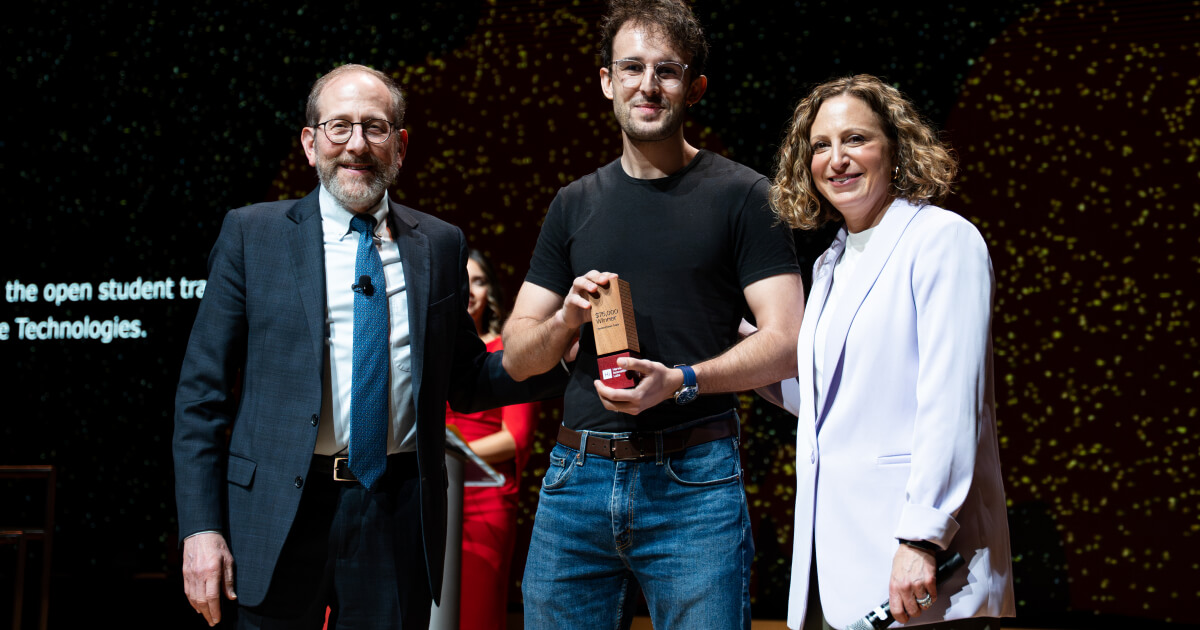
Refine co-founder Yann Calvó López accepts his grand prize at the Harvard President's Innovation Challenge Award Ceremony at Klarman Hall (Sam Mironko/Harvard Innovation Labs)
Yann Calvó López describes it as an “obsession.” Currently pursuing his master’s degree in computer science at the Harvard John A. Paulson School of Engineering and Applied Sciences (SEAS), Calvó López had previously spent two years reviewing economic papers at Northwestern University with former Harvard professor Benjamin Golub. While there, he spent countless hours trying to find any implementation or execution error that could potentially invalidate results. Though critical work, it was still tedious and time-consuming – exactly the kind of task that artificial intelligence could replicate.“Peer review is supposed to be the gold standard for quality assurance, but it’s not built to catch everything,” he said. That inspired Calvó López and Golub to found Refine Technologies, which offers an AI peer review system for academic research. Launched in 2025, Refine is already being used by faculty at multiple Ivy League and elite universities around the world, claiming annual revenue of over $1.7 million.Refine can now add another accolade to its rapidly growing list: grand prize winner of the 2026 Harvard President’s Innovation Challenge. Refine claimed $75,000 in funding from the annual Harvard Innovation Labs competition, which recently held its awards ceremony at Klarman Hall at Harvard Business School.“It’s an unbelievable feeling,” Calvó López said. “We’ve been moving at the speed of light, and we’re looking for incredible talent, especially as it relates to building large language model systems, to join us and help us grow.”Refine won in the Student Open track, one of five that awarded a combined $500,000 in funding from the Bertarelli Foundation.“This year’s competition saw some of the most diverse student ventures in the program’s history,” said Harvard President Alan M. Garber. “Entrepreneurship at Harvard was once the provenance of the few. It now attracts and nurtures the many, drawing on outstanding talent from across the entire university.”With the funding, Calvó López plans to continue expanding the scale of Refine’s AI. Though initially developed for academic research, offering in minutes the kind of reviewer-grade feedback that can normally take months, ultimately this technology could be used in any industry where reports and publications matter. Manufacturing, banking, pharmacology, policy recommendation – all of these domains could benefit from software that can quickly spot errors and inconsistencies.“Obsession is incredibly powerful,” Calvó López said. “Being able to automate it has incredible potential anywhere an error in a technical document can have catastrophic consequences.”