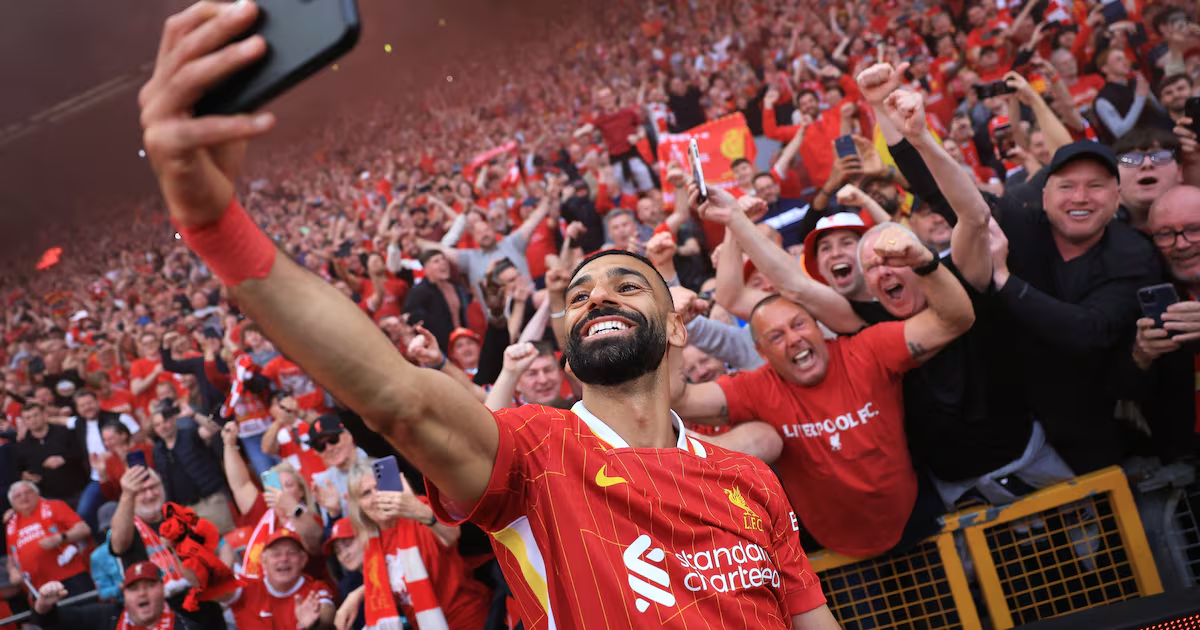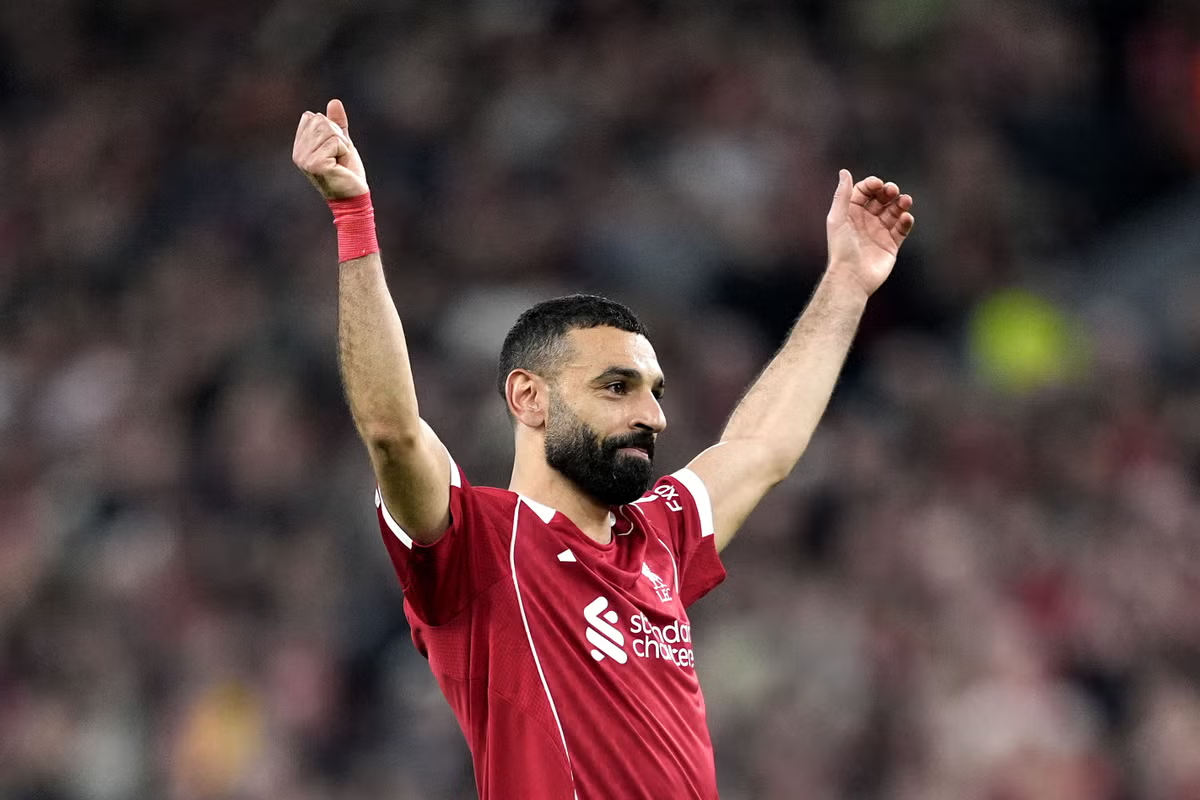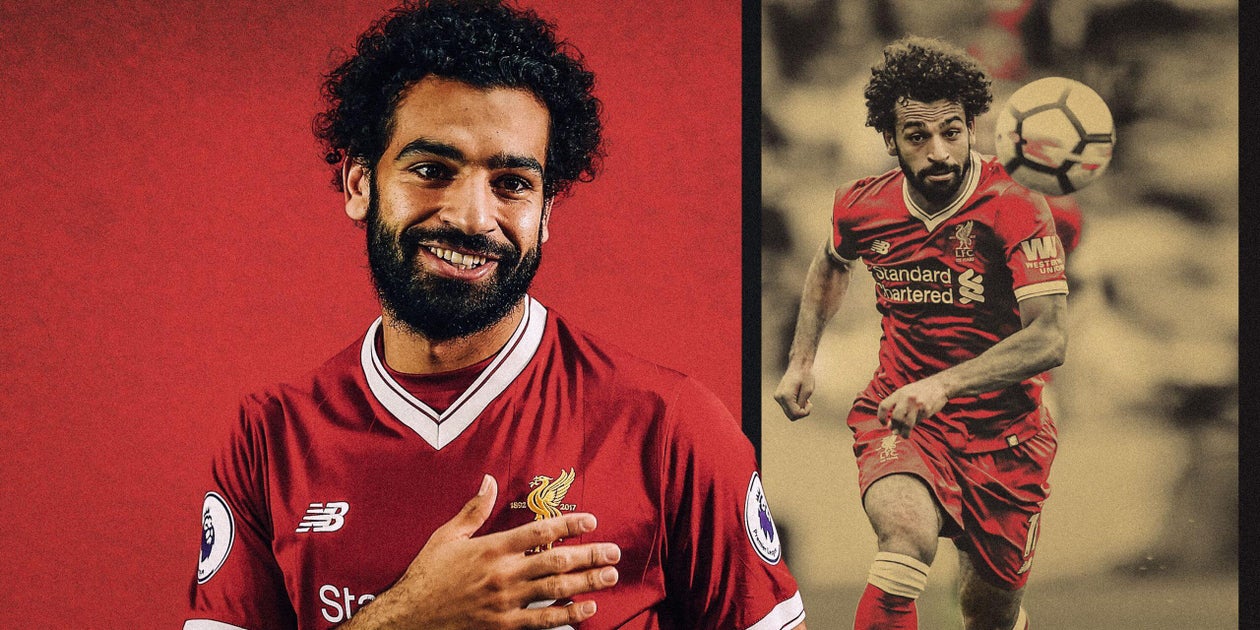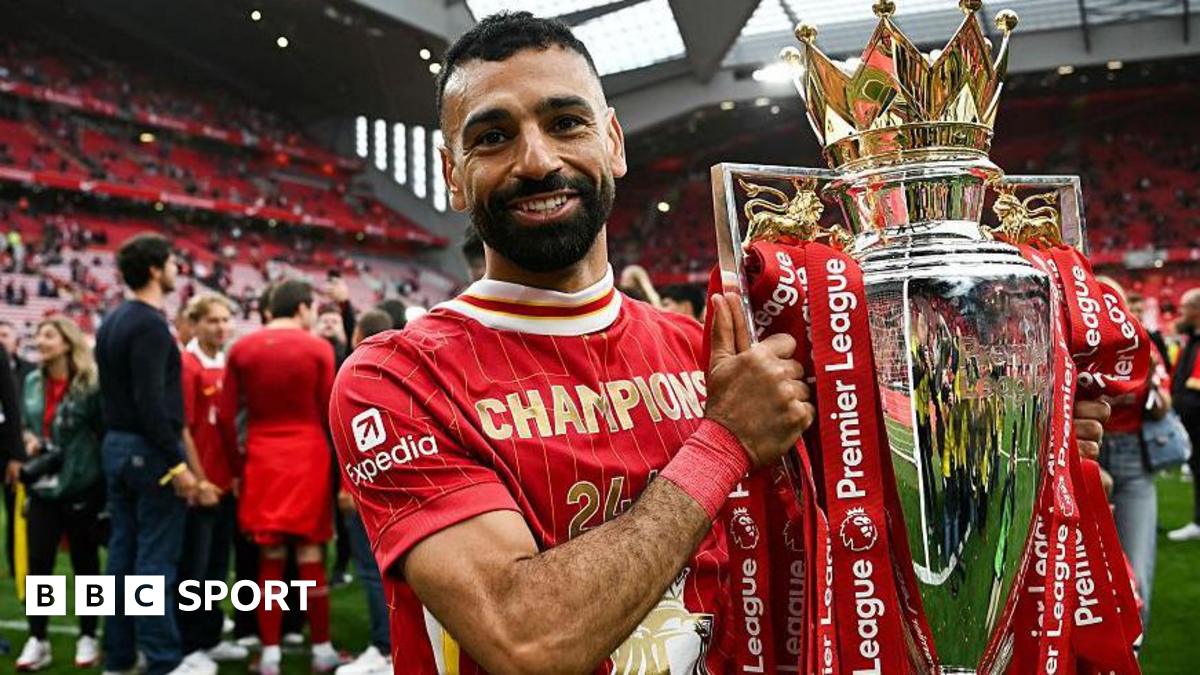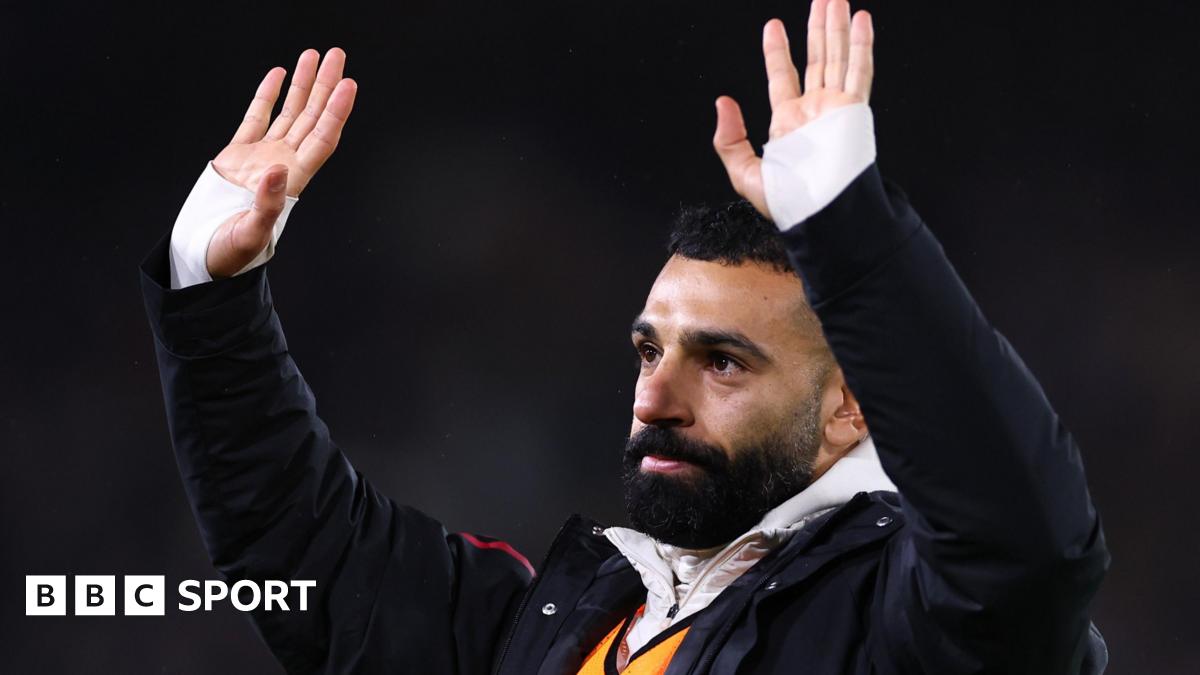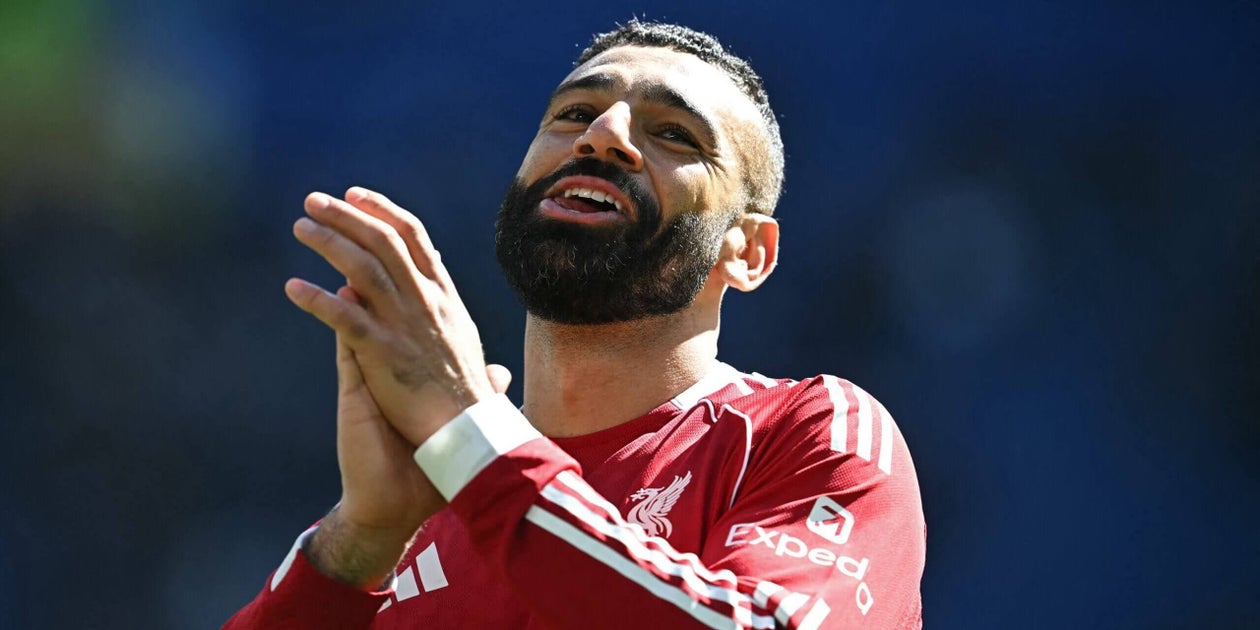
Mohamed Salah’s nine-year love affair with Liverpool is at an end.One of the Premier League’s all-time greats says goodbye to Anfield on Sunday and does so having established himself as one of the club’s favourite adopted sons, courtesy of an astonishing goalscoring record and glittering trophy haul.This week, The Athletic has been analysing Salah’s legacy. You can read about his transfer from Roma revolutionised football recruitment here, and about his wider social and cultural impact as the most famous Muslim footballer on the planet here.Now, James Pearce speaks to those who know him best about what made him so special, on and off the field.
“There is a saying that true character is seen when nobody is watching,” former Liverpool assistant manager Pep Lijnders tells The Athletic. “Character gets revealed when you start winning a lot. Mo was always about the next moment. A dedication to decide games. A hunger to score more. A winger who played as a striker.
“A mentality to beat the opponent, over and over again. Runs, dribbles, combinations. Anfield standing up the moment he received the ball. Because at any moment, some chaos could lead to a memory.”The Dutch coach worked with Salah for nearly seven years at Liverpool before leaving the club at the end of the Jurgen Klopp era in the summer of 2024. He’s spent this season as Pep Guardiola’s No 2 at Manchester City, having previously had a spell in charge of Austrian club Red Bull Salzburg.“Memories are the only thing that keeps us all together now,” Lijnders adds. “All those times where games got decided by an incredible piece of magic and Anfield chanted his name. Legacy is only created by a few. Stories are only written by a few. Records only belong to a few.“It all happened because of togetherness, connection and team play, which gave Mo the freedom to shine. And, my God, did he shine.”Pep Lijnders with Salah in 2019 (Karim Jafaar/AFP via Getty Images)Salah’s trophy cabinet in his Cheshire home lays bare the extraordinary impact he’s had on Merseyside over the past nine years.The Egyptian forward is the only player in history to have won the Professional Footballers’ Association Players’ Player of the Year award three times, and he has four Premier League Golden Boots, a tally only matched by Thierry Henry.With 257 goals in all competitions, he sits third in Liverpool’s all-time scorers list behind Ian Rush (346) and Roger Hunt (285). Only Alan Shearer (260), Harry Kane (213) and Wayne Rooney (208) have been more prolific than Salah (193) in the Premier League era.Not bad for a player written off in some quarters as unable to handle the demands of English football as he relaunched his career in Italy at Fiorentina and then Roma following a disappointing spell at Chelsea.“When Mo arrived in the summer of 2017, there was all that talk about him being a Premier League flop,” recalls former Liverpool goalkeeping coach John Achterberg.“People were questioning why we had broken our transfer record to sign him. They ignored the fact that he had barely had a chance at Chelsea and had then done brilliantly in Serie A.“My first thought when I saw him train for the first time was, ‘Wow, he’s rapid’. He had everything you want to see from a wide forward: quick feet, aggression, intensity, never giving defenders any respite. It was soon clear that he was obsessed with scoring goals and being the best he could be.”Salah’s dedication to his personal fitness is obvious (Andrew Powell/Liverpool FC via Getty Images)Salah scored on his debut in a 3-3 draw at Watford and never looked back. He marked his first Merseyside derby with a goal of such beauty that it earned him FIFA’s Puskas award. He had shrugged off Cuco Martina and then darted away from Idrissa Gueye before finding the top corner. The Kop anointed him in song as their Egyptian King.Liverpool sold Philippe Coutinho to Barcelona midway through the season, but the Brazilian’s absence wasn’t felt as Salah just kept on delivering. The front three of Salah, Roberto Firmino and Sadio Mane contributed 91 goals between them in 2017-18.“At times it was PlayStation football,” Achterberg adds. “That iconic trio were relentless and it was a joy to watch. It’s no coincidence that the club’s global fanbase grew around that time. Mo was a big reason why so many more people were drawn to supporting the club.“Jurgen pushed the players hard but Mo didn’t need any pushing. He was always in the gym. Along with Hendo (Jordan Henderson) and Millie (James Milner), he set the standards and helped create such a special culture. Mo invested so much time and energy into improving every facet of his game. He was always pretty calm in the dressing room — not a screamer or shouter, but someone who led by example.”After scoring 44 goals in all competitions (only Rush, with 47 in 1983-84, had ever been more prolific for Liverpool), Salah’s debut campaign ended with the agony of the Champions League final defeat to Real Madrid in Kyiv. He left the field in tears before the break after being dumped on his shoulder by Sergio Ramos.Salah vowed to return to the biggest stage in club football and was true to his word. Twelve months later, he was sitting in the dressing room in Madrid looking at images on his phone of the heartache he had endured at the hands of Ramos as he prepared to walk out to face Tottenham Hotspur.Salah lies stricken at the 2018 Champions League final after being fouled by Sergio Ramos (Sergei Supinsky/AFP via Getty Images)When Klopp’s side were awarded an early penalty, Salah stepped up and hammered it past Hugo Lloris. Divock Origi’s goal late on ensured Liverpool were crowned champions of Europe for the sixth time.“It was so fitting that Mo had that moment in Madrid after what happened to him in Kyiv,” Liverpool chairman Tom Werner tells The Athletic. “I know he had been practising penalties all week and had decided what side he was going to go if we got one in the final, but as he ran up, he changed his mind at the last moment. It was struck with such force that the goalkeeper didn’t have a chance.”After missing the first penalty of his Liverpool career against Huddersfield Town in October 2017, Salah left no stone unturned in his attempts to improve his technique.Before each game, analyst James French would put together clips of the five previous penalties the opposition goalkeeper had faced. Salah would also turn to Achterberg for advice.“Mo would say to me: ‘Is there a weakness with this ’keeper? Where am I best putting it?’ It might be the case that I thought the keeper’s stance was too wide, which was going to prevent him from getting down low to one of the bottom corners.Salah made his first appearance for Liverpool in July 2017 at Wigan (Alex Livesey/Getty Images)“He just wanted as much information as possible. It was about giving him confidence. Millie told him he needed to put more power behind his penalties, and he certainly did with the one in Madrid.”Salah has scored 46 of the 56 penalties he’s taken for Liverpool with an 82 per cent success rate. Out of players who have taken 20 or more spot kicks for the club, only Steven Gerrard (83 per cent) and Jan Molby (93 per cent) boast a better conversion rate.In winning the Premier League Golden Boot in 2017-18, Salah’s 32 league goals broke the record for a 38-game season. Remarkably, he also outscored three top-flight clubs in Huddersfield (28), Swansea City (28) and West Bromwich Albion (31).He managed 27 the following league campaign, too, ensuring he shared the Golden Boot with Mane and Arsenal’s Pierre-Emerick Aubameyang. He missed the most remarkable game of the season, the historic Champions League semi-final second leg comeback against Barcelona, due to concussion, but he helped set the tone by turning up at Anfield in a T-shirt with the slogan ‘Never Give Up’ on the front.