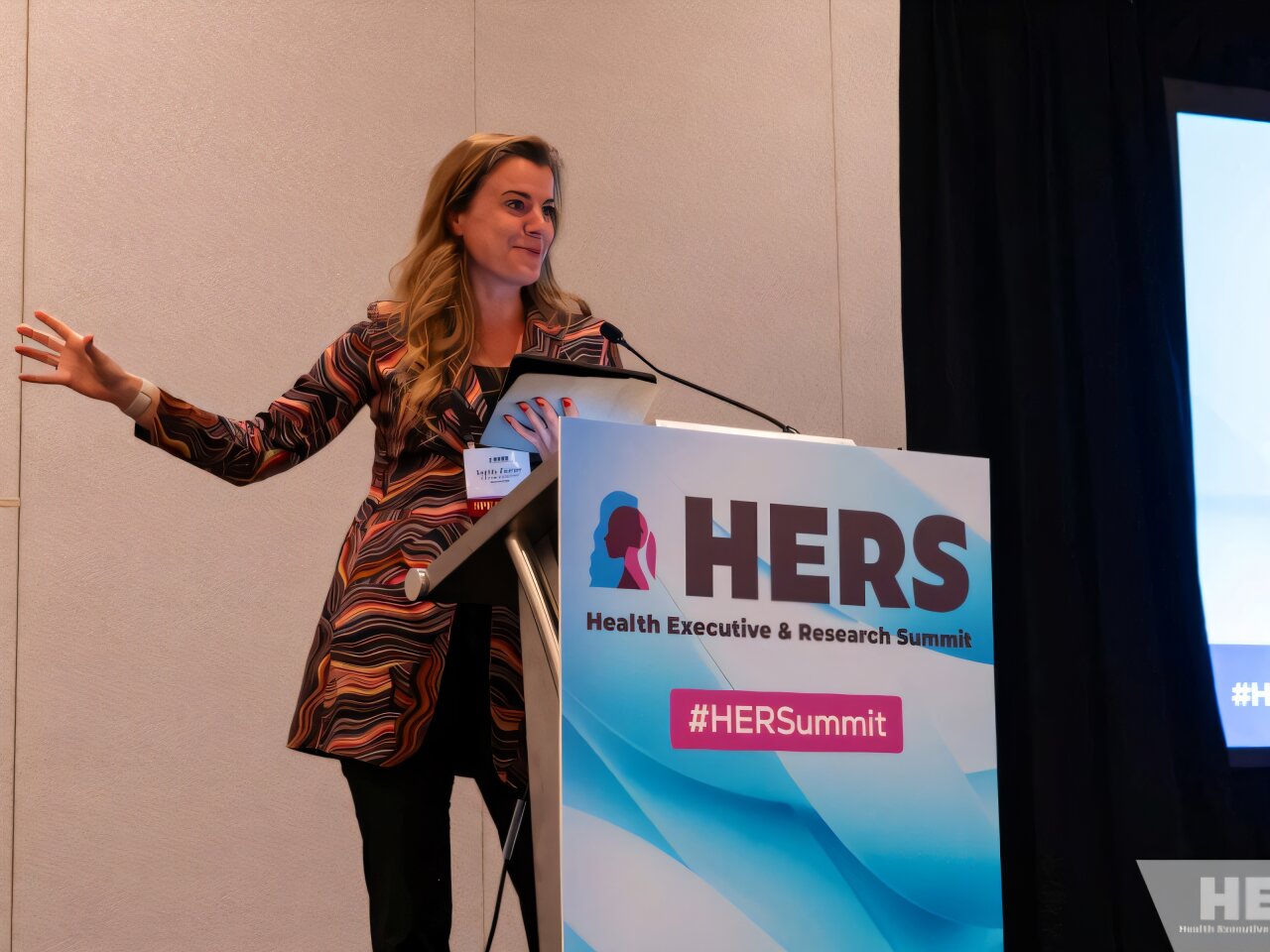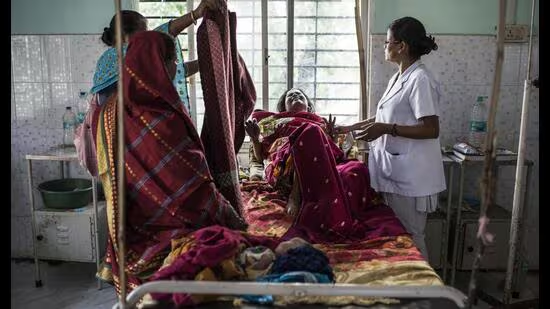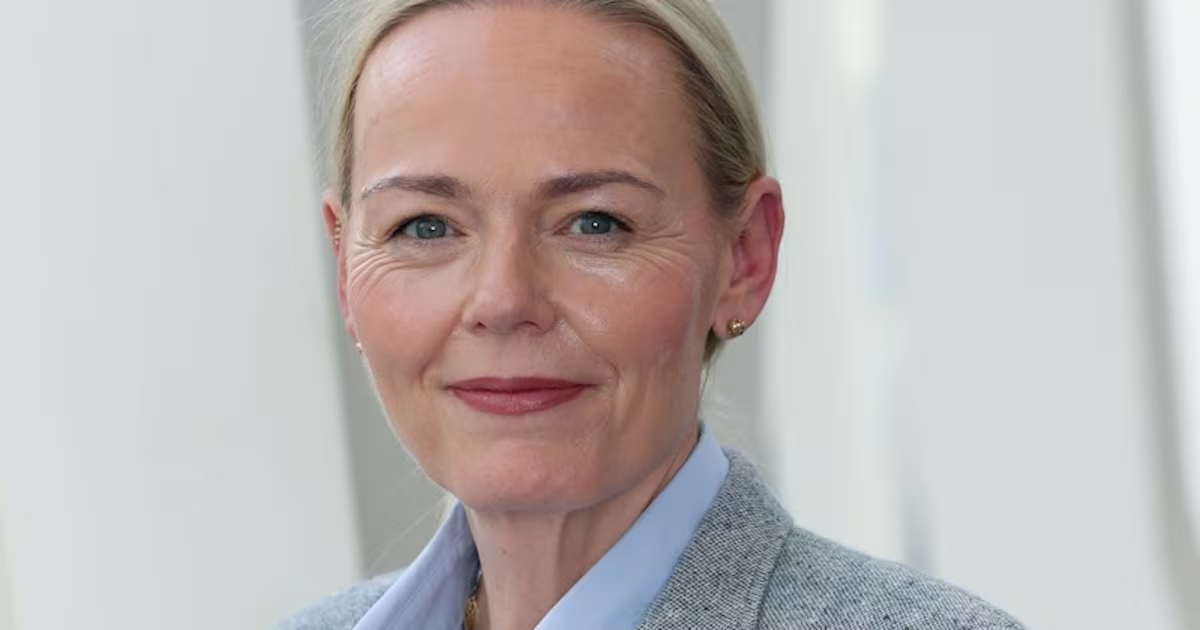
Great strides have been made in the area of women’s health in recent years, with strong moves being made to address historical under-recognition and pervasive gender bias in medicine.But while this progress is welcome – and long overdue – according to Dr Lynda Keaveney, VHI Group Healthcare Officer, we may need to “redefine” what women’s health actually means, so that women can get the holistic, life stage-based approach to care they so desperately need.Keaveney, who will be speaking at Future Health Summit on the evolution of women’s health, says that when people use the phrase “women’s health”, they often don’t understand what it truly means.“A lot of the time when women’s health is discussed or mentioned, people think of the reproductive system, contraception, pregnancy and menopause, and things like that.” What the former GP is trying to convey is that women’s health is “far more expansive” than that, and thus requires a redesign of care to match women’s specific needs.There is still significant room for improvement in this space – women have been historically underrepresented in clinical trials, for example. “A lot of what we understand about medications and disease patterns is based on a population of 70kg white men,” says Keaveney. “So while there has been a definite shift, there is still so much to do.”She uses the example of cardiovascular disease, which she says is traditionally viewed as a men’s health issue. “But actually cardiovascular disease is the leading cause of death in women in Europe.” Changing these attitudes is crucial, Keaveney says; diseases present differently in women, and treatments will also not necessarily work in the same way. “We need to work on this across the whole spectrum, it’s how we train our healthcare staff to understand the differences between gender, and the impact of gender on health in general. We also need to address this from a research perspective.”Yet Keaveney says there is a huge amount of opportunity. “On a micro level as we look at an individual patient in front of us but at a macro level as we plan services, we need to be cognisant of this,” she says. “From a VHI perspective, as an insurer and care provider, when we develop our own services that we provide, we need to look at what we fund and try and play our role in making sure that women’s health is seen in that holistic sense.”Women’s health is a strategic priority for VHI and Keaveney says they have begun to shape their services around what is needed from a clinical perspective, as well as raising general awareness of women’s health as a broader issue. She notes that 52 per cent of its members are women. “Some 27 per cent of those are over 60 years old and that is expected to grow significantly.” The insurer runs a women’s health clinic that addresses care across a woman’s entire lifespan, it also offers a midwife support service, and last year the insurer developed a pathway into the Blackrock Health women’s health clinic. VHI also regularly holds education and training events on “hot topics” in women’s health to educate its own teams and healthcare professionals working in the community. VHI has also focused on women’s health in the workplace, recognising the impact workplaces can have on shaping health outcomes. “It’s important to understand the specific challenges around women’s health in workplace settings and try to support these; it’s not just helping our members but also the employers to understand what they can do to support women better in the workplace.”As healthcare systems face rising demand, ageing populations and increasing financial pressure, Keaveney believes there is a financial and sustainability imperative to investing in women’s health. “We know that while women live longer, they live with a higher burden of chronic disease,” she says. “If we redesign services with women in mind across every life stage, we improve outcomes and build a more sustainable health system. In order to do this, all aspects of the healthcare ecosystem need to continue to work towards this goal. There is a growing awareness and a lot of progress, but such an opportunity to do more.”
Giving women the holistic, life-stage-based approach to care they need
Women have been historically underrepresented in clinical trials – it’s time to change that
692 words~3 min read