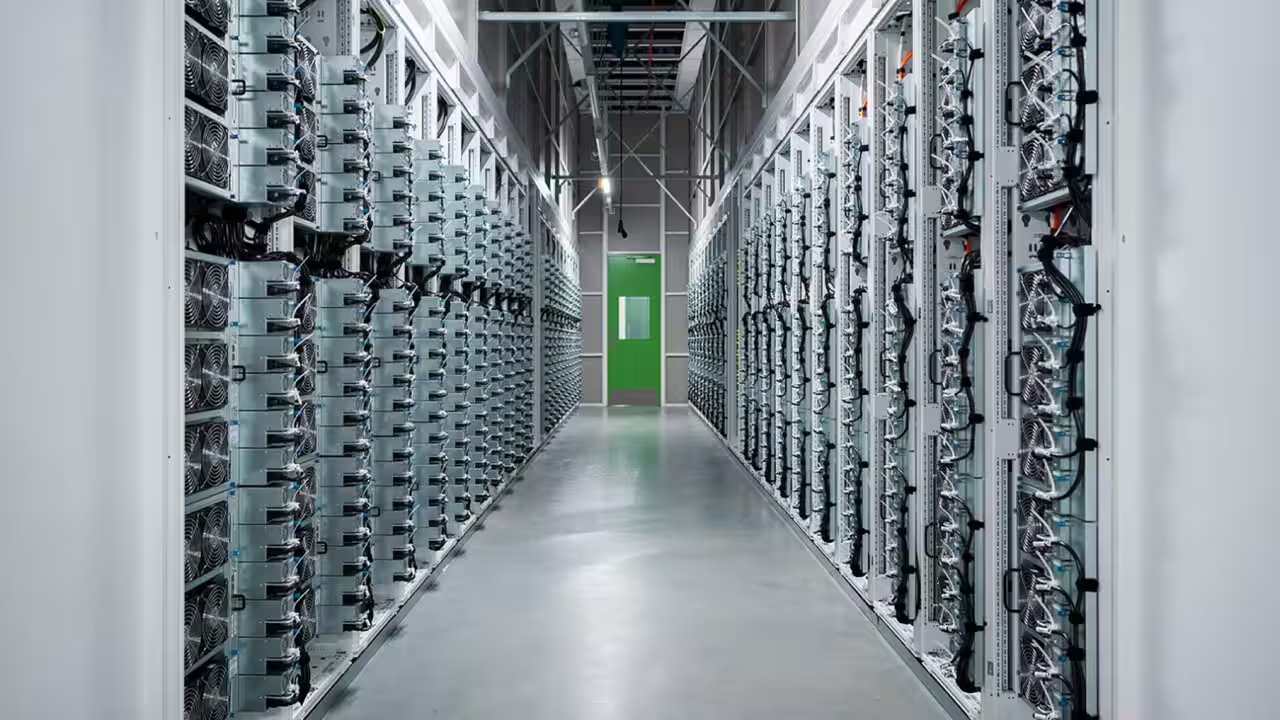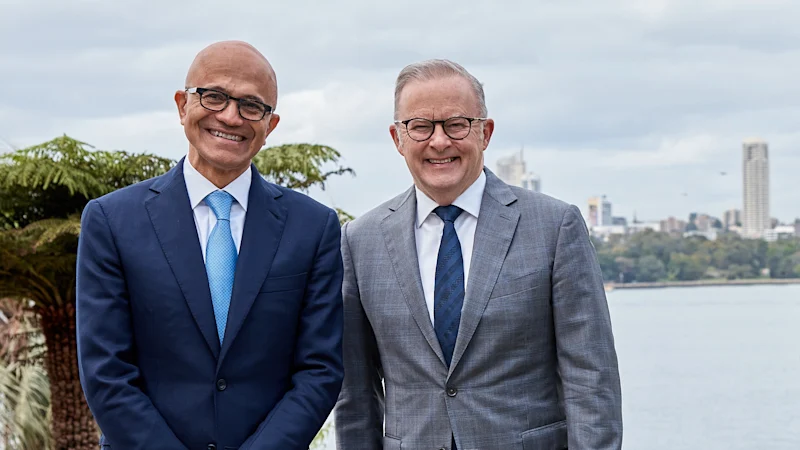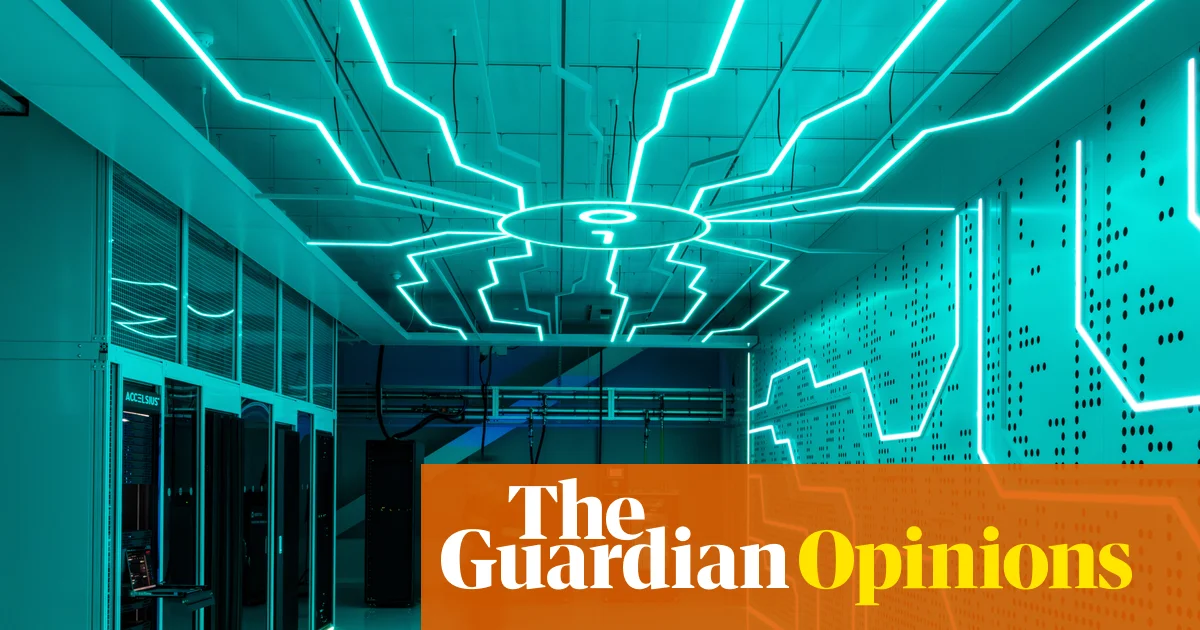
The CEOs of AI titans Microsoft and Anthropic have been duchessing Canberra. The reason? They have bet the house that we are at the beginning of an AI gold rush and they have a big problem: they need to find secure places to train their massive models.Having exhausted the US’s public tolerance for data centres and the eye-popping amount of energy and water they consume, these companies need stable bases to power these mega-data projects to drive their technology. This requires access to space, renewable energy and a stable political environment, resources that are in short supply globally.Assuming you are prepared to wager that AI is neither an unsustainable bubble nor a fast track to social breakdown and global annihilation (and to be clear, I have a foot in both these camps), then there appears to be a live pitch for Australia to produce artificial intelligence the way the Middle East produces oil.It’s not just the datacentres that are popping up around the suburbs to power the tokens used by local businesses. This is an industrial scale rollout to drive the inner workings of the technology, requiring significant energy and social licence from an increasingly sceptical public.With my reservations about AI noted, if there is a deal on the table then let’s make sure it’s a good one. We could start by taking a leaf out of the Norwegian play book and be much more ambitious in the stake we seek in this nascent industry.Norway’s sovereign wealth fund, built on the discovery of North Sea oil deposits in the 1970s, is the global exemplar in valuing their resources in a way that vests the benefits with the people. It was designed as a co-investment with industry to capture and retain the benefits from taxes, licences and dividends. Today it is worth more than A$3tn.Meanwhile, Australians currently faced with rising energy prices have been asking why our thriving gas industry operates on a different set of rules, with little control over our asset. From David Pocock to Pauline Hanson there are calls to fjord a different path.When huge gas deposits were discovered off the West Australian coast, the Hawke government decided it didn’t want to be an upfront investor in the resources sector and bear the financial risk of failure. Forty years on, most objective observers would say that was a bad call, but the middle of a global energy crisis is the worst possible time to reset gas taxes.The takeaway from Norwegian oil and Australian LNG is that the financial arrangements for a new industry need to be designed up front. But at the start of a boom you can’t predict whether it will be a gold rush or a barren dig. All you can do is make a calculated bet.This time around Australia has an extra bargaining chip. The AI models are built on a criminal enterprise. This is not hyperbole; a string of court cases has established that the hyper-scalers have systematically and illegally scraped the web to train their models with no regard for the law.The Tech Council’s Scott Farquhar was refreshingly honest last year when he pitched a data mining exemption to copyright as a retrospective and ongoing legalisation of this theft. The backlash and walk back was immediate.We must hold the line on copyright: a condition for operating these centres should be reparations to creators and ongoing licensing of their work. But we should be demanding more.An AI sovereign wealth fund would require a significant and continuous share in the profits of those companies that train their models here. That should include the value derived wherever the models trained here are used.Such a fund could be deployed to support creators whose work would otherwise be erased and, over time, provide an ongoing funding base for other workers whose jobs will be displaced if AI goes even halfway to living up to its hype.By partnering rather than trying to regulate and tax, it would also allow us to control the direction of the technology, including requiring it comply with our laws.Look around the globe and this is not crazy talk. The South Korean government is exploring an AI profits fund to support startups, creators and the social safety net. US thinktanks are floating the idea of a “token tax”, a kind of GST on AI usage.But limiting ourselves to taxation will condemn any mechanism to the whims of global capital flows and sophisticated accounting tricks. A genuine co-investment, anchored in the recognition of the value of datacentres as a public resource, would embed joint benefit in a way Australia has never previously cracked.Planned well, this partnership could conceivably work. Australia going all in on datacentres would solve an existential problem for Big Tech. Building a renewable-powered infrastructure that shares its output to the world could create a new green export industry for us all.The former Treasury secretary Ken Henry, who designed the ill-fated mining tax, reckons the Australian reticence in taxing resources goes all the way back to the Eureka Stockade: prospectors have always believed they are the owners of things they dig out of the ground.A different future could see Australian-trained AI, powered by renewables and respect for human creation, as the gold standard in machine learning, the foundations of our next resources boom built on solid Norwegian wood.
If Australia is home to an AI gold rush, let’s not squander it. Let’s fjord a different path | Peter Lewis
Tech titans appear to be cosying up to Canberra with an eye to training data models here. An AI wealth fund could share in the profits
926 words~4 min read