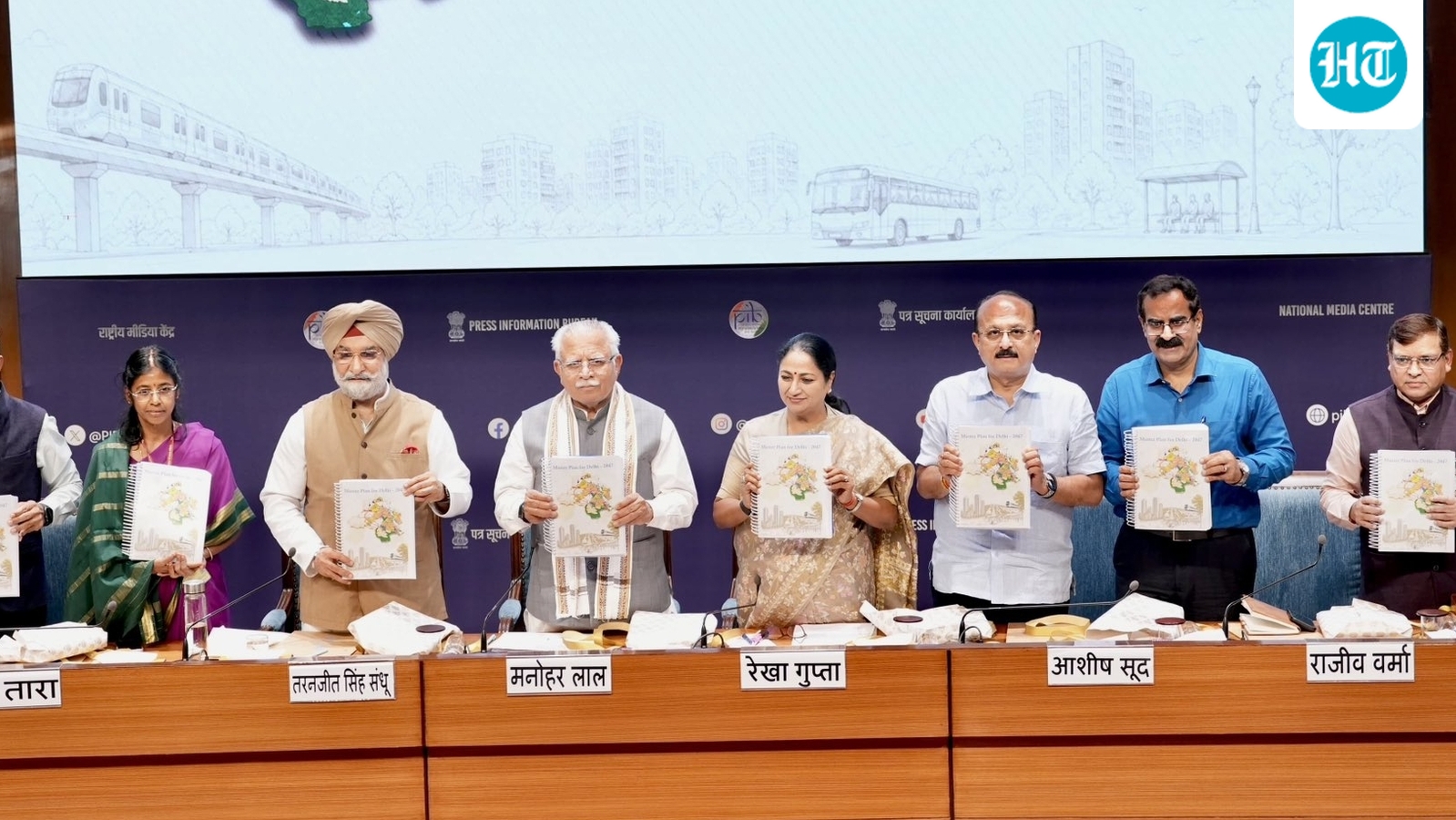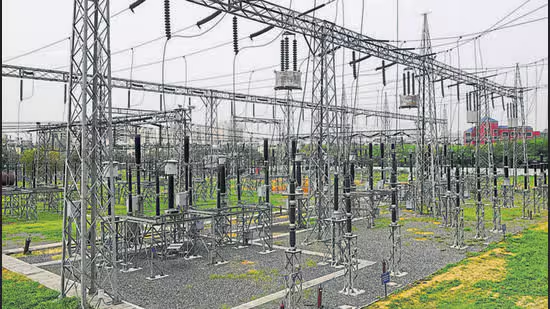
Anticipating a sharp rise in electricity demand over the next five years, the Delhi government has drawn up a power master plan that estimates the capital’s peak demand could touch 11,000 MW by 2030 and climb beyond 13,000 MW if electric vehicle adoption accelerates further.(The highest amount, ₹160.2 crore, was spent in Chhatarpur, followed by ₹95.32 crore in Kirari constituency. (HT Archive)Officials said the plan, Mission 2030, envisages investments of around ₹17,000 crore to modernise and expand Delhi’s power infrastructure.Delhi’s power minister Ashish Sood said the plan was prepared last year as part of a larger long-term vision to improve power infrastructure in the capital, including transmission and distribution networks.Sood said the government will spend around ₹17,000 crore over the next four years till 2030 on upgrading power infrastructure to match Delhi’s growth.“A long-term plan was prepared last year itself and we began work on upgrading power infrastructure across all 70 assembly constituencies. However, with Delhi’s growing population and a constant increase in power demand year-on-year, it is important to plan ahead,” Sood said, adding that the Delhi government spent ₹1,426 crore on improving power infrastructure in the city.“This was done across all 70 constituencies. The highest amount, ₹160.2 crore, was spent in Chhatarpur, followed by ₹95.32 crore in Kirari,” he said.Delhi’s peak power demand is projected to cross 9,000 MW this year and 10,000 MW by 2028.The master plan calls for 24x7 reliable power supply in every area and season. It proposes faster restoration of local faults and advance alerts for outages, while also moving cables underground across busy corridors. Officials said the plan focuses on building an EV- and solar rooftop-ready network.“This will consist of a grid built for the uptake of government schemes such as the PM Surya Ghar Yojana and EV policies, with reliable capacity at homes, communities and public charging points. Focus will also be on transparent billing through smart meters,” an official said.Mission 2030 aims to reduce the average number of power cuts per consumer from three to one, while bringing down the average duration of outages per customer per year from 120 minutes to 60 minutes by 2030.Sood said years of under-investment have stretched Delhi’s network in several pockets, impacting reliability.“To deliver Mission 2030 and enable the Viksit Delhi agenda, we need a catch-up and modernisation programme across the extra high voltage (EHV), distribution and automation networks,” the minister said, adding that key focuses include converting overhead lines into underground cables and shifting from High Voltage Distribution Systems (HVDS) to Low Voltage Distribution Systems (LVDS).“At many locations, the HVDS are over 25 years old. These then overload and short-circuit. We will switch these to LVDS, ensuring greater reliability,” Sood said, adding that he is writing letters to all 70 MLAs informing them about the power infrastructure works carried out in their constituencies in 2025-26.“The letters mention the money spent and the infrastructure created, complete with latitudes and longitudes. This ensures transparency,” he said.
Delhi’s unveils Mission 2030: A ₹17,000 crore plan to upgrade power infra
A long-term plan was prepared last year the Delhi government has began work on upgrading power infrastructure across all 70 assembly constituencies | Latest News Delhi
490 words~2 min read