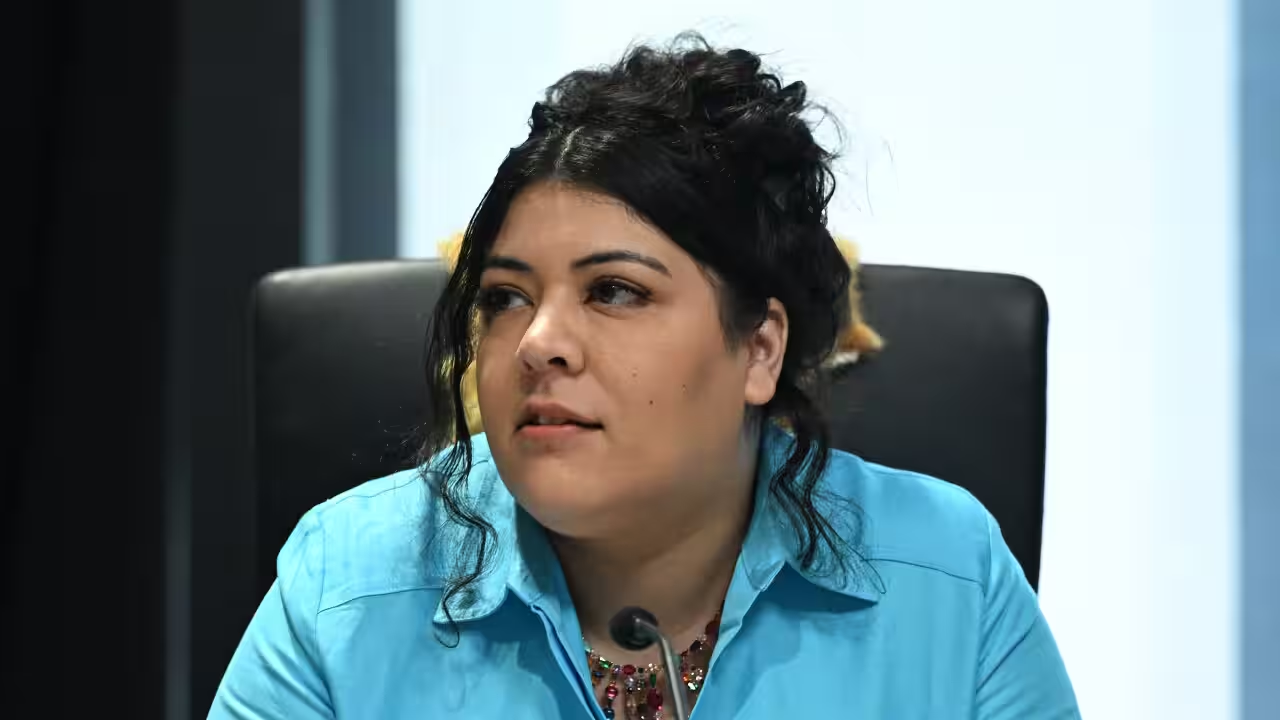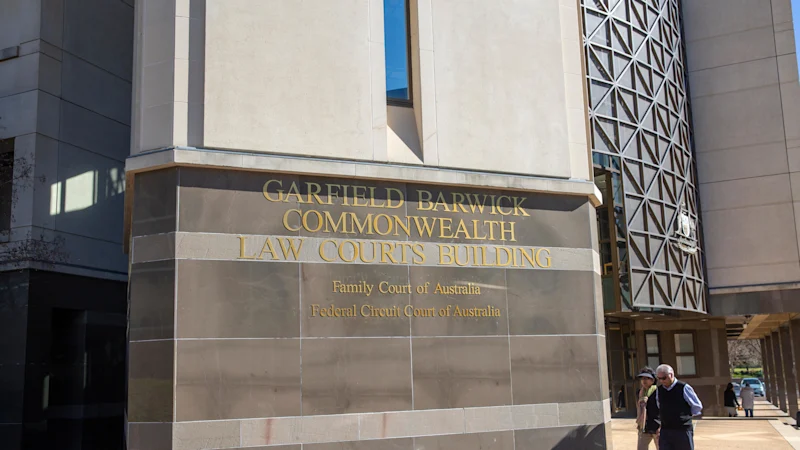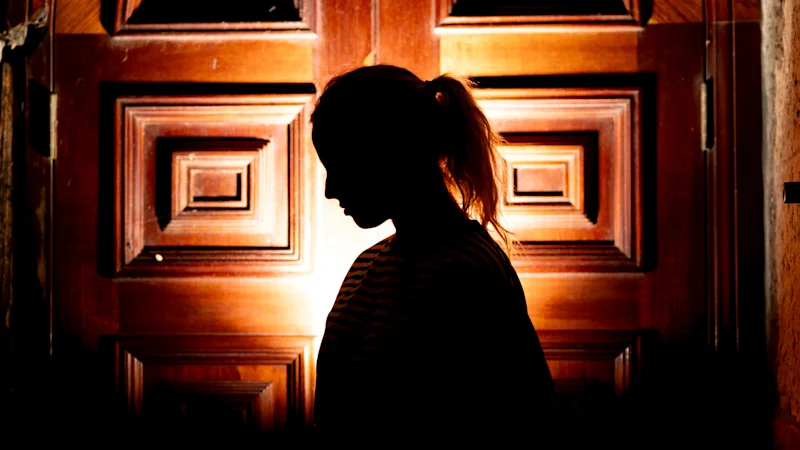
May 22, 2026 — 5:00amClaire* spent years of her childhood in the middle of a family law fight.Now 19, the Sydneysider said one lawyer “literally changed the game”: an independent children’s lawyer (ICL), appointed by the Federal Circuit and Family Court to act in her best interests.Claire* said an ICL helped her have a voice as a child in her parents’ custody battle.Sam MooyThe taxpayer-funded lawyer gave her and her sister a voice in a protracted court dispute between her parents about custody, she said.“At the start, I didn’t have [an ICL]. It was definitely very difficult getting points across as such a young kid,” Claire said. “She was amazing. Without her, we’d probably still be fighting.”But prominent former judges and other family law experts have raised the alarm that ICLs are set to disappear from many family law cases because of inadequate funding in last week’s federal budget.Legal Aid NSW said it had been forced to scale back family law services because the budget failed to address a longstanding funding crisis.ICLs are typically funded by legal aid grants, but the parties may be required to pay a contribution. By December 31, those grants will no longer be available for ICLs to appear at final hearings, unless at least one parent is self-represented. They will not appear in appeals.Claire’s parents separated before her 10th birthday. She said her mother “tried to protect us” from the court process.The ICL successfully advocated for parenting orders that Claire and her sister supported.She remembers the lawyer’s office being “so welcoming”. “We told her our opinions [and] what we wanted the outcome to be. We couldn’t represent ourselves in court, we were kids,” she said.“It’s really daunting being that young. I remember that she had a little cake there for us.“She was so great explaining things to us. She went through all of our questions.”ICLs are appointed by the court to form an independent view, based on the evidence, about the child’s best interests. They do not act directly on the child’s instructions but argue for parenting orders reflecting those interests.Former Federal Circuit and Family Court judge Garry Watts, who retired from the bench in 2022 after 17 years presiding over complex family law trials and appeals, said cutting ICLs was a “false economy”. He predicted it would add time and cost to cases.In high-conflict family law cases, “each parent may have their own agendas which are not child-focused”, he said, meaning that advocacy by their own lawyers “may miss the mark”.“From a trial judge’s point of view, that makes it a lot harder to hear the voice of the child, and to consider an outcome that neither parent is proposing that might be the best outcome for the children,” Watts said.“From a trial judge’s point of view, that makes it a lot harder to hear the voice of the child.”Former judge Garry Watts, a leading family law expert, on cutbacks to independent children’s lawyers.Watts said ICLs might suggest “creative outcomes that both parties may not like but can live with”, resulting in a settlement even at the stage of final hearing.“It’s at the pointy end where they’re the most valuable,” Watts said. A good ICL was “centre stage” at that hearing, he said, and was often the first person to cross-examine the parties.Watts said the funding shortfall was “not a new problem” and it had been “cyclical through the 50 years of the court’s history”.Legal Aid NSW said eligibility for assistance for adults in family law parenting and property proceedings would also be limited after July 1 to domestic violence victims and Aboriginal people. It meant other groups in need, such as people with a disability or mental illness, might miss out.Watts warned the change would leave vulnerable families at risk, including litigants with limited English who would be “severely disadvantaged without a lawyer”.Former Family Court judge Garry Foster, who presided over cases in Parramatta for eight years, said ICLs were “crucial to the proper conduct of a great number of parenting cases”.“Often the parties had their own agenda and had a lot of difficulty focusing on their kids’ best interests,” Foster said.“In the absence of the ICL, the court would have to rely upon court-ordered family reports, which are usually fairly perfunctory … or single expert reports from clinical psychologists or psychiatrists specialising in family law.”Foster said that “even a cheap single expert report can cost the parties $10,000, and it’s not unknown for [them] to cost $20,000 or $25,000, and to take up to six to 12 months to be prepared.”The proportion of parenting cases in the Federal Circuit and Family Court alleging family violence increased from 80 per cent to 86 per cent over the past four years, according to its 2024-5 annual report.Foster said the number of cases involving these allegations was “disturbing” and it was “difficult for the court without an ICL”.“A judge can, to some extent, ask questions in a trial, but they have to be very careful to remain impartial,” Foster said. “That’s where an ICL comes in.”A Legal Aid NSW spokesperson said the work of ICLs “is of critical importance at all stages of proceedings including at a final hearing – they meet with children, gather evidence, ensure the wishes of the children are known to the judge, test the evidence and assist parties to resolve their matters without judicial determination where appropriate”.It said it had been forced “to make some difficult choices about the use of its limited resources and this includes the involvement of ICLs in final hearings”.Sydney barrister Esther Lawson, a family law expert with over 20 years’ experience, said successive governments had “effectively castrated the Legal Aid system through inadequate funding, forcing [it] to significantly cut back on who it can help in the family law courts”.She said this has the potential to lead to “unfair, wrong and downright dangerous” results.“Family law cases are meant to have the children at the heart of the proceedings,” Lawson said. “As a result of the lack of funding, in many instances, there will now no longer be any solicitor or barrister … at a final hearing giving the child an independent voice.”Outside the pool of legal aid funding, the federal budget allocates “top-up” funding of $11.7 million in 2026-7 for a scheme that stops convicted, and in some cases alleged, perpetrators of domestic violence cross-examining their victims personally in court if they are unrepresented.Lawson said the scheme was “well-intended” but noted a wealthy father who abused his former partner or children could opt to act for himself, triggering the appointment under those provisions of Legal Aid-funded lawyers to conduct the cross-examination, while his children may have no ICL. The scheme is not means-tested.“Under the new policy, their teenage son or daughter, who may have been abused or exposed to abuse, now gets no independent voice … advocating for their interests at final hearing,” Lawson said. “They have effectively been silenced. Kind of perverse, isn’t it?”A spokesperson for Attorney-General Michelle Rowland said that funding for Legal Aid NSW “has not been reduced in the 2026-27 budget”.“In its historic funding uplift in the 2025-26 Budget, Legal Aid NSW receives $559 million over five years from 1 July 2025.“The Albanese government is committed to justice, providing access to the courts, and ensuring every Australian – no matter their means – can get a fair go.”*Name changed to protect their anonymityStart the day with a summary of the day’s most important and interesting stories, analysis and insights. Sign up for our Morning Edition newsletter. More:CourtsFor subscribersDomestic violenceFederal budgetFamily CourtFrom our partners
Claire had a ‘voice’ in her parents’ court fight. Many kids will miss out
Taxpayer-funded independent children’s lawyers, appointed to act in their best interests in family law cases, are being cut back after the federal budget.
1,262 words~6 min read