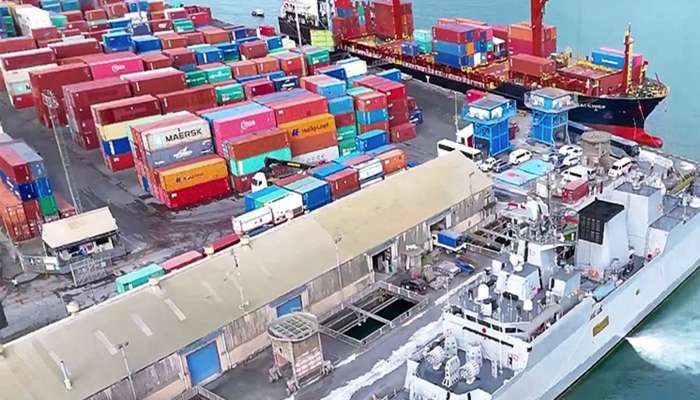
Contrary to popular narrative, the world is not deglobalising. Services trade as a share of global GDP reached an all-time high in 2025, improving upon its previous record of 15.2 per cent of global GDP in 2024. Goods trade volumes continued to grow—and also grew as a share of global output in 2025—despite being buffeted by US tariffs and elevated economic uncertainty.
Yes, it has become harder to trade in a more fragmented world. But despite the noise and uncertainty, the world benefits from trade, which is why traders continue to keep the shipping lanes humming and supply chains continue to adapt.And the agile nations continue to grow. According to the latest WTO figures, Vietnam’s goods exports grew by an astonishing 17 per cent in 2025, reaching $473 billion. For the first time (barring a Covid-19 disruption year), Vietnam—a country of 100 million people—exported more goods than India, whose exports, at $445 billion in 2025, grew by less than 1 per cent.
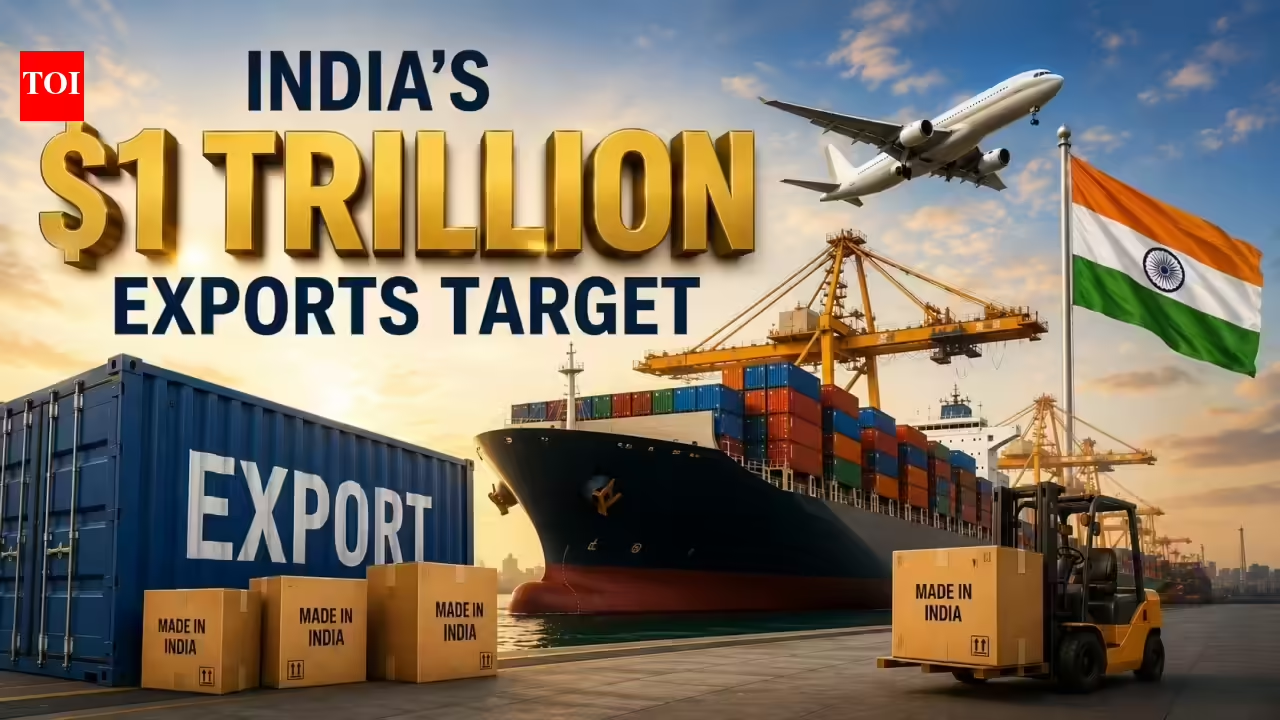
This statistic alone tells us that India could and should be exporting much more.Our new paper, just published by the Centre for Social and Economic Progress, shows precisely this. By “Letting the Elephant Dance,” India can unleash $516 billion of additional goods exports. If realised, this would more than double current goods exports.Is this feasible in today’s world? It is both feasible and necessary. India’s share in world goods exports was only 1.8 per cent in 2024. China’s share was 14.6 per cent. So there is room to grow, with the “China plus one” diversification space providing a significant opportunity.It is also necessary because India’s biggest development challenge remains the creation of more and better-quality jobs. The labour-intensive manufacturing sector can provide millions of formal, wage-paying, export-linked jobs in apparel, footwear, toys, furniture, food processing and light engineering. In fact, we estimate that the missing exports could support about 24 million new jobs, direct and indirect. These missing jobs are equivalent to about 68 per cent of 2020 export-related employment.Our analysis identifies three major constraints holding back India’s goods exports: Protection, an elevated exchange rate, and weak integration into global value chains.