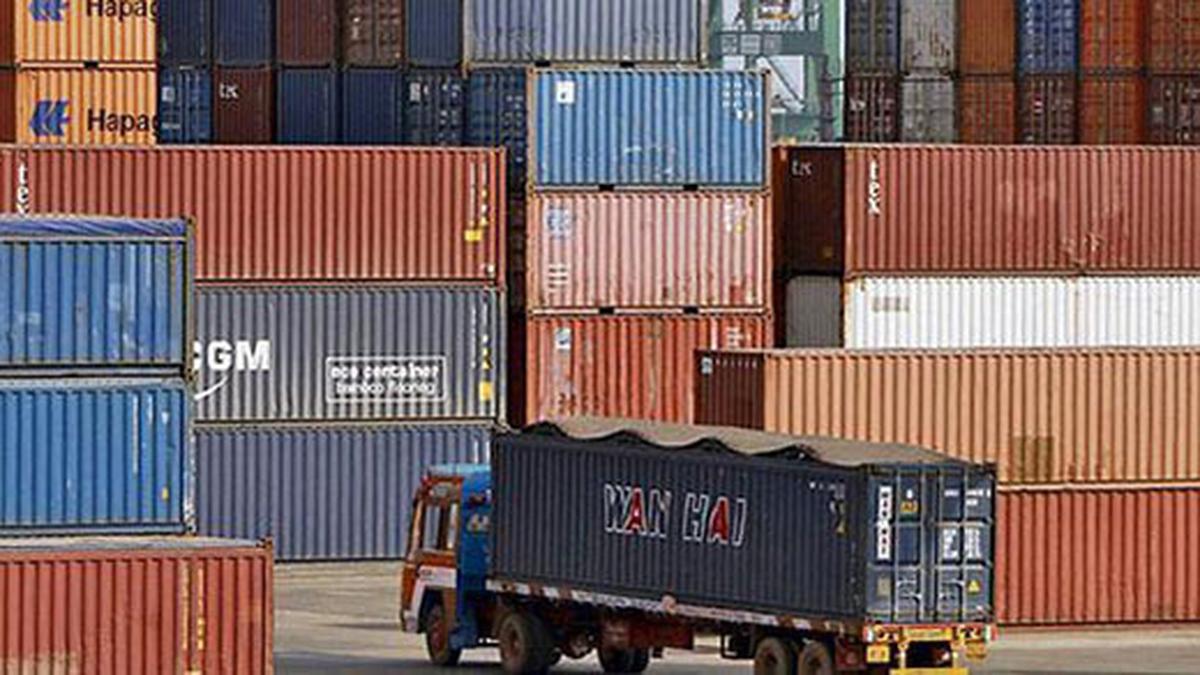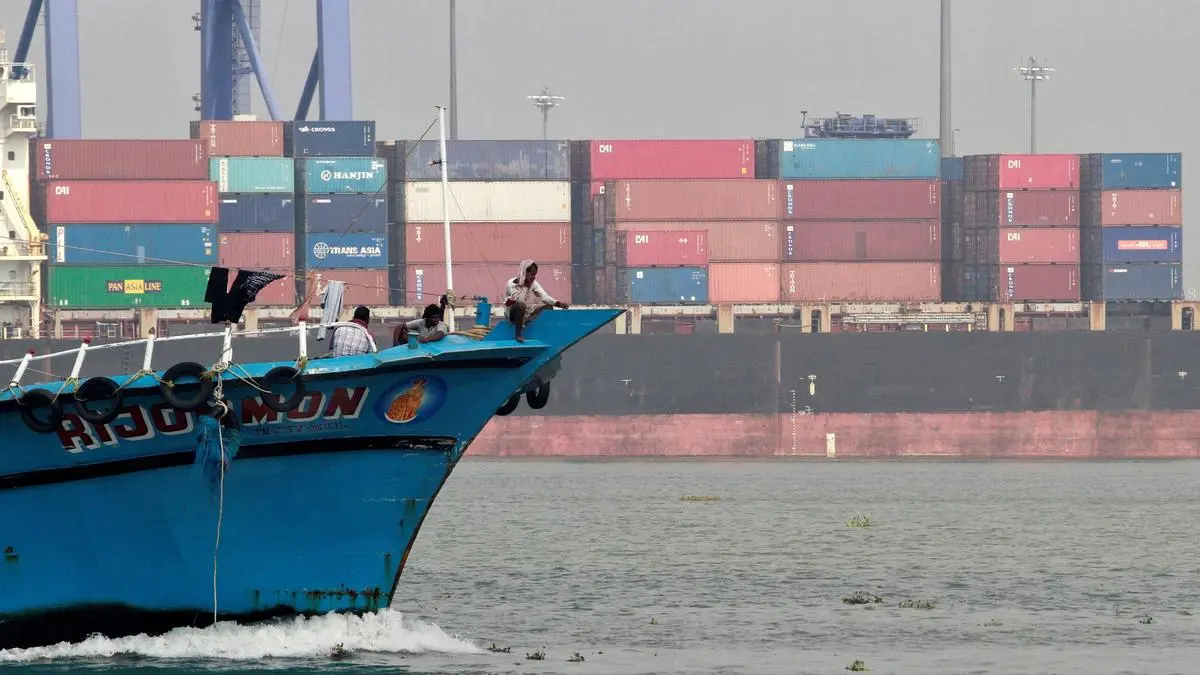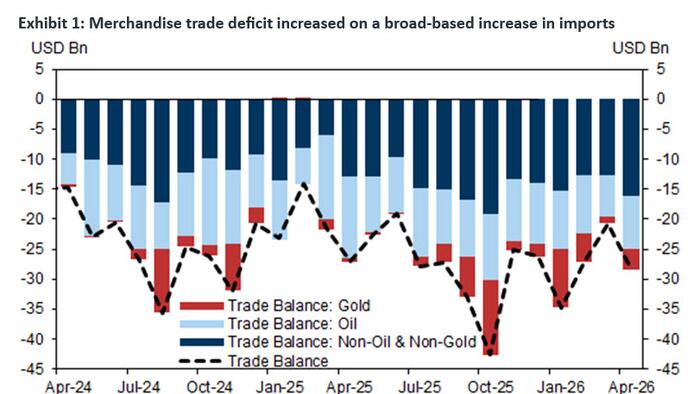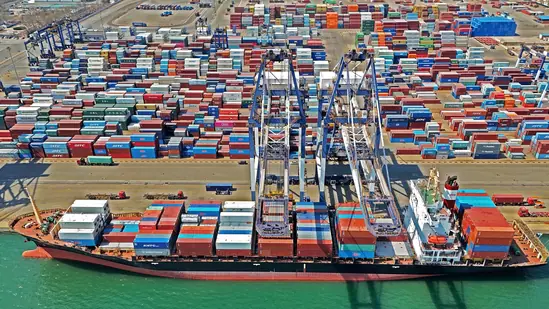
In an era of globally integrated value chains, numbers such as imports, exports and even manufacturing mean very little when read in isolation. The external situation—in terms of the falling exchange rate, bearish foreign portfolio flows, and the ongoing energy supply shock—continues to be grim. It would not be, if India did not run a large merchandise trade deficit. What explains India’s large merchandise trade deficit ? Answering this requires examining the linkage between manufacturing and merchandise trade. The data is far from flattering.A cargo ship at a container port. (AP)The manufacturing roots of India’s trade deficitIndia has yet to recover from the Global Financial Crisis’s shock to its global manufacturing performance Latest UNCTAD data puts India’s current dollar GDP share in the world at 3.54% in 2024. India’s manufacturing share, however, was lower, 2.98%. India’s relative underperformance in manufacturing, as seen in the ratio of its global share in manufacturing and GDP, has been worsening from 2009 onwards, which marked the reversal of a near-consistent rising trend. The key takeaway is simple: India’s manufacturing problems are rooted in factors which are deeper and the current crisis needs to be understood by examining what the 2008 Global Financial Crisis did to Indian manufacturing.The easiest to understand the aspect of this crisis is the loss of investment appetite in manufacturing Things become crystal clear if one looks at gross capital formation data in India’s National Account Statistics (NAS). Manufacturing’s share in gross capital formation peaked at 45% after reforms in the mid-1990s – which suggests the liberating impact they had on the sector – and reached a second, although lower peak of 36% just before the 2008 crisis struck. Since then, it has only gone downhill and it had a share of less than one-fifth in overall capital formation in 2023-24, the latest period for which NAS data is available. The lack of revival in manufacturing investment is despite various policy interventions by the government to revive the sector. To be sure, this is not to say that manufacturing has shrunk in the post-2008 period in India. It is to say that the rest of the economy has done better than manufacturing. Problem is, the rest of the economy is of little help, when it comes to plugging the merchandise trade deficit. In fact, manufacturing underperforming the rest of the economy will only increase the merchandise trade deficit. This is where a country needs manufacturing capability.Indian manufacturing’s other problem: Low value addition In an era of globally integrated value chains, numbers such as imports, exports and even manufacturing mean very little when read in isolation. What matters is their combined dynamics. This is where India has a problem. India’s merchandise imports, in current dollar terms, were 144% of its manufacturing value added in 2024, the latest period for which UNCTAD data is available. For exports, this number was just about 89%. While export and import values were rising almost in tandem with manufacturing value added until 2008, the latter shows a spike in the period after that. China’s trajectory, is the exact opposite, and its manufacturing output underwhelmed both import and export, the former more than the latter, in the post-2008 period. It is after 2008 that China’s manufacturing started making a big leap towards high-tech goods rather than just labour-intensive products. India on the other hand, lost interest in manufacturing after this period, as shown above.Indian manufacturing’s import-disadvantage is not just vis-à-vis ChinaOne can make a fair criticism that comparing Indian and Chinese manufacturing is of little use today. The latter is at an unprecedented peak in the sector and threatening to overwhelm the entire world with its excess capacity and exporting might. HT has taken all countries which had a global manufacturing value added share of at least one percent and compared their merchandise imports and exports relative to manufacturing output. India is among economies where imports are a much larger share of manufacturing output than exports unlike a bunch of countries on the other side of the divide. To be sure, some of the export-advantage countries likely enjoy this privilege thanks to their resource endowments (Saudi Arabia and Russia exporting oil) than a manufacturing driven export competitiveness. India does not have any such advantage and therefore needs to work harder on its manufacturing prowess to bring its merchandise trade deficit under control in order to reduce its external account vulnerabilities.Roshan Kishore is the Data and Political Economy Editor at Hindustan Times. His weekly column for HT Premium Terms of Trade appears every Friday.Number TheoryUnlock a world of Benefits with HT! From insightful newsletters to real-time news alerts and a personalized news feed – it's all here, just a click away! -Login Now!See Less
The manufacturing roots of India’s trade deficit | Number Theory
In an era of globally integrated value chains, numbers such as imports, exports and even manufacturing mean very little when read in isolation.
785 words~4 min read