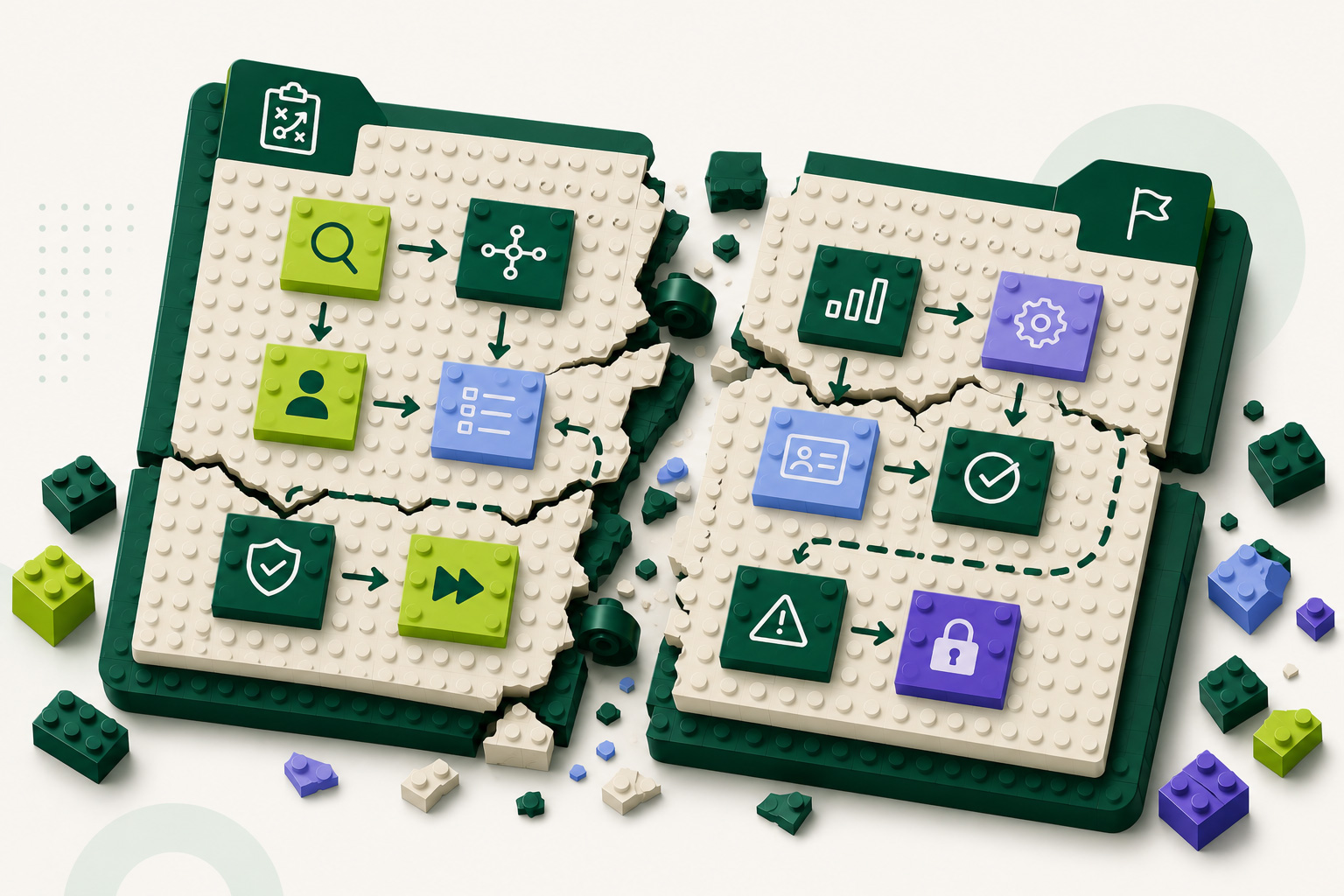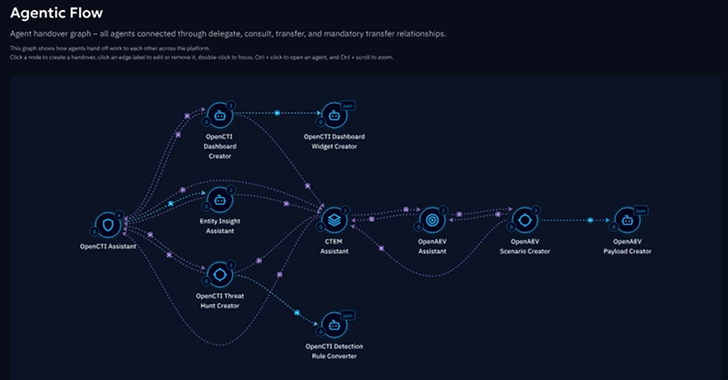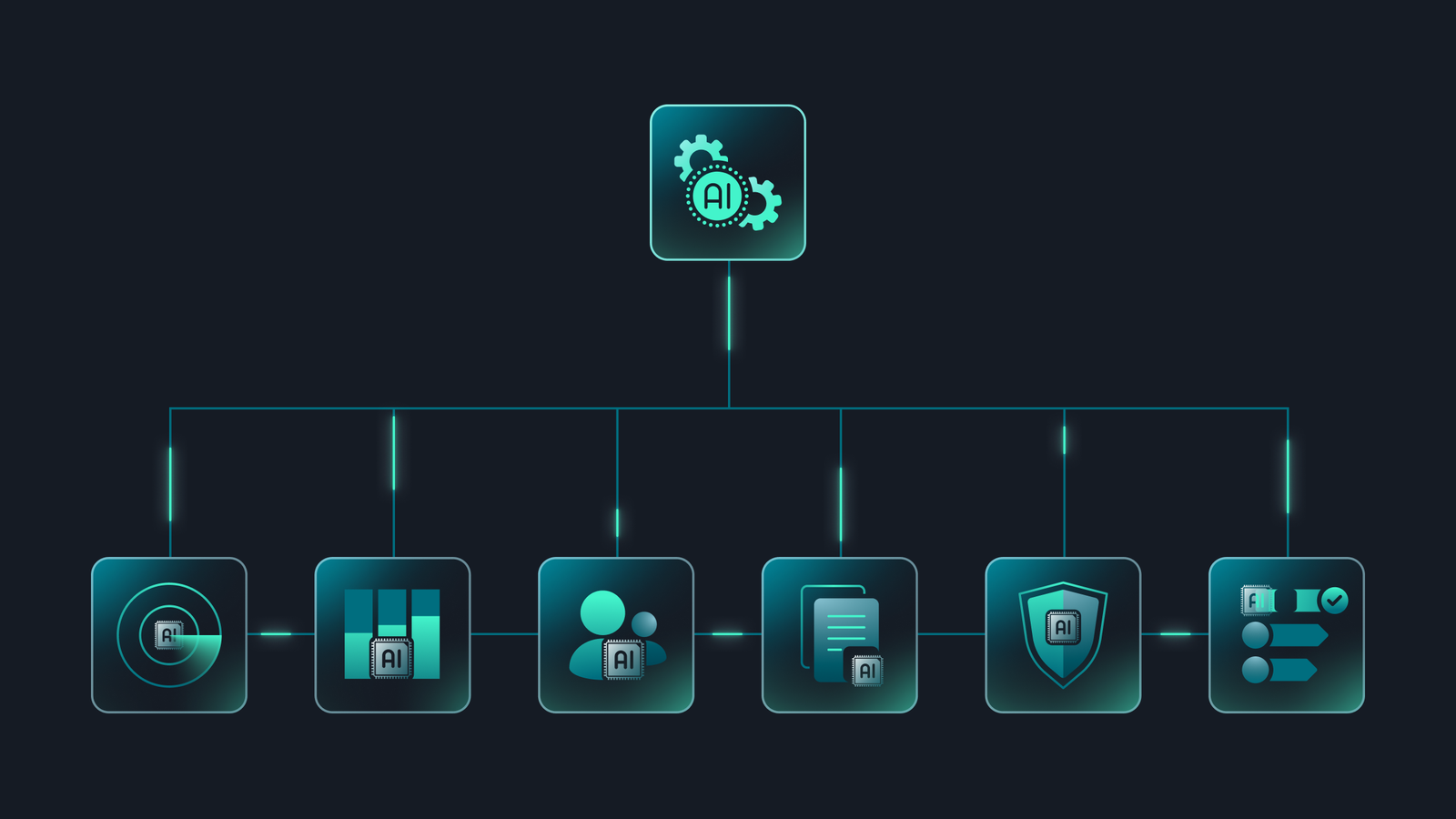
In cybersecurity, AI agents increasingly appear as task-based bots across the security stack, built into monitoring tools, network controls and cloud platforms.But instead of delivering on their promise, these siloed agents add complexity to already fragmented environments, leaving teams managing a growing number of agents, tools and alerts, rather than actual threats.As a result, global enterprises are rethinking security operating models entirely and adopting what's known as an agentic system.“AI by itself is generating insights. Agentic systems are generating outcomes,” said Joe Partlow, chief technology officer at AI cybersecurity company ReliaQuest.Below, explore why the future of security operations isn't more agents — it's making agents work as a system.Today, cybersecurity AI agents are typically task-based and single-function — built to perform a simple step in a larger workflow.But this approach leads to two problems:1. They Don’t See The Whole PictureThese agents only process what's required for their specific task, and they can't communicate with other agents to share critical context.Consider a threat intelligence workflow: one agent scans the internet for indicators of compromise, another builds detection queries based on those indicators and a third investigates resulting alerts. But none of them can understand the full life cycle of an attack and the actions to take, which limits their individual utility. 2. Your Team Is Still Doing The Heavy LiftingSecurity teams are left to manually coordinate the outputs of dozens of disconnected agents. This is agent sprawl, and it’s becoming one of the defining operational burdens in modern security. “Because each of those [agents] is running in isolation, it's up to the human to connect them together,” says Partlow.The downstream effects compound quickly:Slowed operations: Every manual handoff adds critical delays. Rising costs: Teams often have to compensate for the additional strain by adding headcount.A reactive posture: Overwhelmed by alert volume, teams are stuck triaging alerts instead of proactively identifying the next threat in their environment.Inability to scale: As data volumes and threat activity grow, human capacity hits a ceiling, and even hiring more people can’t close the gap.While single agents perform individual tasks within silos and cannot connect or communicate with one another, an agentic system changes this by working toward a specific outcome — orchestrating multiple agents to share context and coordinate actions in real time.An agentic system isn’t just about completing tasks; it’s about autonomously achieving a larger objective. These systems bring together a collection of AI agents, each acting as a specialized skill or tool. These agents leverage memory, ensuring their actions are consistently tailored to your environment. The result is a unified system, far more capable than a single agent. At its core is an agent orchestrator, the system’s decision-maker. Think of it like a quarterback reading the field and calling the right play at the right moment.ReliaQuest brings decades of security operations experience to GreyMatter, its Agentic AI security operations platform. GreyMatter orchestrates multiple agentic systems that operate across any technology stack, architecture and environment.These systems aren’t just automation; they achieve security objectives. Individual agents are organized into personas — each mapped to a security role such as Detection Engineer, Threat Hunter or Intel Researcher. They tap into more than 200 agent skills and more than 400 AI tools to deliver comprehensive security outcomes. “We like to call [agentic systems] personas, and those personas typically map to roles that exist in security operations,” says Partlow.These agents share memory and business context, remembering how your organization has responded to past alerts, and applying that knowledge to future ones. GreyMatter users can orchestrate these agentic systems through natural language, allowing them to take requests semi-autonomously or act autonomously behind the scenes.For security teams, this translates into six concrete benefits.Here's how a GreyMatter Agentic Teammate, such as the Threat Hunter persona, transforms proactive security through a complex hunt. This agentic system draws on a range of specialized agents and powerful AI tools as needed, automatically handling complex hunt processes rather than humans manually connecting the pieces:A Hunt Planning Agent — a skill within the Threat Hunter persona — defines the scope and strategy for a given objective, drawing on threat intelligence and understanding of your specific environment.A Data Querying Agent — another skill — pulls relevant telemetry from across your diverse stack, leveraging query technologies and command-line analysis tools.An Anomaly Detection Agent processes the collected data, applying sophisticated analytics and cross-referencing it against indicators of compromise (IOCs) to uncover subtle signs of suspicious activity.A human analyst receives a concise, actionable summary of the hunt's findings, generated by a Reporting Agent. This allows them to quickly review, validate and strategically respond without needing to be involved in the minutiae of data collection and initial analysis.As a global convenience store and fuel terminal operator, Circle K faces a security challenge most organizations don't: protecting both the hardware and software that power fuel terminals across dozens of countries while simultaneously defending point-of-sale systems and customer data in its retail stores.Frequent acquisitions compound the problem, bringing a constant stream of new environments, legacy systems and mismatched technologies into the fold. Its security teams were overwhelmed by noise and struggling to respond to threats efficiently.After partnering with ReliaQuest, Circle K deployed GreyMatter across its global operations, consolidating its security program onto a single agentic platform.As a result, Circle K:Scaled security across IT and OT environments in 25+ countriesModernized its security operations environmentReduced the mean time to contain threats from 24 hours to five minutes
AI Was Supposed To Reduce Your Workload. Here’s Why It Hasn’t, And Here’s How It Can.
Discover why global enterprises are entirely rethinking their security operating models and adopting an agentic system.
900 words~4 min read