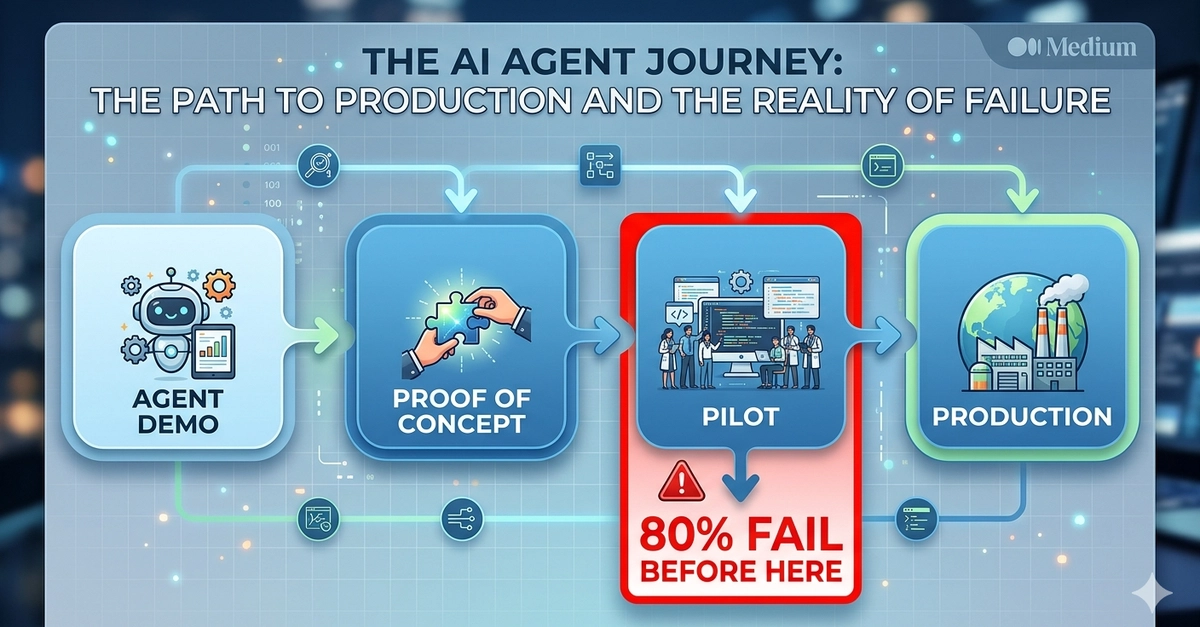
In 2026, the gap between AI agent demos and AI agent deployments is the most expensive gap in enterprise technology. We've watched organizations spin up promising pilots, hit a wall somewhere between 10 and 50 concurrent tasks, and quietly shelve the project. According to McKinsey's The State of AI in the Enterprise 2024, organizations are moving beyond pilots into production deployments, but successful implementations require clear governance frameworks and integration with existing business processes. Most teams skip both. That's where things break.
This isn't a theoretical problem. We built our first Autonomous SDR on a flat 3-agent architecture: research, scoring, and writing all reporting to a single orchestrator. It worked on 5 leads. At 50, the scorer sat idle waiting on research that had nothing to do with scoring. Splitting into discrete agents with explicit handoff contracts between them cut end-to-end processing time and made each component independently testable. We learned the hard way that implicit data passing doesn't hold up when volume increases. Every pipeline we've built since uses explicit inter-agent schemas for exactly that reason.
Here are the five failure modes we see most often, and what separates the deployments that survive from the ones that don't.