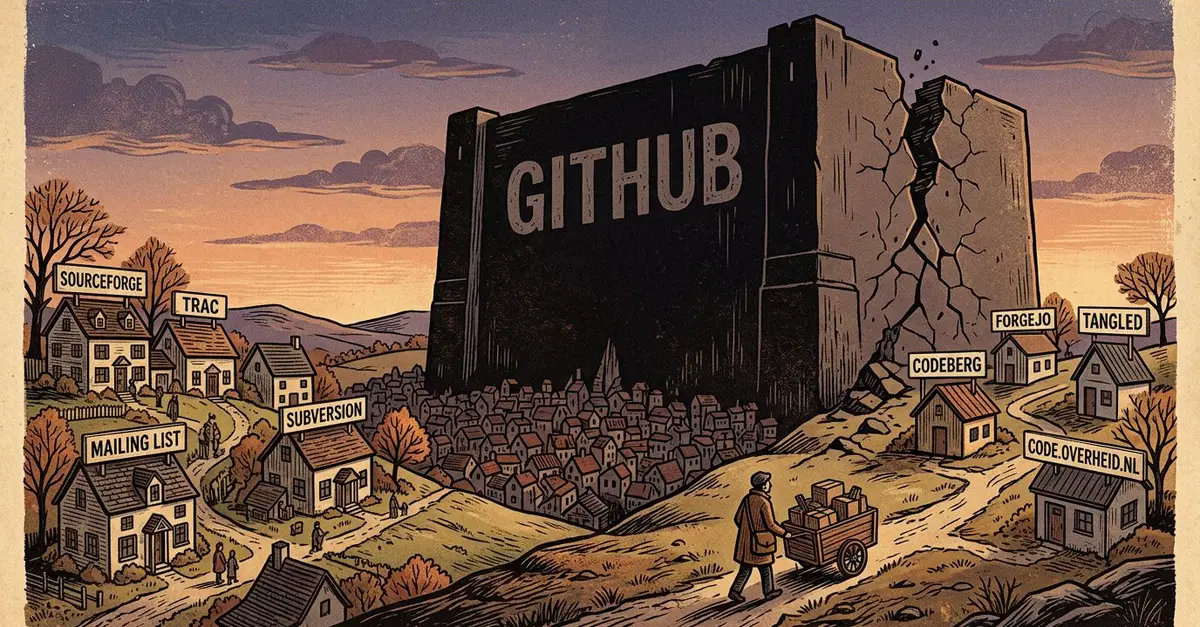
On April 29, 2026, Mitchell Hashimoto announced he was moving Ghostty off GitHub. His phrasing — "GitHub is no longer a place for serious work if it just blocks you out for hours per day, every day" — landed on the front page of Hacker News via The Register and stayed there. The departure itself isn't the story. The departure plus the four other threads on the same front page that week — about a federated-forge protocol, a security audit of GitHub's leading alternative, the Dutch government's Forgejo-based code platform, and Armin Ronacher's long essay on what came before GitHub — those, taken together, are the story. Five threads, one shape.
Hashimoto is not a casual user. He is HashiCorp's co-founder; he is the developer behind Ghostty, the terminal emulator he has been working on since leaving HashiCorp; and as he put it in his own post, he is "GitHub user 1299, joined Feb 2008." He is, in the phrase he used to introduce his journal, the kind of person who "doom scroll[s] GitHub issues since before that was a word." If GitHub still feels like home for anyone, it would be him.
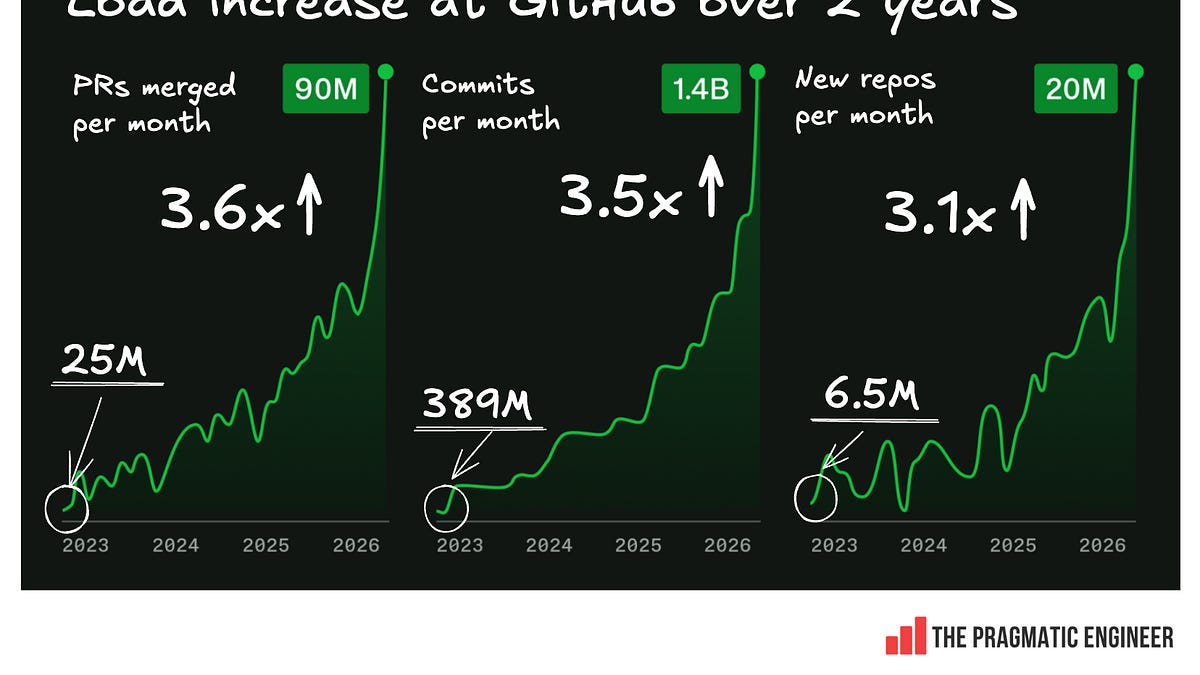
His description of the past month is what makes the post unusual. He kept a journal of dates, putting an "X" next to every day a GitHub outage had blocked him from doing work. "Almost every day has an 'X'," he wrote. "On the day I am writing this post, I've been unable to do any PR review for ~2 hours because there is a GitHub Actions outage." The Register noted that the post itself appeared just before an April 28 incident in which pull requests stopped completing because of an Elasticsearch failure. The official excuse circulating around the thread — that GitHub is straining under a flood of vibe-coded projects — got the obvious counter from one commenter: "if you've built a public SaaS before you know the job is not to host the software, it's to put rails around people taking it down. They've had since 2008 to build those rails, and they're just now hitting places that take the service down on the regular." Whether the surge story is the real cause or the convenient one, the customer-side argument lands either way.