Introduction
One of the most consequential decisions in microservices architecture is data storage. Monolithic systems traditionally rely on a single relational database to service all needs — a model that worked well for decades but creates tight coupling, limits scalability, and forces every domain to conform to the same persistence paradigm regardless of whether it is the right fit.
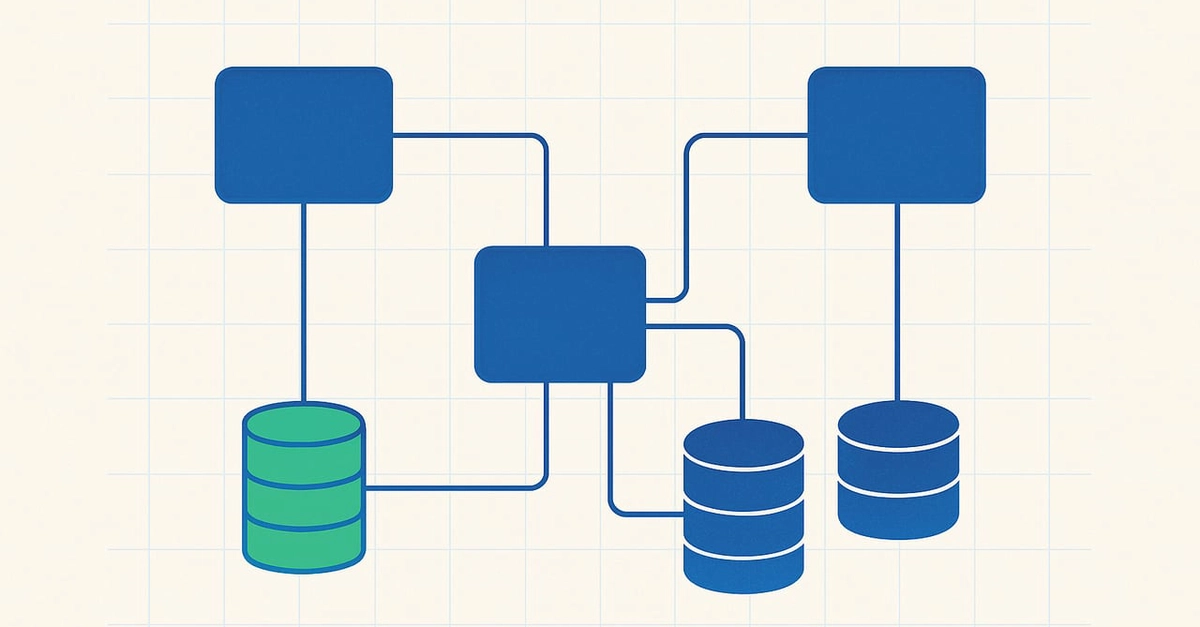
Modern distributed systems have embraced a concept known as polyglot persistence — the practice of using different data storage technologies within the same system, each chosen to match the access patterns and characteristics of the domain it serves. A MVP e-commerce project examined in this document demonstrates this pattern in a concrete way: three different databases, each serving a distinct microservice, each chosen deliberately.
The Three-Database Architecture
The platform studied here organizes data across three specialized stores: