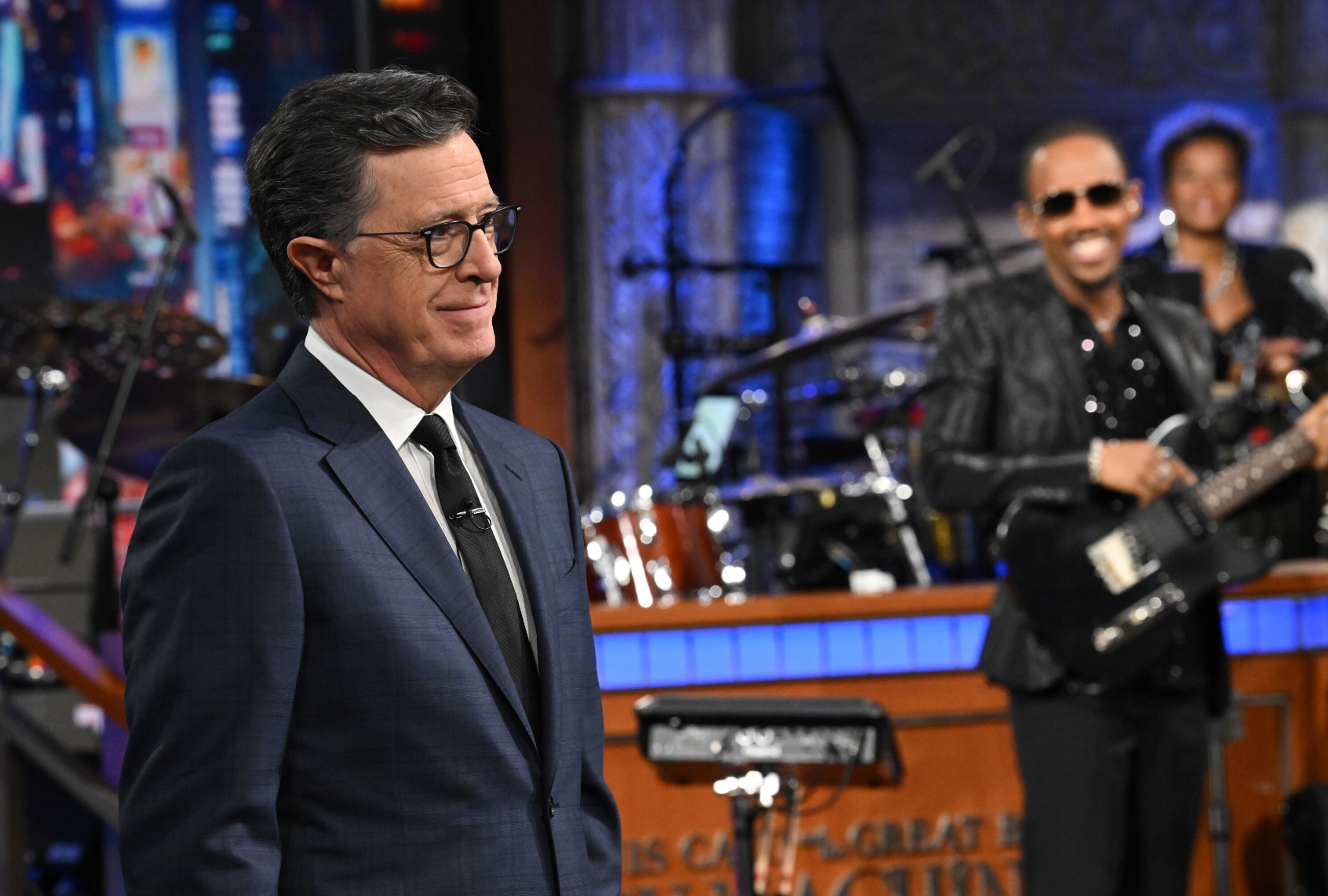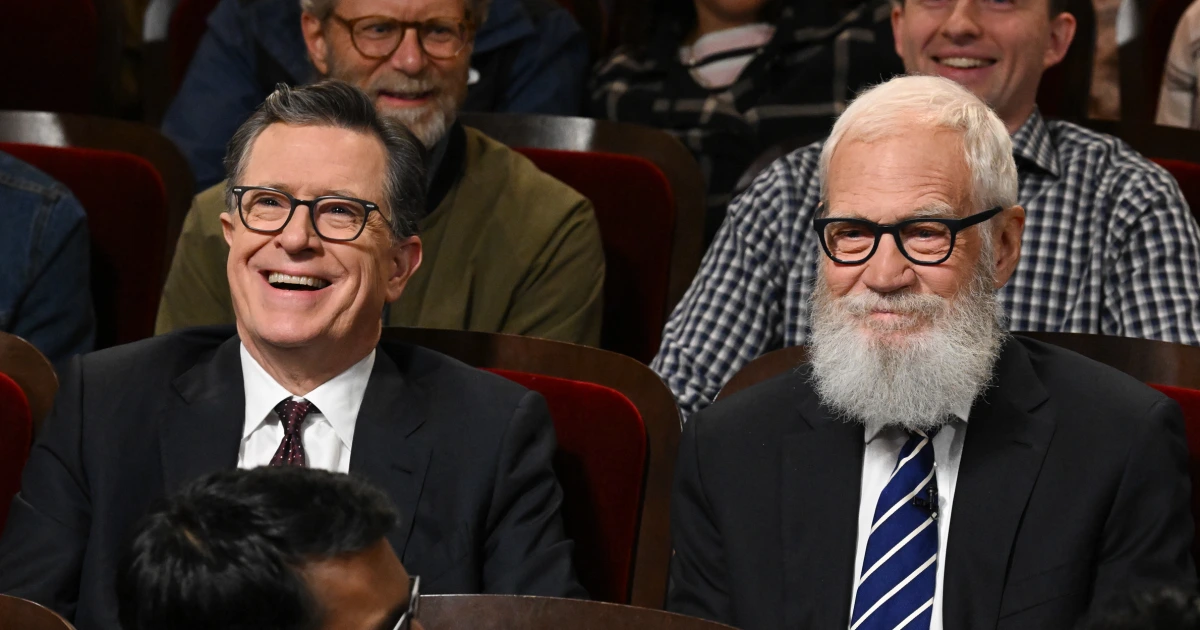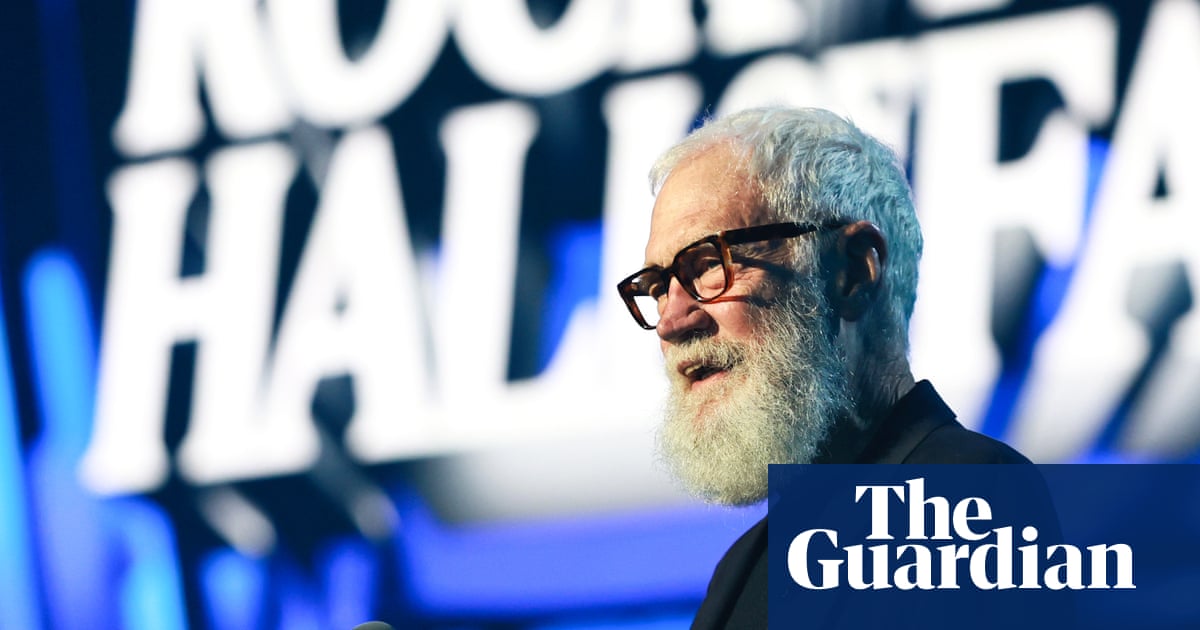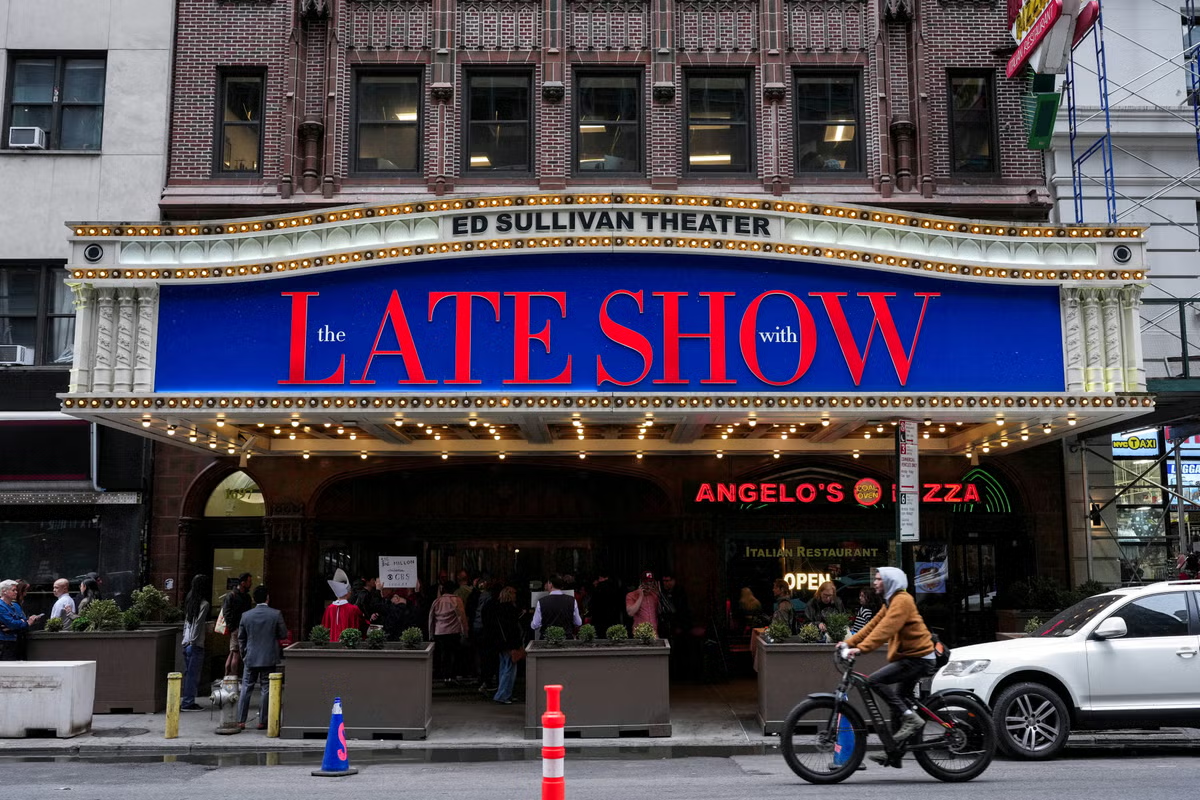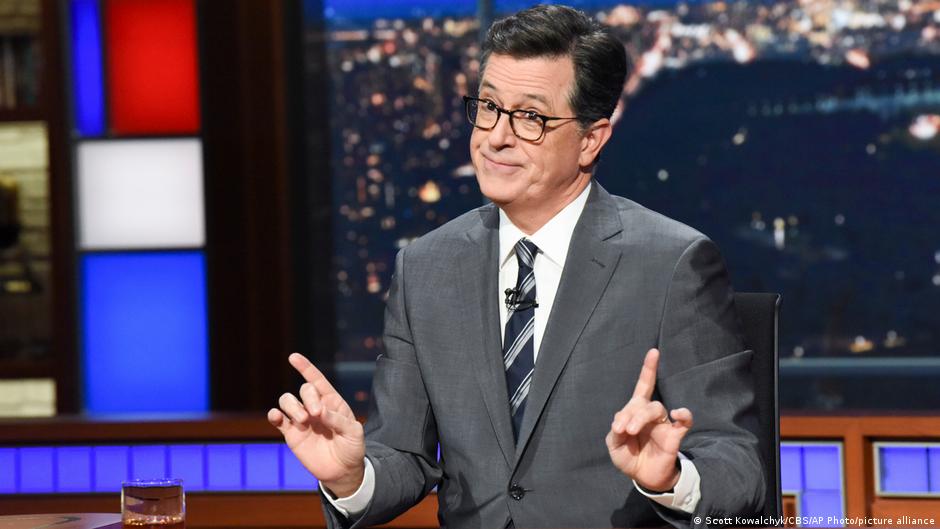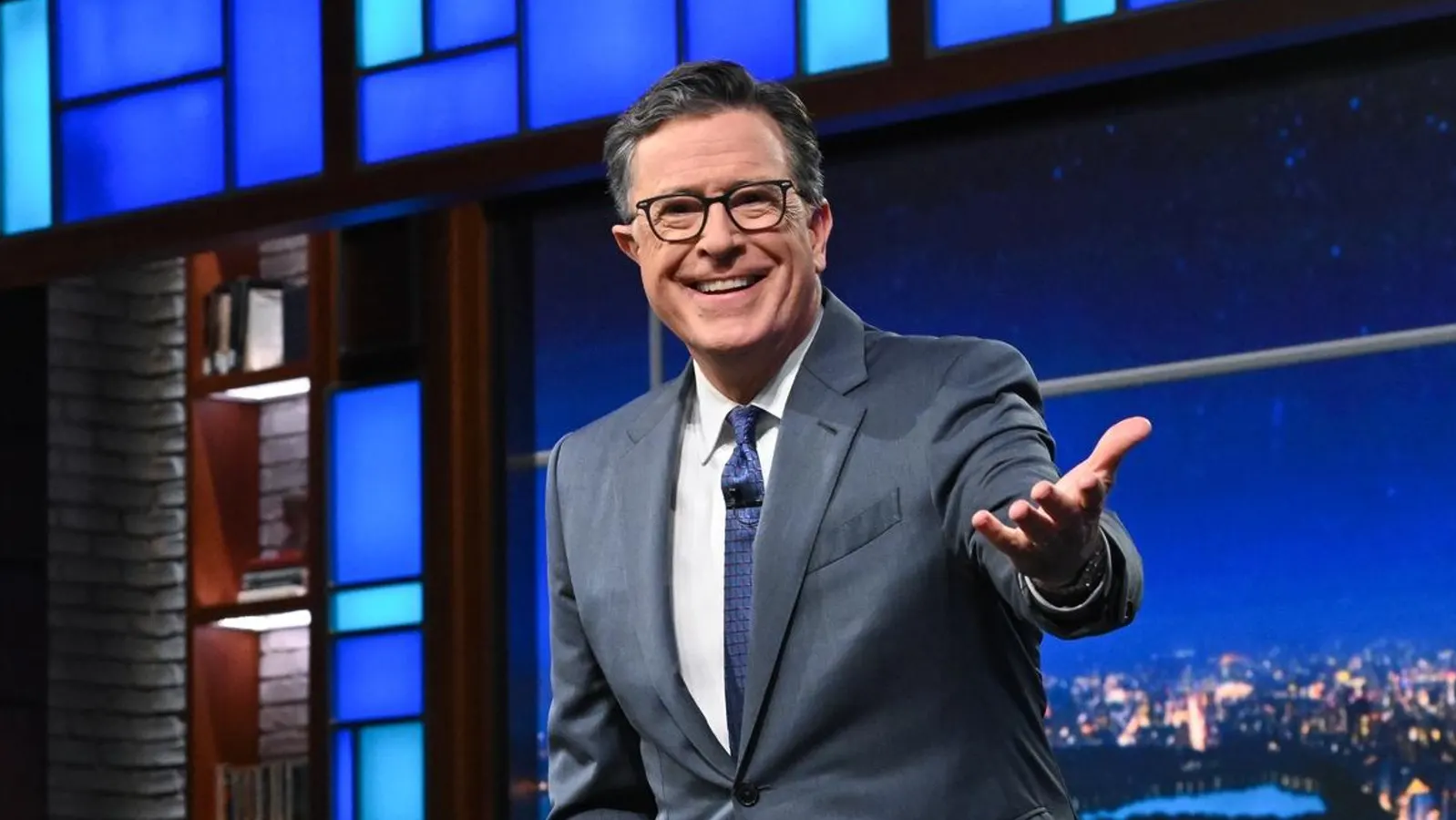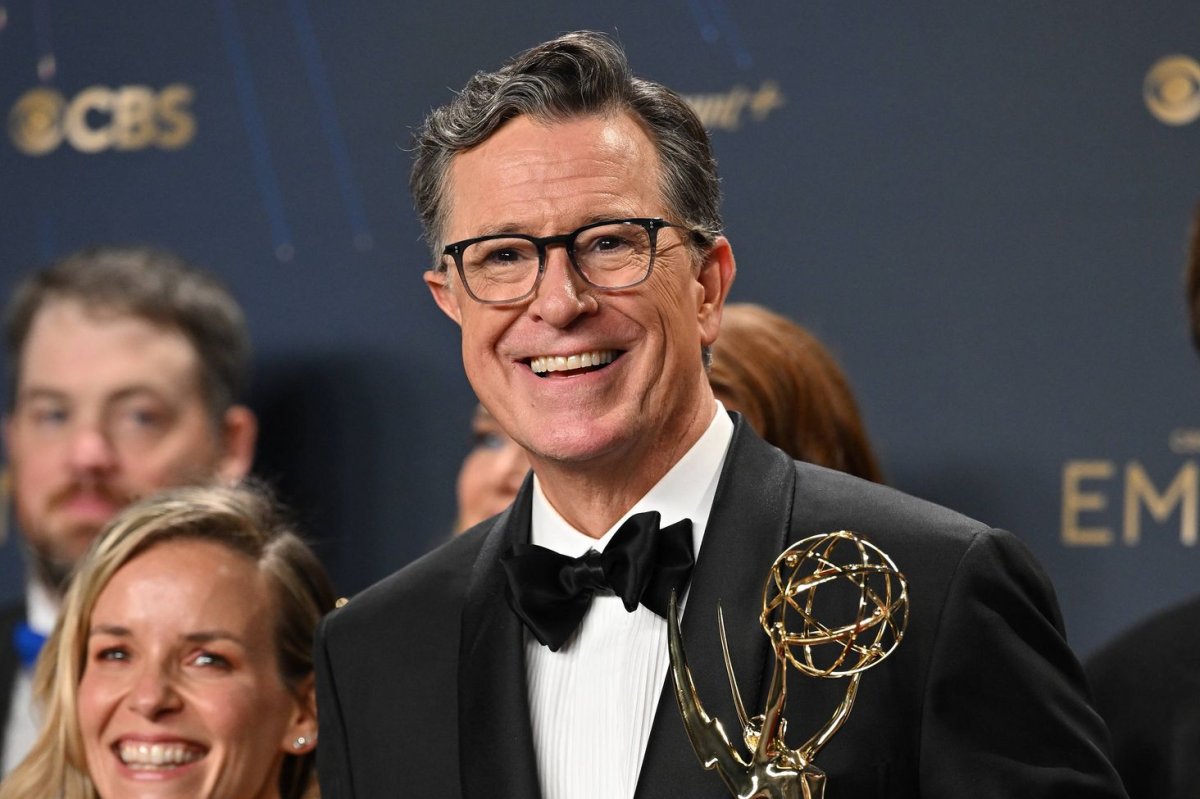
I don’t know that I’ll watch Stephen Colbert’s final episode of The Late Show tonight, which will also be the final episode of The Late Show’s 33-year run on CBS. I did, however, watch David Letterman’s. Last Thursday, the enigmatic, Santa-bearded comedian emerged from retirement for one last appearance on the show he created at CBS back in 1993. It was, as one might expect, a bit sentimental and a bit silly. The only two hosts The Late Show has ever known talked briefly about the death of the show, then about Letterman’s new dog, then about memories of his mother—who had been a frequent guest on the original version of The Late Show—and then the two adjourned to the roof, from which they hurled Colbert’s custom-made chairs, along with other sundry objects, in a bit they called “The Wanton Destruction of CBS Property.” And while it made me melancholy to watch these two titans of linear TV throw their last meal of watermelons from the roof of the Ed Sullivan Theater, it wasn’t only Colbert’s demise that was bumming me out. It feels appropriate that the house Dave built would eventually fall due to the sniveling cowardice of the “suits,” as he liked to call them. (CBS declined to renew Colbert’s contract last year and decided to shutter the show in what they say was a business decision, but which many observers interpret to be an apparent move by Paramount to appease the Trump administration.) In 1991, David Letterman was the host of Late Night With David Letterman, a zany, aggro variety show that occupied the post–Tonight Show time slot on NBC. That year, Johnny Carson, the longtime host of Tonight, shocked both the viewing public and his network by announcing his retirement. As detailed in Bill Carter’s extensive history of the drama, The Late Shift: Letterman, Leno, and the Network Battle for the Night, Letterman had long dreamed of replacing his idol Johnny Carson, and Carson himself saw Letterman as his heir apparent. But, unbeknownst to either of them, NBC had made an agreement with frequent Tonight Show guest-host Jay Leno that the show would be his upon Carson’s retirement. So Letterman lit out for the territory, taking his talents to CBS, where his Late Show began airing in 1993 as a direct time-slot competitor to Leno’s Tonight Show. Letterman’s show, then, came into the world as a giant middle finger to the network executives at NBC who did him wrong. Of course, it’s not as if Letterman independently financed a late-night talk show on public access TV. He just swapped one set of suits for another, but CBS granted him the independence to continue directing his venom toward his betrayers, long after the late-night war was settled. In an incredible segment from 1998, Letterman interviewed Norm MacDonald, who’d just been fired from NBC’s Saturday Night Live, allegedly for making too many jokes about O.J. Simpson, a close friend of NBC executive Don Ohlmeyer. There’s a gleam in Letterman’s eye as he lays into the network for their shortsightedness. “I know Don Ohlmeyer,” he says, “and, between you and me, he’s an idiot.” Then, in 2010, when NBC got caught in another Tonight Show succession drama—giving the show to Conan O’Brien before taking it away and giving it back to Jay Leno—Letterman’s CBS monologue became must-see TV every night, a raucous running commentary on the pettiness and venality of corporate media decision-makers.So it’s fitting that a television program born as a result of the intransigence of one major network would die as a result of the intransigency of a different network. As I listened to Letterman impart hard-won koans to his successor—“You can take a man’s show, you can’t take a man’s voice,” he said—I couldn’t help but find the moment hollow. It’s nice to think that Colbert will still have his voice, presumably to podcast with when the time comes, but sometimes the show matters too. This particular one meant a lot to me; it meant a lot more to Stephen Colbert and David Letterman. One day, the political figures who influenced these events will be out of power, and the corporate officers of these major media corporations will seek survival above all else. There may be a day again, in other words, when a show like Colbert’s can exist without interference. But, whatever comes next, The Late Show will be gone—no amount of podcasting will bring it back.Stephen Colbert’s Late Show was always a different animal from Letterman’s. Coming out of the wild experimentation of Letterman’s NBC Late Night, The Late Show toed a narrow line between the courtliness of a Carsonian talk show and the chaotic anti-comedy that was always Letterman’s personal sensibility. There were regular bits like “Stupid Pet Tricks,” “Will It Float?” and my favorite, “Hairpiece (Not a Hairpiece)?” And there were regular disruptions of TV form, like when Letterman would cut away from his patter to stock footage of a car accident. And the interviews could be strange trips, as well. But he was also, more often than not, in control of the proceedings. For all his manic hijinks, Letterman had an almost classical intuition for hosting. Whatever happened once they got out there, Letterman extended a kind of old-school hospitality to his guests. When Letterman retired, I’ll admit that I hoped his replacement would be Amy Sedaris, a beloved recurring guest who would have been a fit standard-bearer to bring The Late Show’s comic pandemonium into the future. Instead, the show went to Colbert, a longtime comedy partner of Sedaris, and transformed in different ways. Never experimental or radical, Colbert replaced Letterman’s rascally manners with the warm wiliness of your favorite high school teacher. Colbert interviewed guests with an earnestness that could read as smarm in a media environment so unused to that kind of sincerity. This was quite a departure from the comedian’s previous life playing a Bill O’Reilly–esque satire of Fox News journalism on The Colbert Report. On that show, distanced from his own authentic personality, Colbert could be cutting and astringent. Losing that made sense when he made the transition to The Late Show, but it also meant losing other aspects of his appeal. The new Colbert felt more aligned with the naïve optimist who launched the “Rally to Restore Sanity and/or Fear” in 2010, a stunt that was meant to pillory political hypocrisy across the political spectrum but that served as a cringey precursor to the kind of bothsidesism that now seems endemic in political commentary. Colbert tried to begin his Late Show from an apolitical angle, to trade his old precision satire tools for a softer approach, but, within a year, it became clear that he needed to get political to survive. Still, as the critic Will Leitch wrote recently, “The Late Show was a perfectly fine show, but it was never transcendent in the way The Colbert Report was. It was just another show in which an older White guy told safe jokes from behind a desk.”In that way, it feels odd to mourn so hard for a show like this. By the time Letterman retired in 2015, we were already well into late-night’s viral era, a period inaugurated by the rise of Jimmy Fallon. As much as the circulation of clips online helped breathe some life into the form, it would prove to never really be enough. In 2024, for instance, Fallon’s Tonight Show was reduced to four episodes per week, and Seth Meyers, who hosts Letterman’s original Late Night, had to fire his studio band. It would not be a surprise if either of those shows bit the dust in the coming years, for reasons political or otherwise.One of Colbert’s most visible innovations in the format was the conspicuous introduction of his devout Catholicism into the proceedings. Never preachy, Colbert could sometimes affect the manner of a cool catechism teacher, bringing to mind the jokes that might punch up a stultifying homily, a kind of welcoming rebelliousness cushioned by belief in a system bigger than us all. Viral clips of the show would often feature Colbert and his guest engaging in questions about the existence of God. (Notably, the most overt instance of recent censorship came when CBS pushed The Late Show not to air Colbert’s interview with James Talarico, much of which focused on the possibilities of a new Christian left. The interview went straight to the show’s YouTube channel.) Of all the snide and smug voices of the men of late-night, Colbert’s was the godliest. Despite his partisan bite, the most righteous. They don’t make hosts like that anymore—they hardly ever did.A hallmark of the MAGA movement—at least in its second wave—is the seeming contradiction between its weaponized nostalgia and its compulsion to tear things down. Trump motored through both elections on the energy of a sentimental politics of return to a lost America, an America perhaps represented by the wide reach and influence of a program like The Ed Sullivan Show. The past, we are told, has been altered beyond recognition by derangements of public consensus like #MeToo and DEI, and so the mission of this politics is to rid the country of those unasked-for revolutions. But the means have all been destructive. Rather than reform or rat out existing institutions, this administration has sought eradication. This is the logic of Elon Musk’s DOGE quest. You can’t reform the Department of Education; you have to get rid of it. You don’t get a late-night comedian fired or bring him in line; you get his show canceled.But what does a show matter? The late-night shows—whether it’s The Late Show or The Tonight Show or Jimmy Kimmel Live!—are locations of the sloppy, sometimes generative convergence between TV’s past and its future. They can be spaces that reinforce norms, but they can also be spaces of figuring out. Letterman helped the format to take on that charge, and Colbert, in his spiritual pilgrimage for a media environment free from fear and insanity, was striving along those lines. The continued existence of these shows gave that kind of exploratory improvisation a place at the center of the cultural ecosystem, and a budget to go with it. What the closing down of The Late Show represents is the wanton destruction of cultural property. It was imperfect, outdated even, but the possibility of change goes out the window now that it’s gone. I’d love to say that I hope, one day, something better replaces it. I love the Dick Cavett-on-drugs audacity of The Adam Friedland Show, and Everybody’s Live With John Mulaney was full of surprises. The talk show, if anything, is a genre on the rise online. But The Late Show is dead, and the late-night show is dying as an institution. To imagine its glorious return would be to avow a misguided kind of faith in the institutions and stewards of contemporary corporate media. It’s too late for that now.
What We Have Lost With The Late Show
There may be a day again when TV executives have the backbone to support a show like Colbert’s. But The Late Show will be gone.
1,826 words~8 min read