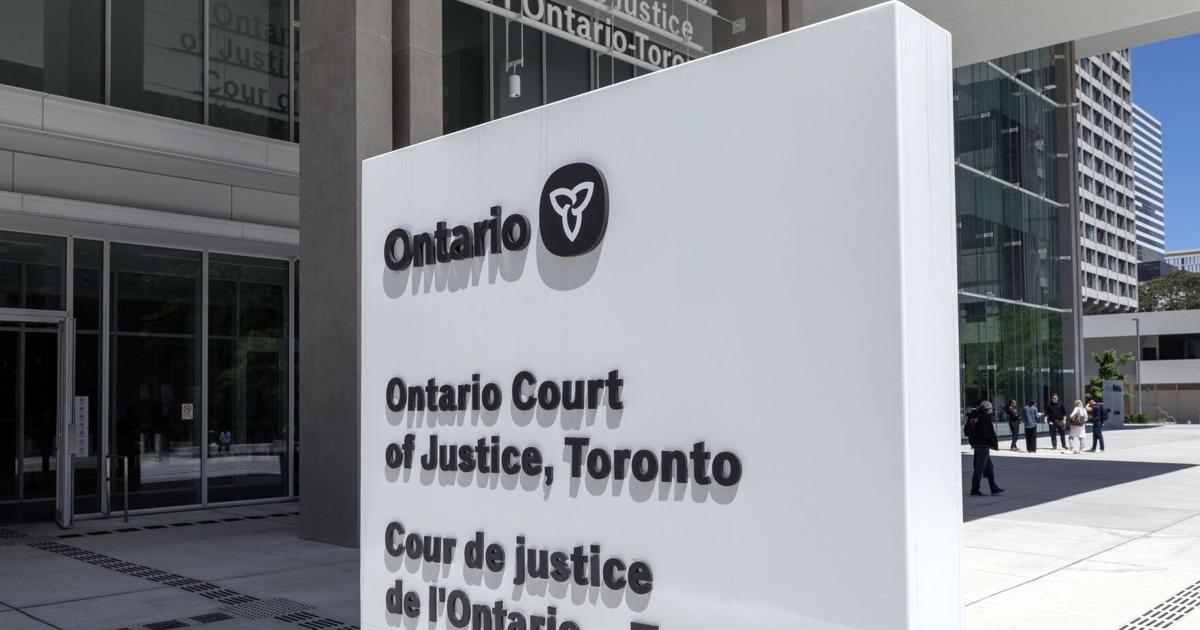
Skip to Content Subscribe Our Offers My Account Manage My Subscriptions FAQ Newsletters Canada Canadian True Crime Canadian Politics Health World Israel & Middle East Financial Post NP Comment Longreads Puzzmo Diversions Comics NP News Quiz New York Times Crossword Horoscopes Life Eating & Drinking Style Sponsored Play for Ontario Travel Travel Canada Travel USA Travel International Cruises Travel Essentials Culture Books Celebrity Movies Music Theatre Television Business Essentials Advice Lives Told Tails Told Shopping Buy Canadian Home Living Outdoor Living Tech Style & Beauty Kitchen & Dining Personal Care Entertainment & Hobbies Gift Guide Travel Guide Deals Savings National Post Store More Sports Hockey Baseball Basketball Football Soccer Golf Tennis Driving Vehicle Research Reviews News Gear Guide Obituaries Place an Obituary Place an In Memoriam Classifieds Place an Ad Celebrations Working Business Ads Archives Healthing Epaper Manage Print Subscription Profile Settings My Subscriptions Saved Articles My Offers Newsletters Customer Service FAQ Newsletters Canada World Financial Post NP Comment Longreads Puzzmo Diversions Life Shopping Epaper Manage Print Subscription HomeNewsCanadaToronto driver wins appeal of red light ticket nearly two decades after 'sarcastic' justice convicted himThe judge said there was no explanation for why it took nearly 18 years for the appeal to be heard, but the paperwork may have been 'lost'Last updated 11 minutes ago You can save this article by registering for free here. Or sign-in if you have an account.A Toronto driver has successfully appealed a red light ticket he got nearly two decades back. Photo by AdobeStockA Toronto driver who fought and lost an accusation of failing to stop at a red light nearly two decades back has cleared his name on appeal.Enjoy the latest local, national and international news.Exclusive articles by Conrad Black, Barbara Kay and others. Plus, special edition NP Platformed and First Reading newsletters and virtual events.Unlimited online access to National Post.National Post ePaper, an electronic replica of the print edition to view on any device, share and comment on.Daily puzzles including the New York Times Crossword.Support local journalism.Enjoy the latest local, national and international news.Exclusive articles by Conrad Black, Barbara Kay and others. Plus, special edition NP Platformed and First Reading newsletters and virtual events.Unlimited online access to National Post.National Post ePaper, an electronic replica of the print edition to view on any device, share and comment on.Daily puzzles including the New York Times Crossword.Support local journalism.Create an account or sign in to continue with your reading experience.Access articles from across Canada with one account.Share your thoughts and join the conversation in the comments.Enjoy additional articles per month.Get email updates from your favourite authors.Create an account or sign in to continue with your reading experience.Access articles from across Canada with one accountShare your thoughts and join the conversation in the commentsEnjoy additional articles per monthGet email updates from your favourite authorsSign In or Create an AccountorNeville Greene was charged on June 4, 2007. He pleaded not guilty, but a justice of the peace convicted him on July 10, 2008, after a police officer testified that he watched Greene turn left at the intersection of Sheppard Avenue West and Jane Street after the light turned red.“The Justice of the Peace’s reasons for conviction consist of the following two sentences: The officer was clear, concise and convincing of all the elements of the offence and the observations he made. There will be a finding of guilt and there will be a fine imposed,” according to a recent appeal heard in Ontario’s Court of Justice.Get a dash of perspective along with the trending news of the day in a very readable format.By signing up you consent to receive the above newsletter from Postmedia Network Inc.A welcome email is on its way. If you don't see it, please check your junk folder.The next issue of NP Posted will soon be in your inbox.We encountered an issue signing you up. Please try againJustice Brock Jones sided with Greene.“It was not explained to me why it took nearly 18 years for the appeal to be heard, other than that the paperwork may have been ‘lost’ for a long time. Nevertheless, for the reasons that follow, I granted the appeal,” Jones wrote in a May 14 decision.“I found that the Justice of the Peace’s reasons for conviction were inadequate and failed to address any of the central issues raised at trial. I also found that the Justice did not provide the degree of assistance necessary to ensure a fair trial for a self-represented litigant.”Greene tried to provide the police officer who was the lone prosecution witness at his trial with photos of the intersection in question so he could authenticate them, Jones said.“The purpose was to have the officer respond to the suggestion that there was construction in the area at the time, which might have impeded normal traffic flow. The photographs also had impeachment value, as the officer had previously testified that there was no construction in the area at the time. Mr. Greene asked the Justice how he could present the evidence properly, and the Justice sarcastically quipped that ‘(this) isn’t Law and Order’ and he could testify later if he wanted to do so.”Greene testified that when he entered the intersection, the traffic light was green, said the decision.“He had to wait until the light turned amber before he could proceed through the intersection because another vehicle was in front of him. During cross-examination, he accepted the prosecutor’s suggestion that the traffic light might have turned red before he finished moving through the intersection, but not before he entered.”When he tried to enter his photos of the intersection as evidence, the justice of the peace ruled they were inadmissible because they were taken the day after he was charged. “The Justice also demanded that the photographs be notarized.”Jurists must explain how they arrive at a conclusion, Jones said.“The reasons in this case fall woefully short of this standard. The Justice of the Peace does not explain that the appellant was presumed innocent or that the Crown bore the burden of proof on the essential elements of the offence,” said the judge.“More concerning, the Justice of the Peace states, without any reasoning, that the officer’s evidence was accepted and the appellant was convicted. The Justice of the Peace did not address or analyze the appellant’s testimony at all, even though it could raise a reasonable doubt on an essential element of the offence: whether the appellant proceeded into the intersection when the light was red. Nor did the Justice of the Peace explain why the officer’s testimony was accepted and the appellant’s rejected, or why the appellant’s testimony was not at least capable of raising a reasonable doubt.”Reasons “are particularly important when a court wrestles with contradictory evidence on a key issue,” Jones said.“I recognize this was a short trial on a simple matter, and that provincial offences courts are inundated with multiple matters that may be set for a trial on any given day,” he said. “Even considering the extremely busy nature of these courts and the routine nature of this trial, the failure of the Justice to abide by the inherent duty to provide meaningful reasons cannot be excused.”The justice of the peace didn’t tell Greene how the trial process operates, Jones said.When Greene asked whether he could call evidence about ongoing construction on the day in question, the justice of the peace “dismissed his question without providing any guidance on how he might properly present that potentially exculpatory evidence.”Evidence from any witness, “including a police officer’s, must be assessed by the court and will not merely be uncritically accepted,” Jones said.“Contrary to the Justice’s mid-trial ruling, it was not only permissible but entirely appropriate for Mr. Greene to show the photographs to the officer during cross-examination, giving the officer an opportunity to reconsider his position that there was no construction in the area at the time of the offence. He should have assisted Mr. Greene with this questioning. Furthermore, he was wrong to reject the introduction of the photographs when Mr. Greene testified. Even if the photographs were taken the day after the offence, if Mr. Greene had testified to their accuracy and to the presence at the time of the offence of the construction depicted in them, that would have been a sufficient basis for their authentication.”And there was no reason for the photos to be notarized, “when the photographs’ accuracy can be stipulated to by a live witness,” Jones said.“Finally, I observe that sarcastic remarks uttered by a Justice to a legally untrained person who is presumed innocent are unbecoming and may bring the administration of justice into disrepute.”Jones vacated Greene’s conviction and acquitted him “as it would not be in the public interest to send the case back for a new trial in these circumstances.”Our website is the place for the latest breaking news, exclusive scoops, longreads and provocative commentary. Please bookmark nationalpost.com and sign up for our daily newsletter, Posted, here. Join the Conversation This website uses cookies to personalize your content (including ads), and allows us to analyze our traffic. Read more about cookies here. By continuing to use our site, you agree to our Terms of Use and Privacy Policy.
Toronto driver wins appeal of red light ticket nearly two decades after 'sarcastic' justice convicted him
The judge said there was no explanation for why it took nearly 18 years for the appeal to be heard, but the paperwork may have been "lost."
1,530 words~7 min read