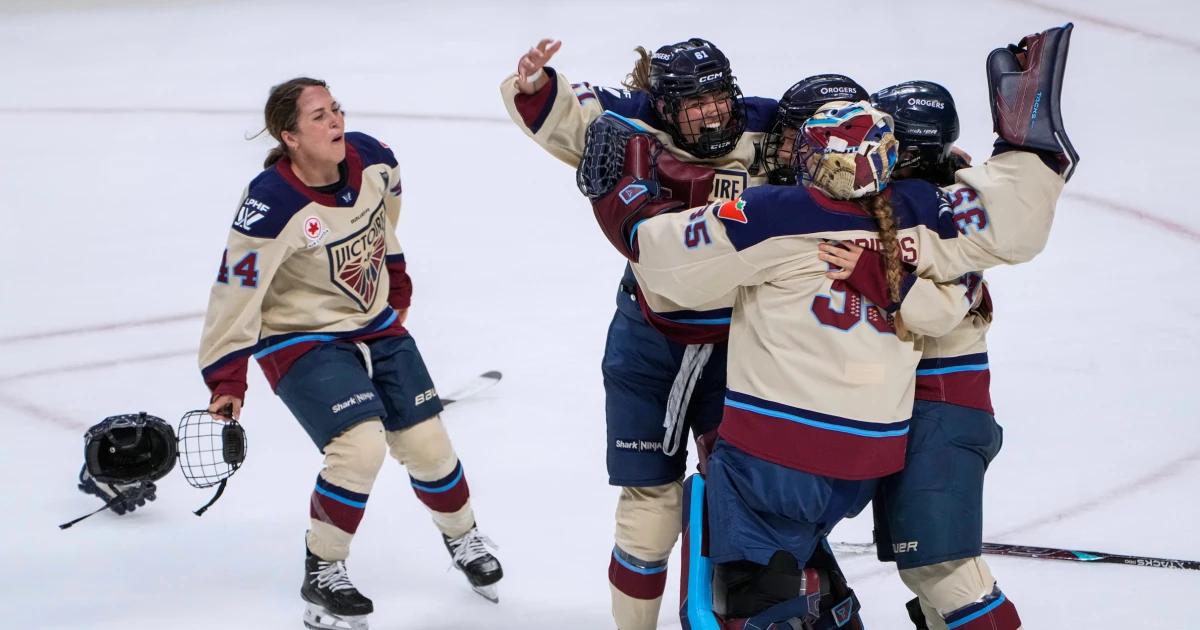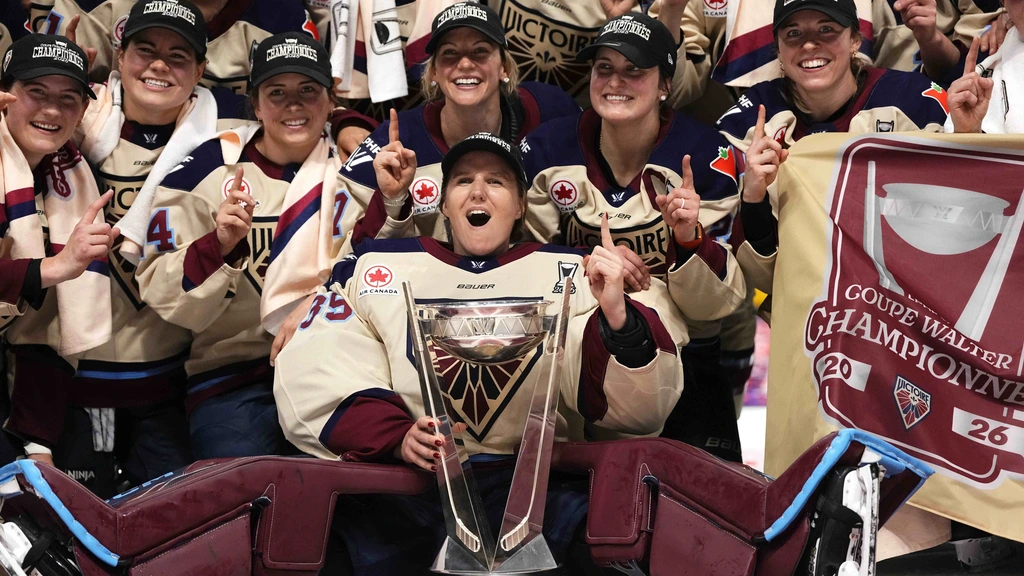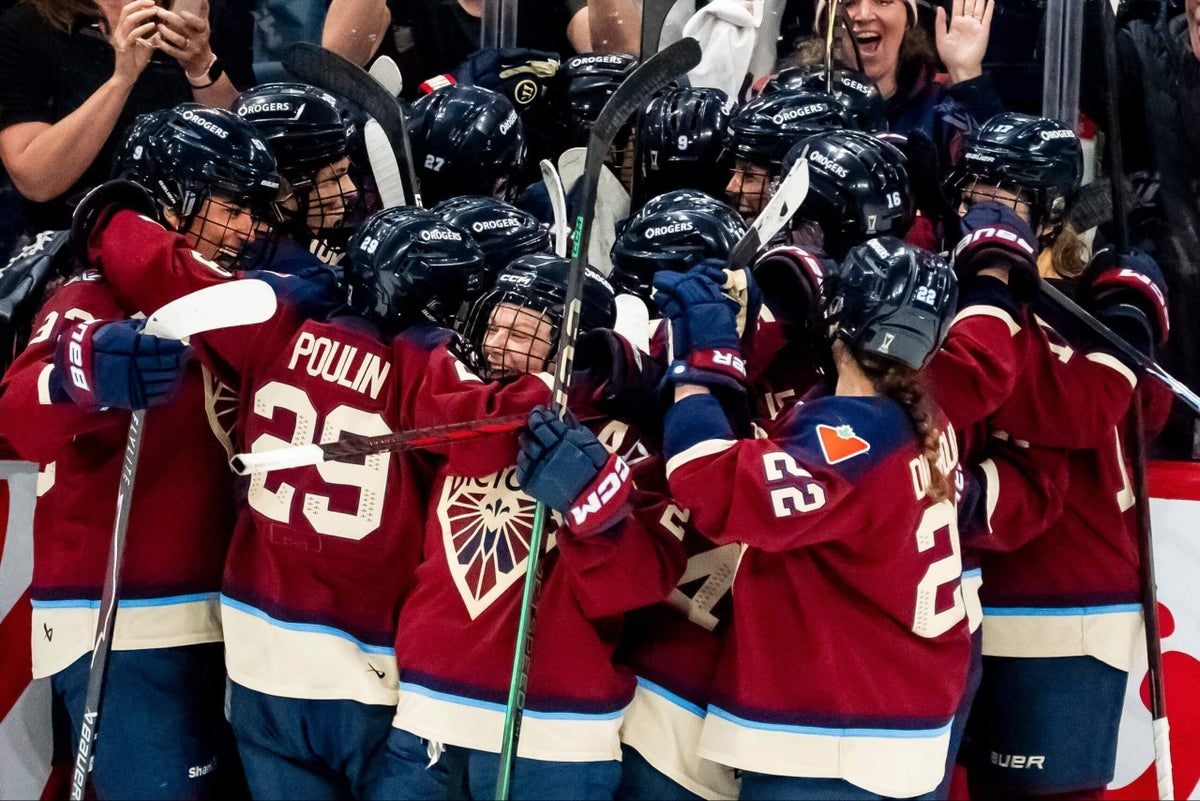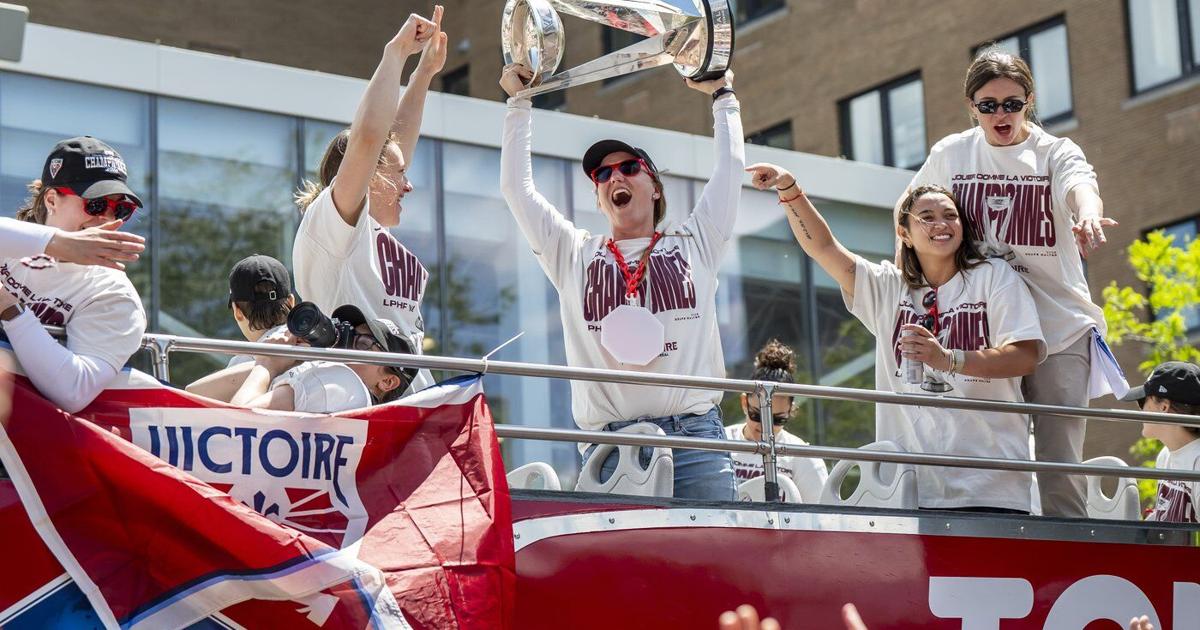
OTTAWA — Marie-Philip Poulin hoisted the only major trophy that has eluded her on Wednesday night after the Montreal Victoire won the Walter Cup as champions of the Professional Women’s Hockey League.When Poulin was presented with the Cup, she held it over her head while her teammates cheered and confetti rained down. Then, she cracked open a beer, poured it into the 35-pound trophy and took a couple of chugs.“She deserved this more than anybody in the world,” said defender Erin Ambrose, who watched her teammates take turns drinking from the trophy at center ice. “She’s been our leader the whole year, the best hockey player to ever play this game.”Amid the celebration of the first-ever Canadian winner of the PWHL title — which also included a beer shower for Montreal coach Kori Cheverie — it was easy to forget, just for a moment, that the PWHL is undergoing a major transformation this offseason.“It’s sad,” said Montreal forward Abby Roque when asked about the looming offseason. “We’d love, obviously, to have this group together again next year. That’s probably impossible based on the rules and things like that. So we’re gonna try to enjoy each other’s company now and worry about that later.”Soon, the PWHL will welcome four new expansion franchises in Detroit, Las Vegas, Hamilton, Ont., and San Jose, Calif., which will increase its size to 12 teams spread more widely across North America. The league could soon be split into two conferences, or multiple divisions, with a schedule designed to maximize rivalries and limit any travel concerns that might come with a larger footprint.Original six teams (Toronto, Ottawa, Montreal, Boston, New York and Minnesota) were largely clustered in the Northeast, save for the Minnesota Frost. Next year, there will be two teams in the Midwest (Detroit and Minnesota) and four in the West (Seattle, Vancouver, San Jose and Las Vegas), while the remaining six teams are in the East (Toronto, Ottawa, Montreal, Boston, New York and Hamilton).“For us it’s just the next iteration of what the PWHL is and what we want to be,” said Amy Scheer, the league’s executive vice president of business operations. “It’s a little bit (like) the league going from a child to a teenager to an adult.”Amid a wave of momentum for women’s sports, the PWHL’s ultimate goal was to grow to 12 franchises. There were two avenues to getting there: adding two teams in 2026-27 and two more the following season, or ripping the band-aid off and adding four next season — an option that meant more chaos this offseason but would ultimately spare the players further upheaval.The league chose the latter route.“As a league, you aspire to be big,” said Scheer. “The goal is not to stay at six teams. The goal is how do we grow this into a legitimate sports league?“In order to continue that growth and to find our path, you need to add teams, you need to cover both countries, you need to cover time zones.”The league expanded for the first time this season, adding teams in Vancouver and Seattle. And while both struggled on the ice, they had the largest average attendance in their home venues and generated the highest first-year merchandise sales of any team in the league to date.That the league is expanding yet again speaks to its early success and rapid growth. In Year 3, the PWHL surpassed one million fans in attendance in a single season for the first time. Average attendance also rose 28 percent from 7,230 spectators in 2024-25 to 9,304 this season — a 71 percent increase over the inaugural season in 2024.American attendance records were set and broken by sold-out games at Seattle’s Climate Pledge Arena and a neutral-site game at Madison Square Garden. A March 28 “Takeover Tour” game in Detroit became the first in league history to be broadcast on national television in the United States. According to the league, merchandise sales have doubled compared to last season and viewership has surged on the league’s YouTube channel.“I’m not sure people would have thought (expansion) would have come this fast,” said Scheer. “The fact that there is demand for the PWHL and people want us in their markets is really exciting for our league and for the game and for the growth of women’s hockey.”But getting to the league’s next chapter hasn’t come without complications or chaos.In a whirlwind 14 days, the PWHL announced the four expansion teams, two new general managers and finalists for major awards — all while Montreal and Ottawa played for the Walter Cup. There were playoff games scheduled back-to-back. The fifth and deciding game of the semifinals was postponed hours before puck drop due to an undisclosed illness on the Victoire.Players on the Montreal Victoire celebrate their Walter Cup win on Wednesday. (Troy Parla / Getty Images)Frost forward Taylor Heise was among the most vocal critics of the league’s scheduling, calling the back-to-back “inappropriate.”“I took heat for that one, but I truly don’t care at all,” Heise said at Minnesota’s end-of-season availability. “That’s the tough part about having things scheduled (the way it was). … When the expansion (process) was scheduled to start on May 28, there’s not a lot of wiggle room.”The league’s tight schedule also meant that the Victoire’s first-ever trip to the Finals was often competing with the Montreal Canadiens’ own NHL playoff run. Last week, just 5,062 fans attended Game 1 of the Walter Cup Finals — significantly lower than the Victoire’s average attendance of around 9,000 — as the Canadiens took on the Buffalo Sabres in a pivotal Game 5 at the same time. It was arguably the Victoire’s biggest game to date, and it was played in front of its smallest crowd for a game at Place Bell.Then there’s the looming expansion roster-building process, which means another summer of player movement that will more greatly impact players making league minimum, which will be around $38,245 in 2026-27, and a second straight league-wide shakeup. As Heise alluded, that process was tentatively set to begin on May 28, though it will now start on June 2.The league has yet to officially announce how expansion teams will be built or how the four new franchises will be integrated into the 2026 PWHL Draft, which will be held in less than a month, on June 17. But according to a document sent to players by the PWHL Players Association last month, which was reviewed by The Athletic, there will be a series of signing windows and no traditional expansion draft, a departure from last year’s process.The new process, PWHLPA executive director Malaika Underwood wrote in a May 3 email to players, “is a significant change that gives players more opportunity to participate in the process through negotiation and choice.”There’s also a concern that introducing so many new teams might negatively impact the product. The league has been confident that won’t be the case, with a record 236 players officially declared for the draft and a talent pool that includes 23 Olympians, such as tournament MVP Caroline Harvey, Laila Edwards and Abbey Murphy. Not to mention, creating more jobs — 92 roster spots — should be net-positive.“I think those are the things that I love the most about this job, is providing opportunity for more women in sports,” said Scheer. “Whether it’s as an athlete or it’s in the front office.”Beyond that, there’s the overall question of doing too much too soon. The league will now have just six months to stand up four new franchises. It has done a version of this before — launching in a six-month sprint in 2024, though in this case the league will need to balance building successful new franchises while maintaining the momentum of what it’s already built.“I think one thing we’ve learned about our staff and our leadership team and our entire staff is when the pressure’s on, we excel,” Scheer said. “Will Game 1 in Las Vegas be perfect? No. Will Game 1 in Hamilton be perfect? No. But every game we’ll learn something, every game we’ll improve, and every game we’ll build our quality.”
With new PWHL champion crowned, league sets sights on its hardest challenge yet
Amid Wednesday's celebration it was easy to forget, just for a moment, that the PWHL is undergoing a major transformation this offseason.
1,353 words~6 min read