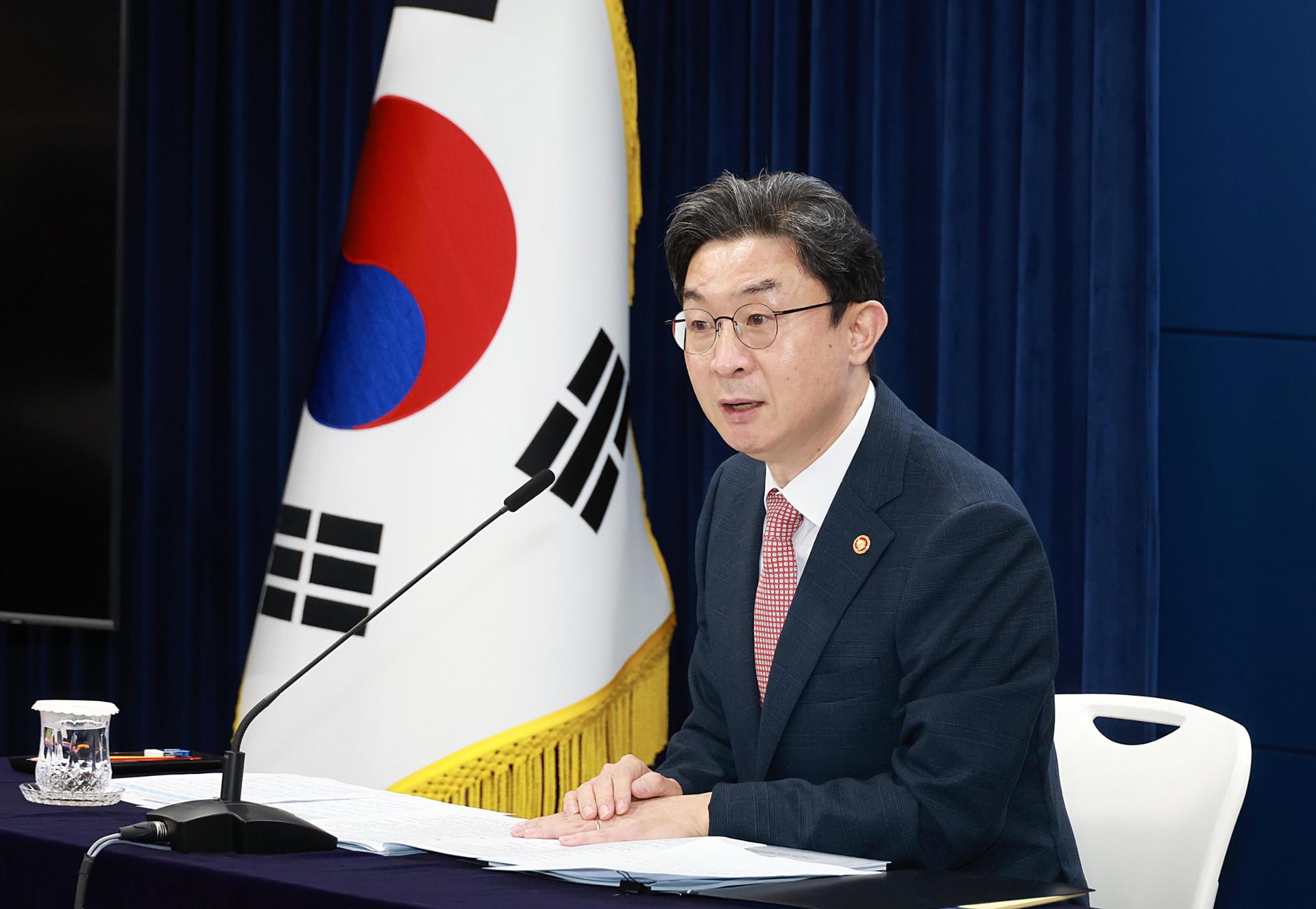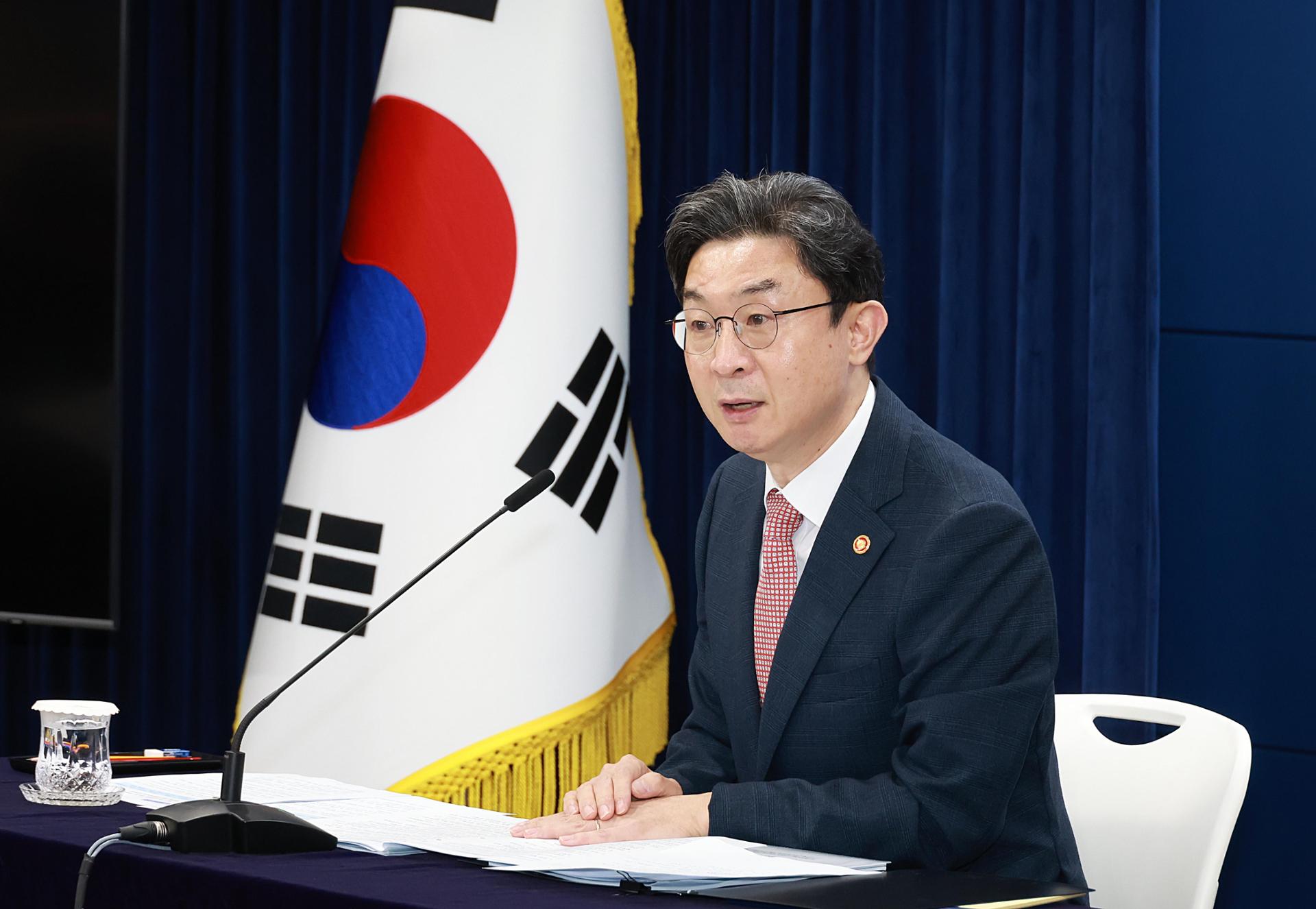
Financial Services Commission (FSC) Chairman Lee Eog-weon speaks during a press conference at Government Complex Seoul, Thursday. Courtesy of FSCAs part of the government’s broader push to expand access to mainstream lending for vulnerable and lower-credit borrowers, the Financial Services Commission (FSC) is set to launch a task force next month aimed at reshaping a finance system that has long favored super-prime clients, its chairman said Thursday.During a press conference, FSC Chairman Lee Eog-weon said government efforts have so far focused largely on emergency relief measures for people pushed outside the institutional lending system, including state-led debt relief programs and credit forgiveness initiatives.“But now, we plan to go a step further. We want to address the underlying structures that continue to create these social and economic vulnerabilities in the first place,” he said.The task force will be divided into four working groups. Its agenda includes ways to embed inclusive finance more deeply into corporate governance — such as the appointment of chief inclusive finance officers — as well as reviewing whether rigid prudential regulations can be made more flexible to better support underserved borrowers.The task force will also examine Korea’s credit evaluation framework, which Lee said still relies too heavily on conventional indicators such as borrowing histories, delinquency records and formal banking activity.The chairman added that he views the lending system as consisting of three layers: mainstream institutional finance, state-backed policy finance for vulnerable groups and alternative financing channels designed to help distressed individuals get back on their feet.“But the current institutional finance has become overly concentrated on serving super-prime borrowers through the safest and most predictable forms of lending, driving too many others to high-interest savings banks or private lenders outside the regulated system,” Lee said. “And for these people, the barriers to reentering the mainstream system become higher and opportunities to rebuild credit become narrower.”He pointed to growing limitations in traditional credit evaluation models, arguing that they are increasingly out of step with today’s changing economic realities and income structures.Current assessments still rely too heavily on past borrowing records and delinquency histories, he noted, adding that lenders should move beyond conventional deposit-based financing models and adopt broader credit assessment frameworks incorporating alternative and nonfinancial data.Separately, FSC announced plans to launch “Korea Premium Week” in September, a new investor relations event for overseas investors modeled after programs such as Japan Weeks and Taiwan Weeks.“We plan to bring together previously fragmented outreach events and turn Korea Premium Week into a signature international platform showcasing the country’s capital market,” Lee said.
Head of financial regulator vows to overhaul lending system for low-credit borrowers - The Korea Times
As part of the government’s broader push to expand access to mainstream lending for vulnerable and lower-credit borrowers, the Financial Services C...
420 words~2 min read