Debora Vandor / Getty Images
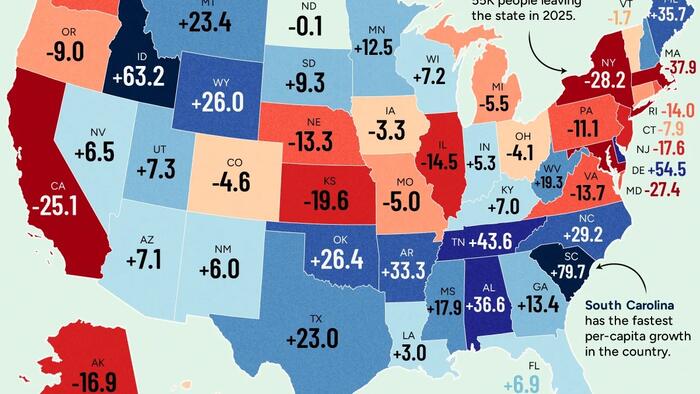
The price gap between expensive cities and affordable ones now runs wide enough to change where people choose to live. Buyers who cannot afford the markets they grew up in — or the ones where they built careers — are increasingly treating the question of where to live as a financial decision first and everything else second. The calculation is not complicated. Cheaper home prices mean smaller down payments, reduced monthly obligations, and in some cases the difference between owning something and renting forever. That arithmetic is redrawing the U.S. migration map one searcher at a time.
Nearly one in five house hunters — 18.8% — looked to move to a different part of the country in the fourth quarter of 2025, up from 17.9% a year prior and up from 15.9% a half-decade earlier. The steady rise carries a counterintuitive detail. The pandemic era, when remote work was at its peak and rates were hovering near 3%, generated a lower share of would-be relocators than the market saw in late 2025. Mortgage rates eased somewhat over the course of 2025, and inventory grew enough to give buyers options they had been waiting on. Many of those buyers used the opening to act on plans they had been deferring. Acting meant moving.