Oronde McClain was only 10 when he was shot in the head while caught in the gunfire of a drive-by shooting. He had to learn how to walk and talk again after an eight-week coma and the removal of one-third of his brain.
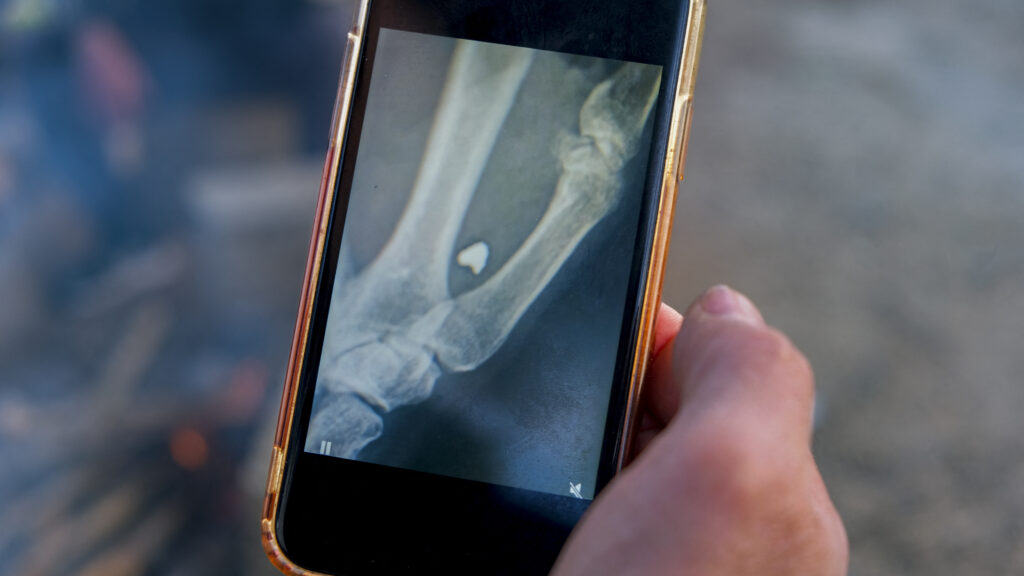
Twenty-five years later, McClain still lives with the health consequences of this incident. He has seizures, and his right side is partially paralyzed. He also lives with the physical remnants of what happened that day — specifically 36 retained bullet fragments that are lodged inside his brain and skull.
Every year, about 115,000 firearm injuries occur in the United States. A study estimates that about 75% of survivors of firearm injuries live with retained bullet fragments — pieces of metallic ammunition that remain in the body after a non-fatal gunshot wound. Changes in firearm and ammunition design, such as the increased use of hollow-tip bullets, have increased this risk. These bullets are designed to create more tissue destruction and are less likely to exit. Depending on where the fragment(s) are located, they are often not removed. Survivors of gun violence often live with retained bullet fragments inside the body for the rest of their lives.
It is well known that survivors of gun violence face long-term health consequences. Less publicized are the physical and psychological impacts that they can face specifically when bullet fragments remain inside.