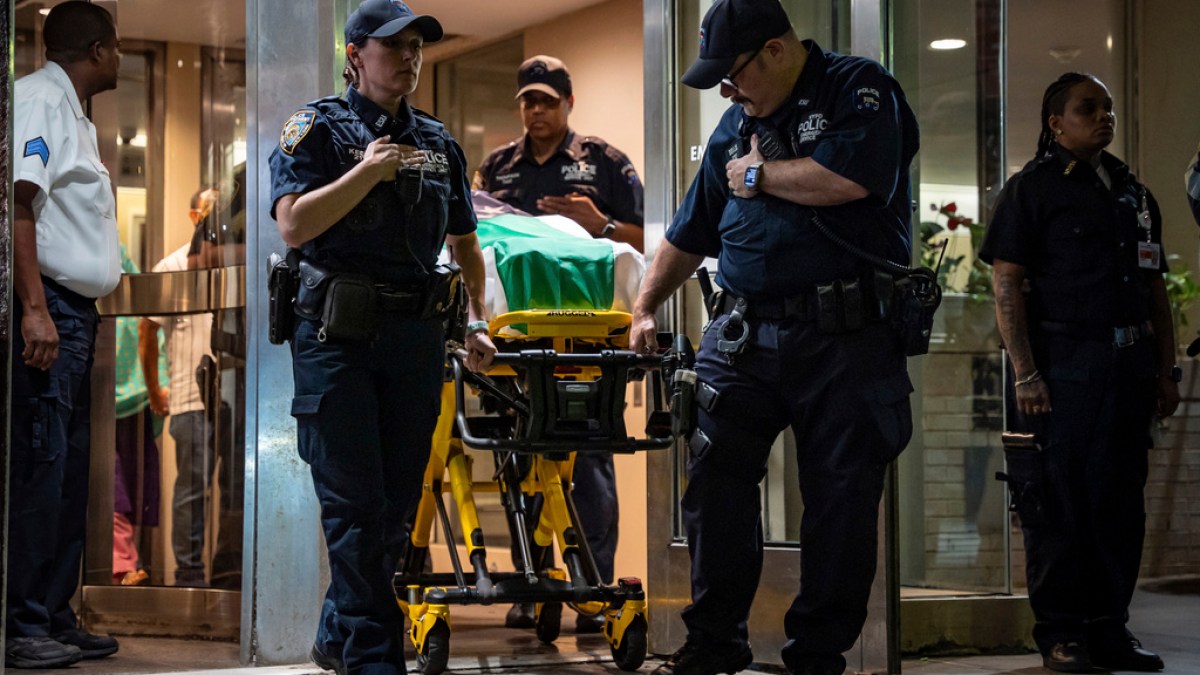
On Monday night, a gunman killed four people and himself in Manhattan in an attack that reportedly targeted the NFL’s headquarters in the city.
The gunman, Shane Tamura, left behind a note in which he said he’d been suffering from chronic traumatic encephalopathy, or CTE, as a result of playing football. He had asked for his brain to be studied as part of CTE research.
The discourse about football’s impact on the brain is not new to the NFL. Both players and their families have sued the league time and time again over the matter of brain damage and its effects on players’ post-career lives.
CTE is a “progressive neurodegenerative disease,” explained Dr. Jeremy Tanner, an assistant professor of neurology at the Glenn Biggs Institute for Alzheimer’s and Neurodegenerative Diseases at UT Health San Antonio. Research shows that football players, along with other people who participate in high-contact sports and activities, are more likely to develop the disease.
A study out of Boston University’s CTE Center found 40% of athletes under 30 had developed early signs of the disease upon their death. Another study out of BU found that roughly 91% of studied NFL players had the disease when they died.