The Government has advised Irish diplomats and officials in Brussels to be on their guard against “approaches” from tobacco industry lobbyists.This warning should prepare them for an extraordinary set of challenges about to be created by London. Last month, Westminster passed the Tobacco and Vapes Act, which applies across the United Kingdom. Its landmark provision is a “generational ban” on tobacco products. From January 1st next year, such products can be sold only to people born before the last day of 2008. The effect will be to raise the current age limit of 18 by one year every year, until smoking dies out with the last of its adherents. By 2081, the age limit will be 72 – the lifespan of the average British smoker.The Act also bans the sale of all vape and nicotine products to under-18s from October. When the legislation was first proposed by the former Conservative government three years ago, doubts were immediately raised over whether it could extend to Northern Ireland. The Windsor Framework applies European Union single market laws in the region, including the Tobacco Products Directive, plus general laws on consumer rights and free movement of goods.Denmark abandoned work on a generational ban in 2022, fearing it would breach these laws. That unnerved other EU countries interested in similar measures, Ireland among them.Although unionists had been concerned about a smoker’s sea border, they were reassured by London’s commitment to a nationwide ban. Nationalists supported the ban on principleThe British position is that a ban is compatible with EU law due to the flexibility permitted for public-health policies. Brussels also allows member states to set different minimum ages for buying tobacco, as Ireland will demonstrate in 2028 when it raises its age to 21.This sets up a high-stakes situation for the tobacco industry. If the generational ban goes ahead in Northern Ireland that will establish it is lawful in the EU.Since the UK formally notified Brussels of its plans last year, concerns and objections have been filed by seven members states: Croatia, Czechia, Greece, Italy, Portugal, Romania and Slovakia. All have significant tobacco industries – Italy is the continent’s largest producer. All have claimed actual or potential breach of the Windsor Framework.The European Commission has not yet taken a position. It objected to Denmark’s ban in 2022 but it is developing its own plans to make the EU tobacco-free. Only the commission and the British government can use the dispute-resolution mechanism of the Windsor Framework. However, any individual, company or organisation in the world can bring a Windsor Framework case through Northern Ireland’s courts.Ireland will be drawn into all these arguments, as the member state on the framework’s front line. Anyone who thinks they might usefully whisper in Irish ears will want to do so. For once, the Government need not worry about divisions in Northern Ireland. Although unionists had been concerned about a smoker’s sea border, they were reassured by London’s commitment to a nationwide ban. Nationalists supported the ban on principle. Because the Tobacco and Vapes Act touches on devolved powers, Stormont’s consent for it was required by convention. This was granted last year, with only People Before Profit and the Traditional Unionist Voice objecting, mainly over concerns about the law’s enforceability.Unfortunately, those concerns are warranted. Any restriction on sales of tobacco and vapes creates opportunities for smugglers, counterfeiters and other rogue traders. Gradually raising the age limit could almost have been designed to drive steady growth of the black market. Paramilitaries and criminal gangs are already in place to serve this expanding business. Northern Ireland also has an increasing number of the dubious high street stores linked by the authorities to criminality, much of it involving illicit sales of tobacco and vapes.Smuggling would still be a major issue if age limits were to rise together on both sides of the Border. Different limits will make matters worse.The generational ban is to be enforced through a new licensing scheme for retailers, policed by local councils. This will hardly deter people prepared to operate outside the law. In reality, policing the effects of the ban will fall to the specialist agencies and partnerships covering organised crime, paramilitary crime, immigration offences and tax evasion. These involve the PSNI working alongside UK-wide bodies such as the Home Office and the National Crime Agency. They co-operate with their counterparts in Ireland via the Joint Agency Task Force – and further co-operation will certainly be required.Enriching paramilitaries and incentivising smuggling creates particular national security concerns for the UK and Ireland. Boosting organised crime in general raises security concerns across Europe – Greece, Romania and Slovakia mentioned it in their formal objections.The Windsor Framework is ultimately premised on protecting peace, political stability and an open border. If the UK’s ban – or policing the ban – starts looking like a problem for those objectives, what position will Ireland take?
Newton Emerson: UK’s ‘generational ban’ on tobacco will give Dublin a headache
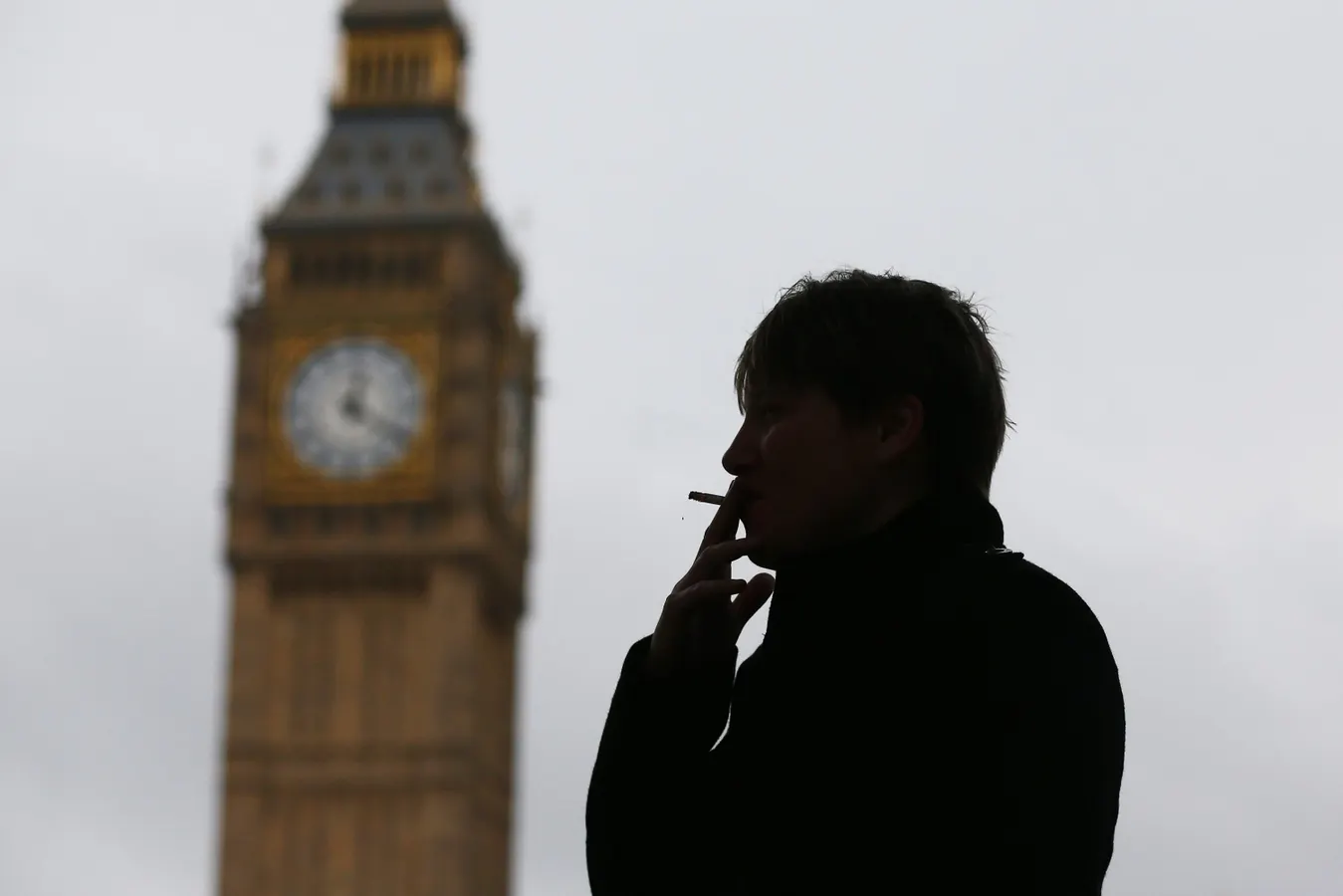
Effect will be to raise the current age limit of 18 by one year every year, until smoking dies out with the last of its adherents
811 words~4 min read