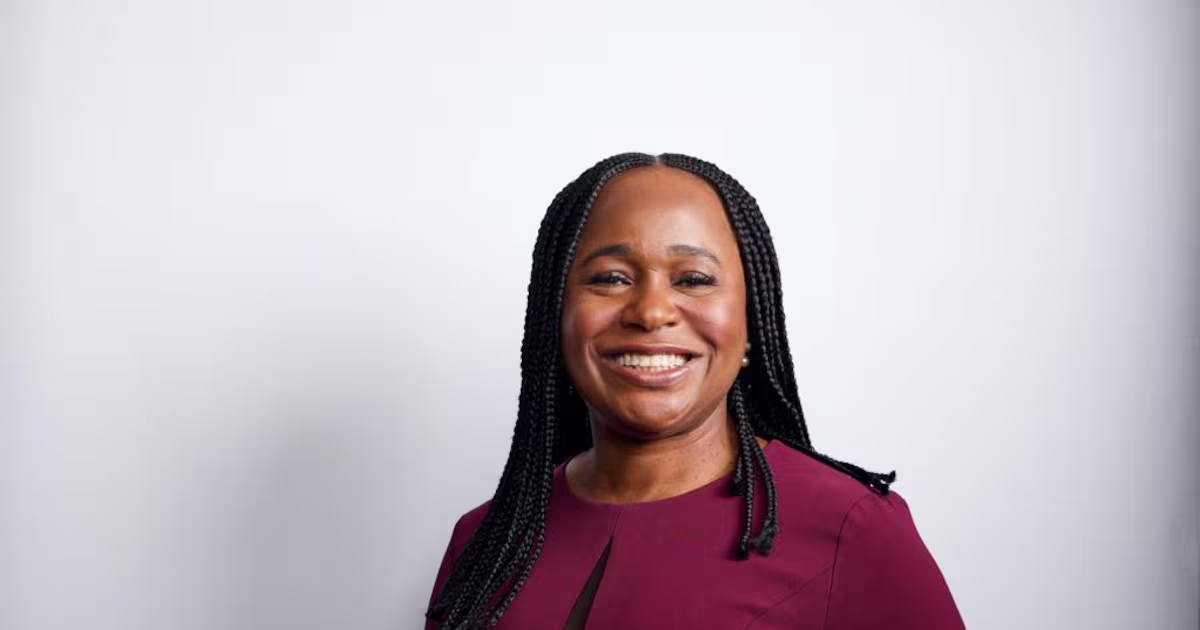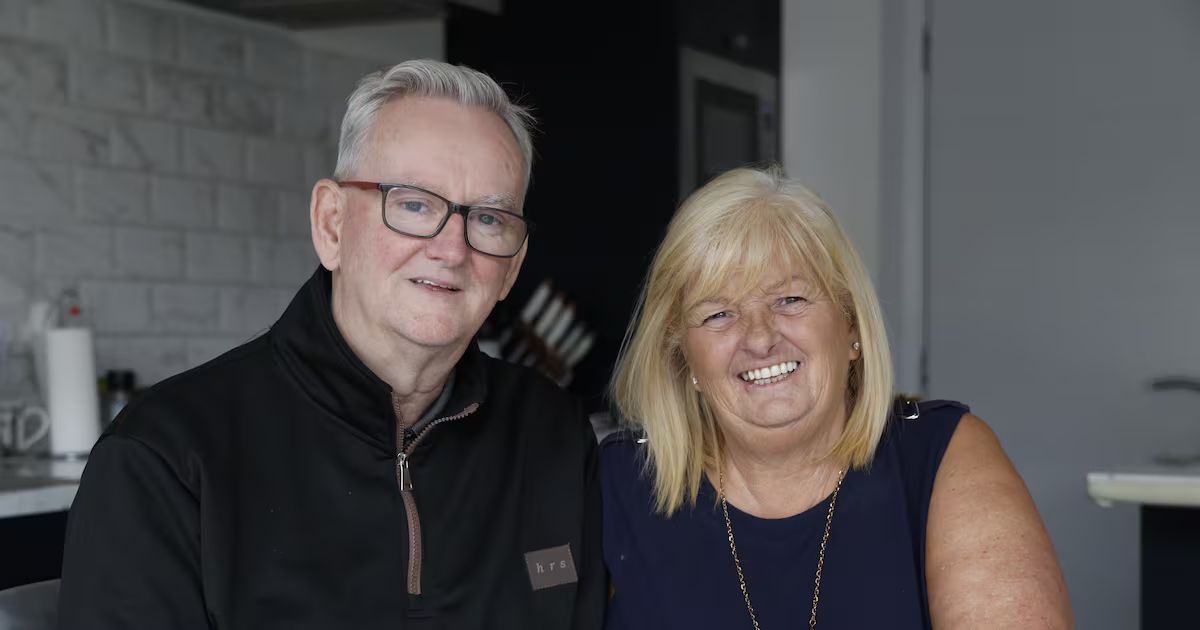
Taking a child living in a difficult situation into a ‘strange house’ is not easy, but Noeleen O’Reilly has no regretsPhil and Noeleen O’Reilly: 'The [foster] children have brought so much life into the house over the years.' Photograph: Nick Bradshaw Thu May 21 2026 - 06:05 • 4 MIN READWith three children of their own, it was by chance that Noeleen O’Reilly and her husband, Phil, decided to open up their home to young people in need. The Dublin woman read an article on fostering in a local newspaper and felt she could offer a loving home. After speaking with her family, she “made the call” and the rest is history.Twenty years on, the couple have fostered 15 children – some for long periods, some during emergency situations and others to allow their biological parents a little respite. There have certainly been challenges along the way, but Noeleen and Phil have no regrets. “Some children come from difficult situations, so are nervous coming into a strange house,” she says.. “But it has been amazing to see their confidence grow. I remember one child came for respite and was very shy when he arrived. But when he left, he gave me a big hug and thanked me, something his social worker said was a very big thing for him to do. I was so happy that he felt comfortable enough to do that. “The [foster] children have brought so much life into the house over the years and most have great personalities and love fun and banter, so hearing them laugh is a great feeling.” Noeleen O’Reilly. Photograph: Nick Bradshaw The couple realise every child has different needs, but watching them grow and “not worrying about whether or not they are getting a dinner or will they have a safe, clean bed to sleep in is amazing”. “Every child deserves a carefree childhood,” Noeleen says.This month is National Fostering Awareness Month and Jacqui Smyth, Tusla’s national lead for fostering, said applicants and inquiries from all backgrounds are welcome.It is important to have a pool of available foster carers that is “as diverse and unique as possible” because the needs of every child differ, she says. “Right now, in every part of Ireland, there is a need for foster carers,” Smyth says. “Children come into care from every socio-economic group, across religions and cultures, across rural and urban communities throughout our country. Every child deserves the chance to live in a home within their own community.”[ Foster carers wanted: ‘You can be over 55, gay, single, a job seeker, of ethnic minority, and be a carer’Opens in new window ]Tusla, she added, aims to “support foster carers and encourage people to consider” helping a child who is unable to remain in their home. There are 3,782 approved foster carers nationwide, working to provide stability and a home to 5,099 children and young people in the care system. Those in care range from babies up to 18 years, and usually enter care when their home situation becomes unsafe or cannot meet their needs. Smyth says the number of foster carers in the State has slowly but steadily decreased over the past decade with people opting out for reasons such as age and their own children having become adults. Despite the drop, Ireland still ranks among the top providers of foster care to children in alternative care internationally and it is hoped this will continue. “The landscape of alternative care in Ireland has changed dramatically in the last 10 years as Ireland has opened its doors to accommodate separated children seeking international protection,” Smyth says. “Ensuring children can grow up in homes like their peers and have that same experience is an essential component of helping children to overcome trauma, build resilience and reach their potential.” Foster carers are entitled to the Fostering Allowance to cover the additional costs involved in meeting the day-to-day associated costs, but it is by no means a salary.The rate set by the Department of Children is €400 per week for a child aged under 12, rising to €425 for those aged up to 18. There is a mileage allowance and a medical card for the child, with other expenses covered. Smyth said many people believe fostering is something “outside their range of skills when, in fact, what foster children need most are homes that are stable and filled with kindness and love”. “The love and care is the same as if you were looking after your own child or family member,” she said. “What all foster carers share is a genuine motivation to improve a child’s life by offering them a safe and stable home environment during a difficult time.” Training and support are provided and nobody is expected to “know it all”, she added, but an “openness to learning and a willingness to be flexible” go a long way. Noeleen O’Reilly believes “you can’t change the whole world but you can change the world of a child even if it’s only for a short while”. “It doesn’t take a special family to foster a child. It just takes a regular family willing to open their heart and home to a child that needs it.”IN THIS SECTION
Twenty years, 15 children fostered: ‘Hearing them laugh is a great feeling’
While the number of Irish households taking in children in need is declining, Noeleen O’Reilly has no regrets about becoming a foster parent
870 words~4 min read