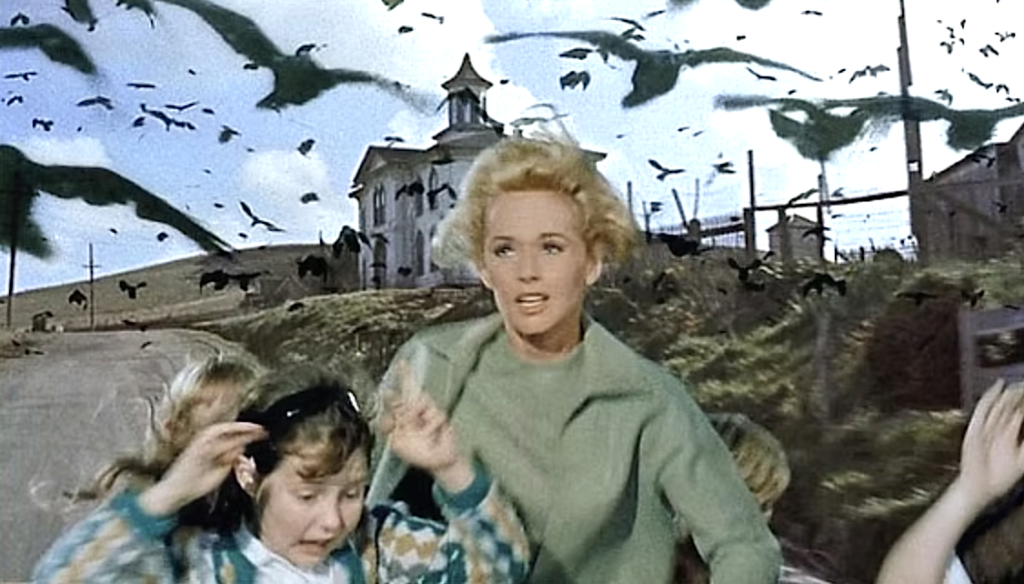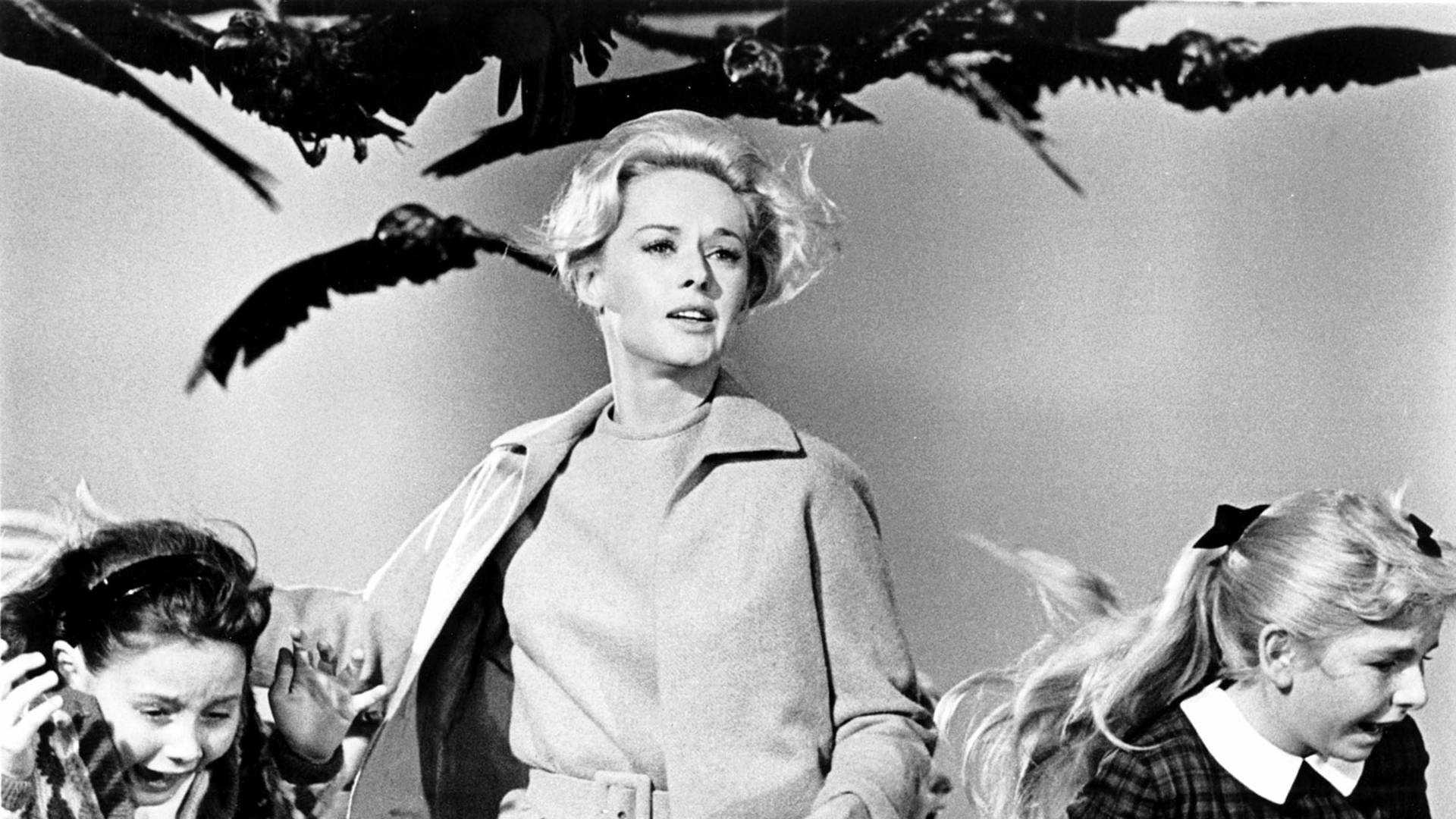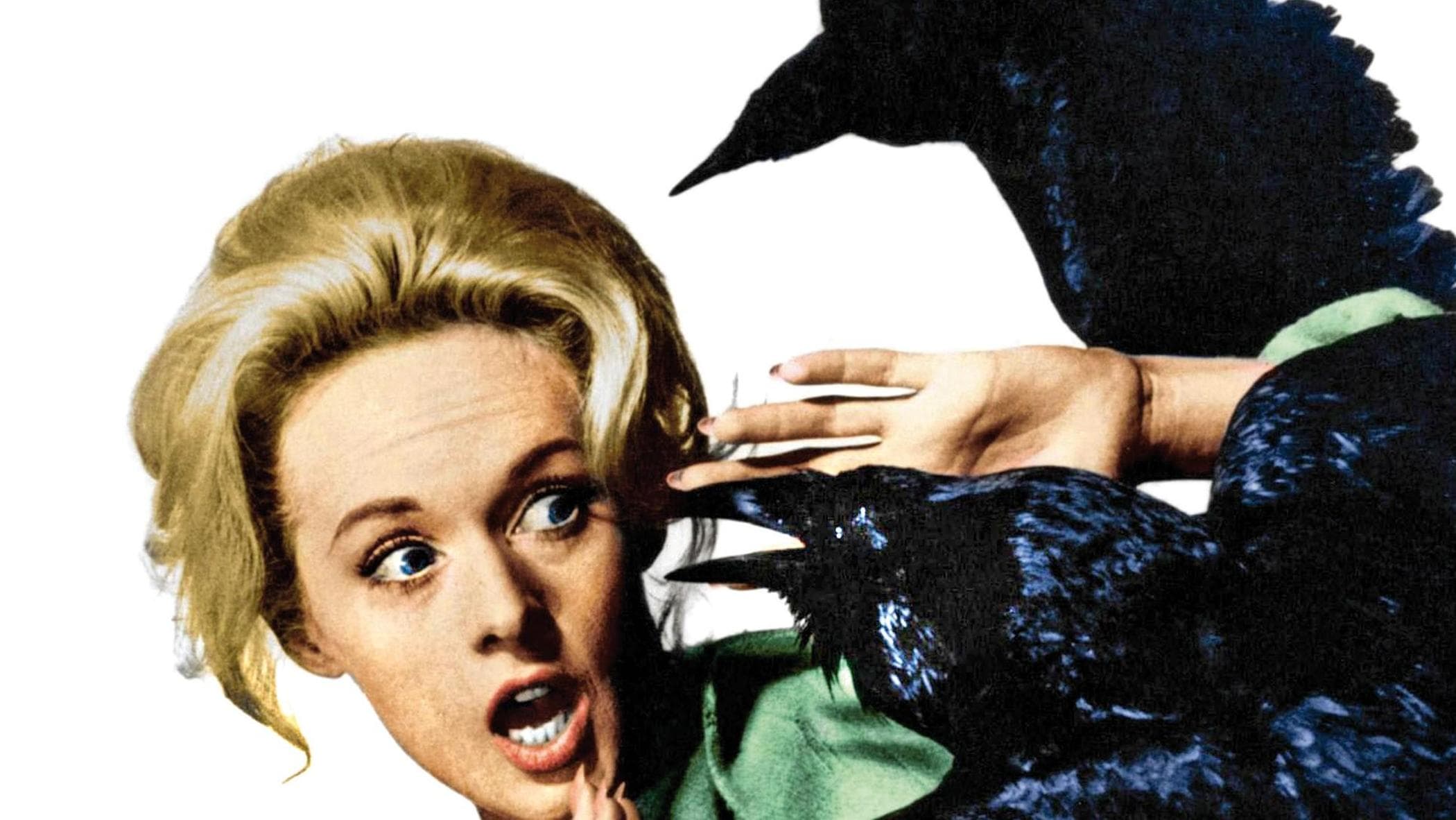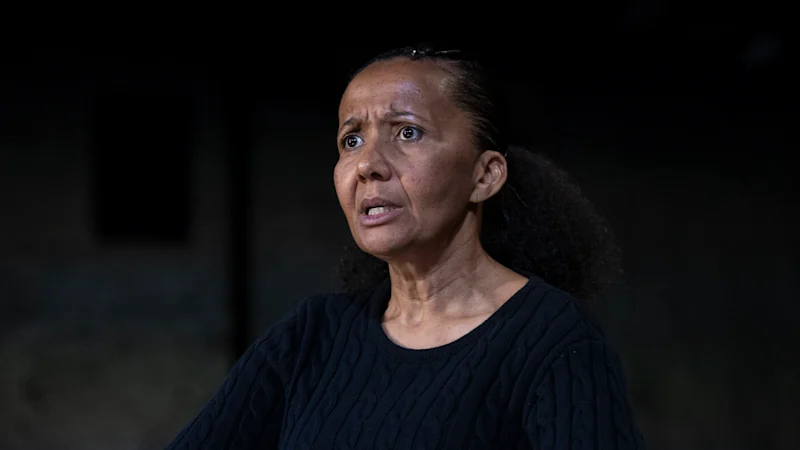
Updated May 21, 2026 — 1:50pm,first published May 19, 2026 — 3:12pmTHEATREThe BirdsBelvoir St Theatre, May 20. Until June 14Reviewed by JOHN SHAND★★★★½This is Paula Arundell’s defining role. A one-actor adaptation of Daphne du Maurier’s The Birds (which Alfred Hitchcock ensured pecked at a shared, ancient paranoia in his 1963 film version), it taps into every aspect of Arundell’s acting powers, and she’s never found wanting.When the fortunes of her primary character, Tessa, are at their bleakest, her very physiology changes: she seems to grow in stature and resolution and, as director Matthew Lutton says in his program note, she becomes a warrior.Paula Arundell takes on every role in The Birds – and does a superb job. Brett BoardmanLouise Fox’s script has been honed until its bones gleam through its skin. Even its poetry is sparse and lean. Hitchcock took du Maurier’s book, set in late-1940s Cornwall, and relocated it a dozen years later in California. With Fox’s adaptation set in Australia right now, the story is revealed as timeless and even mythological. Perhaps the birds could turn on us. God knows we’ve provoked them enough.Any one-actor play must balance narration and action, and this one very much prioritises action, which doesn’t mean that Lutton has Arundell dashing about Kat Chan’s simple set: often she impales us just with her voice and facial expression. But it does mean she spends more time amidst the story’s frenzy than merely describing events.Paula Arundell (left) with The Birds director Matthew Lutton and scriptwriter Louise Fox.Brett BoardmanFox’s text is also a template begging for others’ artistry. Crucial to the success are two qualities: Arundell’s creation of multiple characters who are just as convincing as Tessa, and the realisation of the birds, which is a joint triumph of composer and sound designer J. David Franzke and lighting designer Niklas Pajanti.Before this season (and following the show’s origination at Melbourne’s Malthouse Theatre two years ago), Arundell told me an interview that she’d arrived at the voices organically: they were simply her response to Fox’s text. The wonder is that she can hold four-way conversations between Tessa, Tessa’s husband Nat, and their young children, Johnny and Jill, and, such is her conviction and virtuosity, we almost see them.Equally virtuosic are the sound and lighting. Like the whole project, the use of surround sound could so easily have been melodramatic. Most plays that brush against the horror genre are. Franzke places us in Tessa’s home, and then nearly makes us duck from the frightening sounds of the birds’ assault.When Tessa is repeatedly attacked on her way home from school, sound and lights converge in a series of sudden shocks that fire synapses in every imagination, so where some people initially giggled at Arundell’s different voices, we’re now all deathly silent; under the same spell. Even the lights themselves – black shapes, hanging low over the stage – become birdlike in our minds, and later tiny spotlights replicate the creatures’ watching eyes.Fox’s building of suspense is masterful, and, while we share its spell, I suspect everyone leaves with wildly diverse responses, from enjoying high-quality B-grade horror, to having seen a warning of environmental apocalypse.MUSIC Split EnzTikTok Entertainment Centre, May 18Reviewed by BERNARD ZUEL★★★★½Here came the six-piece band of four originals – the brothers Finn, Noel Crombie and Eddie Rayner – and two excellent junior blow-ins in bassist James Milne and drummer Matt Eccles, all suitably dressed in Crombie-designed loud checks, vivid patterns and wide stripes.The senior men may be well aged, but they were not going quietly, peeling off Shark Attack, which still feels like a teenage frenzy done by arthouse punks, History Never Repeats, a synth pop song that forgot to get rid of guitars, and Poor Boy, ostensibly a straight pop song but one that can’t hide its oddness. Biff. Bang. Pow! What a cracking opening of energy and vividness, and the songs weren’t bad at all, were they?Neil Finn in action with Split Enz during the New Zealand leg of the tour earlier this month.Tom Grut Then 80-odd minutes later, the main set would close with another flurry of a kitchen pots-and-pans clatter Hard Act To Follow, a joyously proggy Six Months in a Leaky Boat, and the spunky simplicity of I Got You, before everyone, from leaping-about-with-better-knees-than-ours Tim Finn to the lost-in-the-darkness lot at the back of this cavernous theatre, was set loose with I See Red.This was nostalgic, but it was not in aspic – see also the very early songs Time For a Change, played as a boarding house ballad meeting Roxy Music, the kazoo-spiked Matinee Idyll, and Spellbound – and even the flaws ended up serving a purpose.Age has not wearied Tim Finn, seen here on stage in New Zealand earlier this month. Tom GrutThe room’s limitations in managing volume and clarity in Give it a Whirl allowed Fleetwood Mac’s erstwhile touring guitarist (one Neil Finn) to show how to distract with flair. A messy, mistake-riddled That Was My Mistake circus-walked its way through on sheer fun, and a Crombie-as-Hendrix guitar solo, to set the mood for that last stretch of the set.And in the encore, as I Hope I Never began and a collective intake of breath was felt (could Tim’s voice make this work, or at least not crash it?), the raggedness and imperfections remade its vulnerability and brought surprising satisfaction.Tim had earlier created an absolute highlight with Stuff and Nonsense, a young man’s errant foolishness about life – now sung by a less vocally stable but more emotionally grounded version – given more weight and delicacy than any of our pronouncements at that age deserve. What a song.Lest we forget among the stomps and hooks and fun and reminders of singing along to these songs in the bedroom, on the bus or watching Sunday night Countdown, the swirls and little dabs infiltrating History Never Repeats, the melodic vamps in Nobody Takes Me Seriously, the weird little noises along with the rising chords in Dirty Creature, the elegant runs in Message to My Girl, the jaunty seafaring chords of Six Months and drunk sailor piano in I See Red, confirmed that this has always been Rayner’s band at its heart. Nice of him to share, though.Split Enz also play the TikTok Entertainment Centre on May 19MUSICAL THEATRESonderOld Fitz Theatre, May 16Until May 23Reviewed by JOHN SHAND★★½Coined by writer John Koenig, “sonder” is the profound realisation that everyone you see is the protagonist in their own life story. As Romeo puts it in this experimental piece of musical theatre, “The story you live is the one you pass down – your very own legend.”Sonder is a brave idea: musical theatre with one performer, no live musicians, and story-telling that flits between conventional narrative, myth, ritual and song, the latter being ballads laced with electronic dance music.Riki Lindsey in full flight in Sonder. Jessie ObialorThe lone performer is Riki Lindsey, who also wrote the book and lyrics, while Mitchell Sloan crafted the music and Alexander Berlage directed, designed and lit the show, aided by movement director Fetu Taku.Riki Lindsey in Sonder.Jessie ObialorLindsey mostly has the voice and presence to hold the stage for an hour, but the same can’t be said of his writing. He has his protagonist, Romeo, coming of age in New Zealand, studying Mau Rakau (a Maori martial art) and wanting to be a warrior to gain the approval of a father whose violence and depravity result in a broken home. Lobbing in Berlin, Romeo falls in love with Toby in a nightclub. After a brief, blissful cohabitation, he’s dumped, and, heartbroken, ponders the nature of love and what went wrong.The problem is that it’s too bald. We know all that Romeo knows and Romeo knows all we know, and without any discrepancy we merely observe him, rather than becoming engaged.Both story and character are enormously flattered by this world premiere production. Berlage is among our most accomplished directors, responsible for the Hayes Theatre’s 2019 American Psycho and the Old Fitz’s 2023 A Streetcar Named Desire, among many others. Here he places Lindsey on a reflective black floor in a ring of bright light, with reflective triangles flying in and out around him. These catch and fragment the light, like memories distorting our pasts.Add some pleasant songs and a likeable performer, and the show’s visual and aural aspects are strong enough. So are parts of the text, as when Romeo tells us of a caterpillar whose cocoon is smashed in a storm before it has completed metamorphosis. Then we share his sense of wonder, rather than struggling to sympathise with a character who is often too one-dimensional to win it. Singing about the power of love and love’s capacity to hurt doesn’t cut it.Yet, you have to admire the sheer audacity of the whole project: of daring to imagine a musical that conforms to none of the conventions (other than overuse of the word “love” in the lyrics). It adds up to bold art, but compromised theatre. Even when Lindsey performs some Mau Rakau stances and motions (tutored by Herb Ratahi), one senses a level of physical commitment is missing. Nonetheless, if we gave out stars for daring to dream a different dream, this would have the box set.MUSICAustralian Chamber Orchestra – Schubert’s Fantasy & OctetSydney Opera House, May 17Reviewed by PETER MCCALLUM★★★★I confess to being apprehensive when ACO leader and violinist Richard Tognetti programmed an ensemble arrangement of Schubert’s Fantasy in C major, D 934 (1827), originally written for violin and piano, and based on his harmonically remarkable song Sei mir gegrusst!.It is not that Schubert’s original piano part is quintessential piano music. Quite the reverse. When Schubert set out to write virtuosic piano music, it was often clumsy and the piano part of this piece is notoriously so. As in other works of his final years, such as the G Major String Quartet, Schubert used tremolos and complex figuration in the Fantasy to create Romantic awe and mystery, and one sometimes feels it needed a master of pianistic imagination like Liszt to realise his vision.Richard Tognetti playing with the Australian Chamber Orchestra.Nic WalkerBut in the event, Tognetti’s arrangement was captivating and illuminating, aided in no small part by the excellence of the players who delivered it. The arrangement used the same instrumentation as Schubert’s Octet in F Major, D. 803 (1824) which was played in the second half. Effective use of clarinet (David Griffiths) added light clarity to the interchange of the solo violinist (Tognetti) and upper part, while the horn writing (Carla Blackwood) mixed sonorities of smooth glowing resonance into the fabric.Discreet bassoon lines (Todd Gibson-Cornish) gave edge and definition to often complex, sometimes disarming string textures (Helena Rathbone, Stefanie Farrands, Johannes Rostamo and Maxime Bibeau). Tognetti’s performance of the violin part had light sweetness and, in virtuosic passages, the agility was mixed with the teased string and bow noise of gut strings. Above all, it was the close listening of all players that added colour and illumination to a work that is always fascinating.The second half was given over to a superb performance of the Octet itself, its expansive paragraphs shaping an idyllic world in which time is measured only by the distance between each carefully nuanced phrase. There were moments, like the simple horn call that initiated the Coda of the first movement, and the hushed violin sounds from Tognetti and Rathbone opening out to a perfectly placed cadence in Coda of the second, where it seemed to stand still altogether.Reality intervened in the fifth movement, when one of those gut strings finally gave up the ghost. This must have been due to the workout it received in the Fantasy, since it occurred as the gentle Trio section was working its way back to the Menuetto, and could scarcely be blamed on excess pressure at that most serene of moments.MUSICSydney Philharmonia Choirs – Durufle’s Requiem and Poulenc’s GloriaSydney Opera House, May 16Reviewed by PETER MCCALLUM★★★½Maurice Durufle’s Requiem was written in the dark years of World War II but harks back to the distinctly French sensibility of the beginning of the twentieth century.It is a notable fruit of French reverence for Gregorian chant as the fount and model for all melody. Sydney Philharmonia under conductor Elizabeth Scott performed its original version (1947) for choir, orchestra and organ with a large chorus and produced a sound of blazing splendour at the words “Hosanna in excelsis in the Sanctus” and in moments which call for a full sound.Sydney Philharmonia Choirs performing Durufle’s Requiem and Poulenc’s Gloria.Keith SaundersScott established an unhurried demeanour and, even with such large soprano and alto sections, balanced the choir well, nurturing a rounded unforced tone. There were moments, such as the opening Kyrie where the rhythmic approach and shape of each line didn’t quite reach the floating Gregorian ideal. As in Faure’s Requiem, Durufle gives a prominent role to the Baritone soloist in the Libera me, and Samuel Dale Johnson sang this part and the Hostias with an attractively focused tone and a natural sense of expressive accent.Singing with generous vibrato, mezzo-soprano Helen Sherman was strongest in the upper register, the lower notes penetrating less well. Led by Fiona Ziegler the Sydney Philharmonia Orchestra created a warm string sound in the Pie Jesu, tempestuousness in the Libera me and delicacy in the closing In Paradisum.Mezzo-soprano Helen Sherman performing with the Sydney Philharmonia Choirs.Keith SaundersIn his new work, Time’s Fell Hand, a setting of Shakespeare’s Sonnet 64, composer Carl Vine created a sense of immediate narrative connection combined with poetic depth by giving lines of resigned, determined expressiveness to the baritone soloist, echoed by an aura of choral commentary.With succinctly balanced form, the work lays bare the structure and resonances of the text with simple clarity. Dale Johnson conjured a sense of striving directness which led persuasively to the work’s central moment “time will come and take my love away.”The program concluded with another major French choral work of the mid-twentieth century, Poulenc’s Gloria which, in complete contrast to Durufle, celebrates its piety with strongly chiselled rhythmic outline, bright ideas and what could pass for cheekiness if one wasn’t aware of the sincerity of Poulenc’s faith.With her large choral forces, Scott took the opening at a judicious stately speed, and the choir responded with a strong sound though occasionally struggled to achieve strict precision in the spiky rhythmic irregularity. Soprano Meechot Marrero brought warmth and a full-bodied tone to the clean-cut outlines of Poulenc’s modernist lines, closing this confident assertion of faith with a soft amen.Get the day’s breaking news, entertainment ideas and a long read to enjoy. Sign up to receive our Evening Edition newsletter.John Shand has written about music and theatre since 1981 in more than 30 publications, including for Fairfax Media since 1993. He is also a playwright, author, poet, librettist, drummer and winner of the 2017 Walkley Arts Journalism AwardConnect via X.Bernard Zuel is a freelance writer who specialises in music.Connect via X.From our partners
Audience comes close to ducking in virtuosic thriller based on Hitchcock classic
The Birds made for a chilling movie – and it has lost none of its power on stage. Plus, our critics look at performances by Split Enz, the ACO and the Sydney Philharmonia Choirs.
2,495 words~11 min read