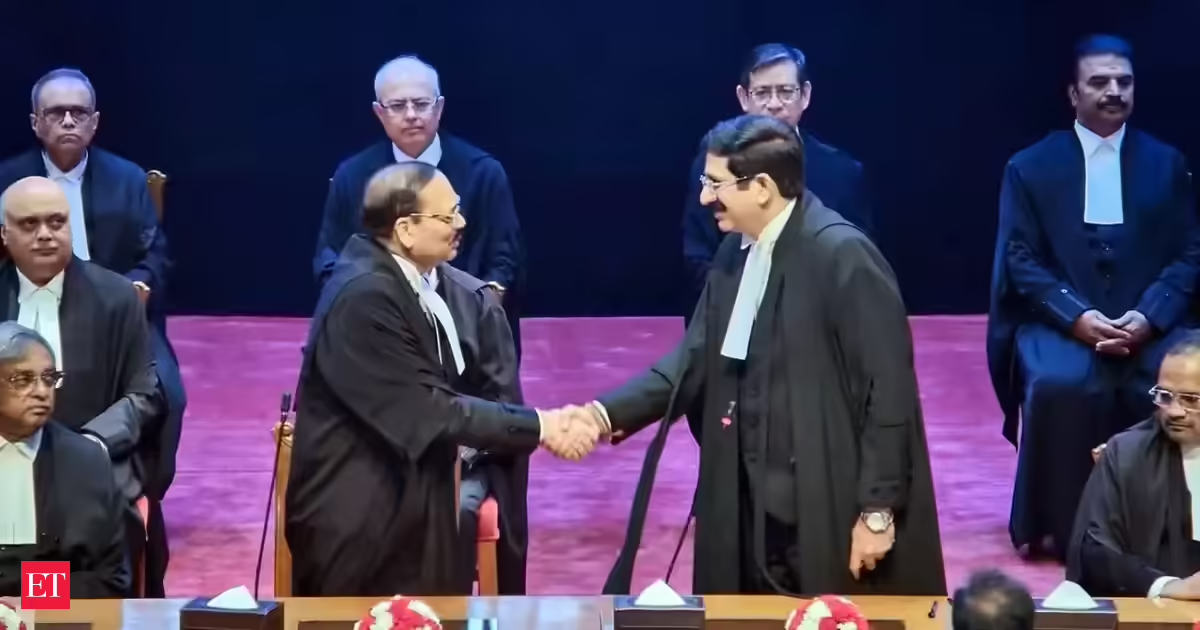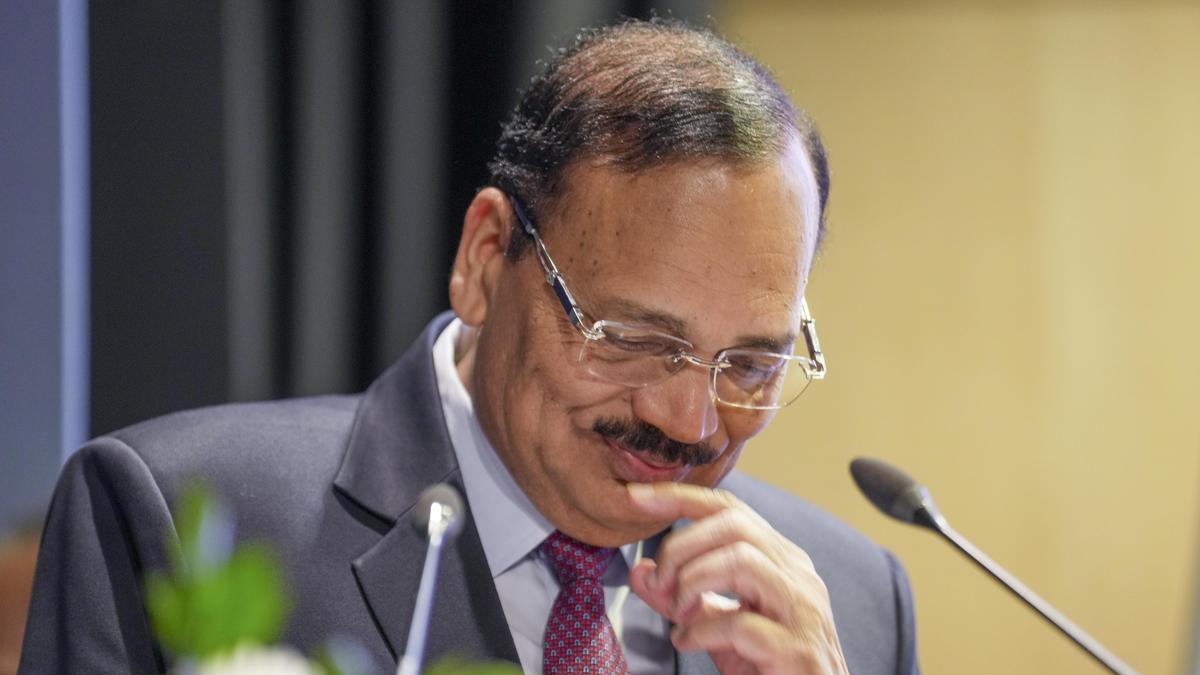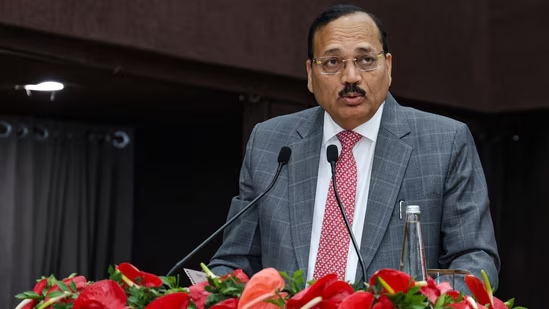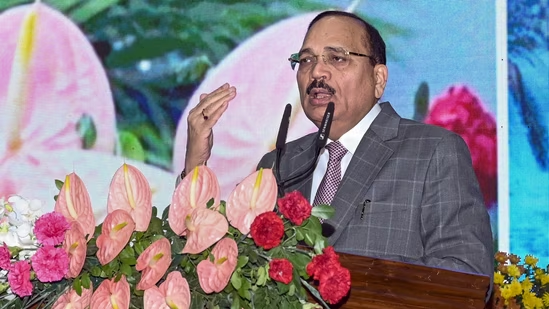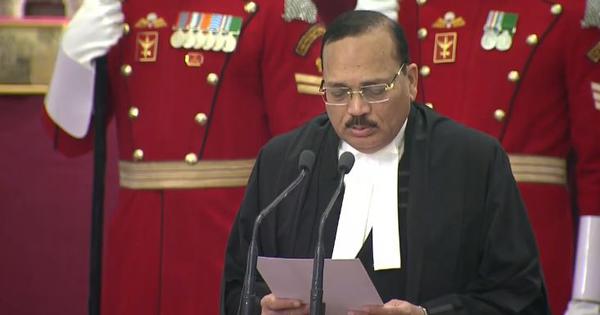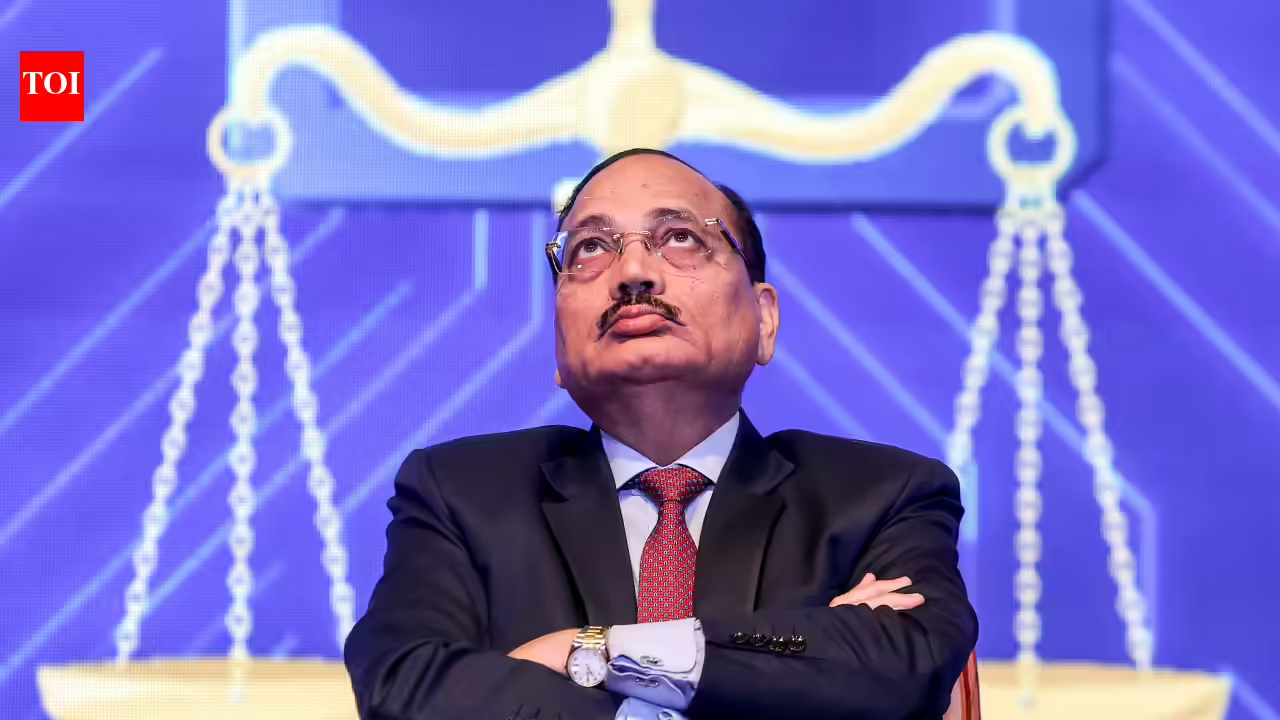
Chief Justice Surya Kant’s remarks from the bench on May 15 and the clarification that followed the next day have revived a question Indian law has tried to settle twice. When a judge speaks from the bench and the speech wounds, what standard governs? Hearing applications relating to the designation of senior advocates, the Chief Justice remarked that “there are youngsters like cockroaches” and that some advocates were “parasites of society.” The clarification confined the criticism to fake-degree-holding designees. The clarification has not closed the controversy.The court has named the convention twice. The first was the Restatement of Values of Judicial Life, adopted by the Full Court on May 7, 1997. The second was Chief Election Commissioner vs M.R. Vijayabhaskar, decided by Justice D.Y. Chandrachud and Justice M.R. Shah on May 6, 2021. A century before either, Benjamin Cardozo, in his Storrs Lectures at Yale in 1921, named the standard that constrains all judicial utterance. The judge, Cardozo wrote, “is to draw his inspiration from consecrated principles. He is not to yield to spasmodic sentiment, to vague and unregulated benevolence. He is to exercise a discretion informed by tradition, methodized by analogy, disciplined by system, and subordinated to the primordial necessity of order in the social life.”The Vijayabhaskar standardThe trigger for Vijayabhaskar lay in the Madras High Court. In April 2021, during the second wave of COVID-19, the Madras High Court was hearing a petition on COVID protocols at a Karur polling booth, with Chief Justice Sanjib Banerjee presiding. The Bench, exasperated at the Election Commission for permitting large political rallies during the Assembly elections then under way, remarked that the Commission was “singularly responsible” for the situation and that Commission officers “should be put up for murder charges probably.” The remarks were not in the formal order but were widely reported. The Election Commission moved the Supreme Court for a direction restraining the media from reporting oral observations of judges.Justice Chandrachud refused that restraint. The judgment did three things. It defended bench questioning as a form that provides “clarity to the judges” and lets lawyers develop arguments “with a sense of creativity founded on a spontaneity of thought.” It cautioned against scathing language directed at persons or institutions, calling the Madras High Court’s metaphor “inappropriate” and the remarks “harsh.” And it held, as the doctrinal centrepiece, that “the formal opinion of a judicial institution is reflected through its judgments and orders, not its oral observations during the hearing.” Two faces of the bench remark were thus named by the court itself: the question that tests and the language that wounds. The same standard, drawn from Cardozo and codified in Item 8 of the 1997 Restatement, applies to both.The bench question that testsThe first face is the bench question that tests an argument. The judge states a position she may not hold, to see how the lawyer defends against it. The form is unscripted; the function is rigorous. The judgment is the considered position; the bench question is the testing that precedes it. Three instances show the form at work. During the second round of hearings in Brown vs Board of Education before the United States Supreme Court, Justice Felix Frankfurter asked Thurgood Marshall what he meant by saying the Constitution required “equal” treatment in schools. Marshall answered: “Equal means getting the same thing, at the same time, and in the same place.” The bench question forced the petitioner to define his term in a phrase that would travel. The answer entered the American civil rights doctrine.On September 12, 2023, the Israeli Supreme Court sat as a 15-justice panel to hear petitions against an amendment that stripped the courts of their power to review government decisions for reasonableness. President Esther Hayut told government counsel from the bench: “We are not concerned with our prestige but with the vital interests of the public.” She pressed the government on whether reasonableness could survive as a legal obligation if no judge could enforce it. The questioning was widely read as foreshadowing the 8:7 majority that struck down the law in January 2024.In April 2023, hearing the marriage equality petitions in Supriyo vs Union of India, Chief Justice Chandrachud told Solicitor General Tushar Mehta that “there is no absolute concept of a man or an absolute concept of a woman at all… the very notion of a man and a woman is not an absolute based on genitals.” The exchange was widely read as signalling that the bench would read same-sex unions into the Special Marriage Act, 1954. The judgment delivered six months later went the other way. Chief Justice Chandrachud himself was in the minority. The bench question had done its work of testing. The considered position lay elsewhere.The intemperate remarkThe second face is the intemperate remark. The standard against “scathing language” is most strained when the language reaches for the dehumanising.In December 2015, hearing Fisher vs University of Texas at Austin on race in university admissions, Justice Antonin Scalia observed from the bench that there were those who contended that African-American students did better at “a slower-track school” than at competitive universities. The remark went to the empirical question of whether affirmative action helped its intended beneficiaries. The language he used to put the question carried its own weight. The remark was widely condemned as racist. Justice Scalia did not retreat. He died two months later, leaving the remark on the record.On March 1, 2021, hearing the bail plea of a government employee accused of raping a school student in Maharashtra, Chief Justice S.A. Bobde asked his counsel: “Will you marry her?” The accused’s lawyer informed the court that his client was already married. The Chief Justice withdrew the suggestion. A week later, he said the remark had been “completely misreported”: he had asked whether the accused was going to marry, not directed him to do so.Hearing a PIL on urban housing for the poor in February 2025, Justice B.R. Gavai, who would assume office as Chief Justice three months later, wondered aloud whether freebies were producing “a class of parasites.” That he was urging the homeless to be drawn into the mainstream did not redeem the epithet. Justice Surya Kant’s remarks of May 15 belong to the same category and have followed the same arc: utterance, criticism, clarification confining the scope of what was said.The same standard applies off the bench. In July 2016, Justice Ruth Bader Ginsburg of the United States Supreme Court called Donald Trump, then the presumptive Republican presidential nominee, “a faker” in media interviews, and said she did not want to think about his winning the White House. After Mr. Trump called for her resignation, she issued a statement: “On reflection, my recent remarks in response to press inquiries were ill-advised and I regret making them. Judges should avoid commenting on a candidate for public office. In the future I will be more circumspect.” Item 8 of the 1997 Restatement, which directs an Indian judge not to “enter into a public debate or express his views in public on political matters or on matters that are pending or are likely to arise for judicial determination,” would have reached the same conclusion in fewer words.A pattern runs through the intemperate remarks. Each was followed, where it was followed at all, by a retreat that did not match what had been said. Scalia did not retreat. Justice Bobde said the remark had been misreported. Chief Justice Surya Kant said the criticism had been narrower than reported. Only Ginsburg, in withdrawing, acknowledged the standard she had crossed. The retreat that names the rule is the rarer kind. The retreat that denies the speech is the more common one.The standard Vijayabhaskar identified has not changed. What has changed is the audience. Bench remarks now travel from the courtroom to the news cycle in real time, before the formal opinion of the court is written. The discipline Cardozo named, and Item 8 codified, now operates in public. The clarification that denies the speech leaves the wound on the record and the standard unanswered. A clarification that named the rule is what Vijayabhaskar asks of the bench. The first occasion to apply it has come and gone. A second is now in play.(V. Venkatesan is a journalist and legal researcher.)
Oral remarks and institutional limits
Chief Justice Surya Kant's controversial remarks highlight ongoing debates about judicial speech standards and their impact on public perception.
1,377 words~6 min read