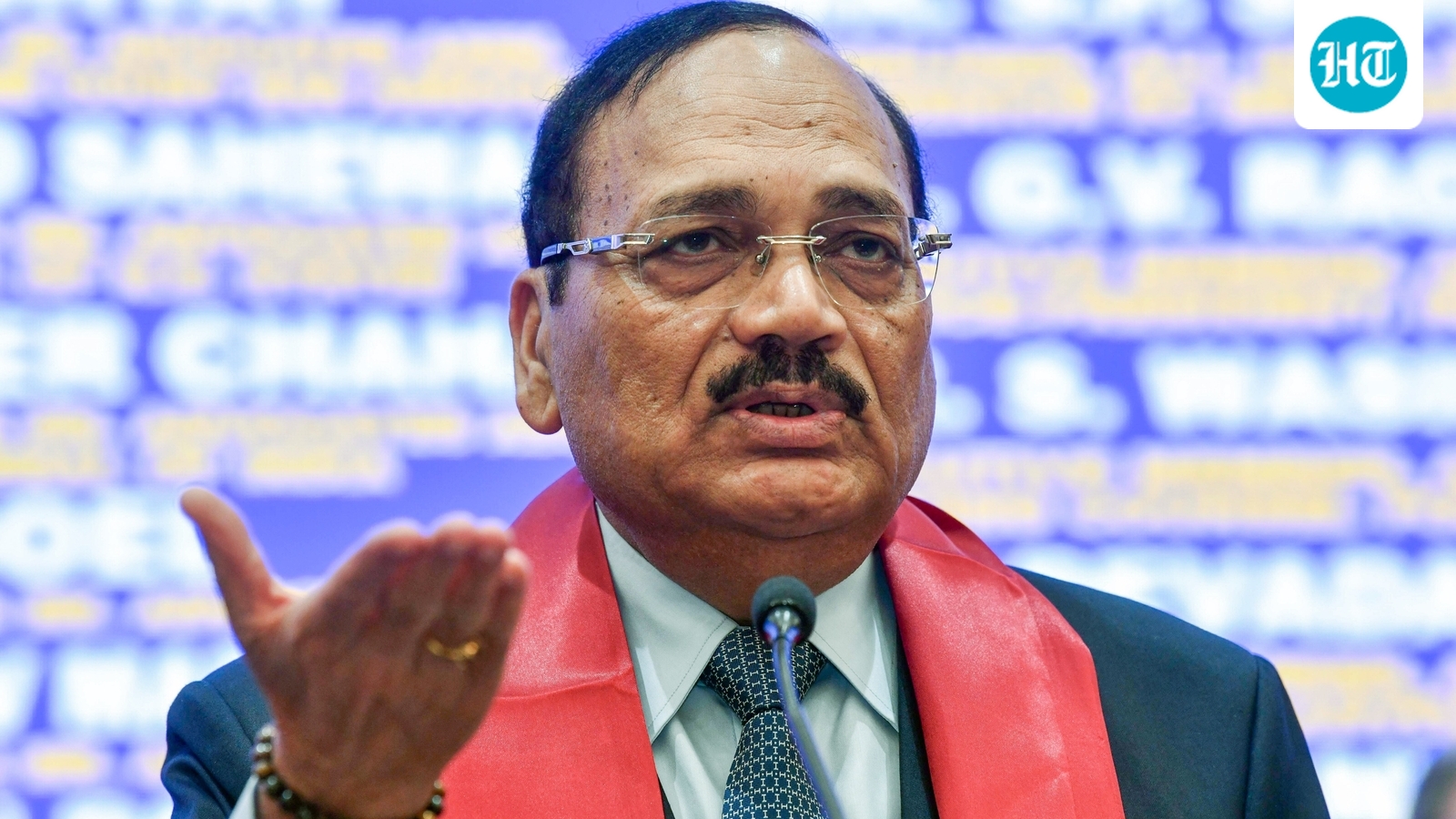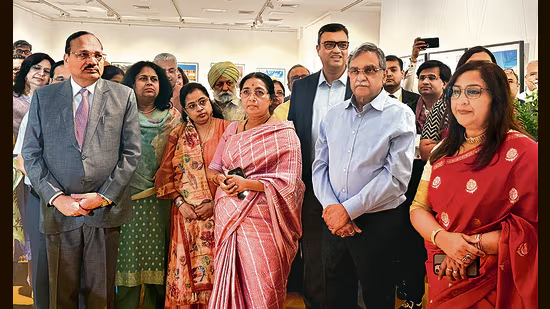
Chief Justice of India Surya Kant on Tuesday said art and photography often become spaces of reflection and contemplation within judicial households, adding that in increasingly restless times, art teaches us to slow down and observe more deeply.(Left) Chief Justice of India Surya Kant, Justice Dipankar Datta, Justice Vikram Nath and artist Jhuma Dutta. (HT)The CJI was inaugurating a nature and landscape photography exhibition curated by Jhuma Datta, wife of Supreme Court judge Dipankar Datta, and praised the exhibition for its exploration of four themes: silence, flow, rhythm and energy.“The judiciary is often seen only through the lens of judgments, courtrooms and constitutional questions. But behind these institutions are lives that have creative pursuits and seek reflection, stillness and emotional balance. Art and photography create those spaces of pause and contemplation within judicial households,” the CJI emphasised.The exhibition, titled Prakriti-Raga, brought together landscape and nature photographs capturing waterfalls, glacial rivers, snow-covered terrain, forests, rocky coastlines and expansive skies. Organised around themes such as “Silence”, “Flow”, “Rhythm” and “Energy”, the exhibition combined visual imagery with reflective text installations inviting viewers to “slow down, observe, and feel more deeply”.Speaking at the event, Datta said her work emerged from a long-standing personal connection with nature.“Nature has always felt deeply alive to me — not silent in the literal sense, but full of presence, rhythm and emotion. Through these photographs, I wanted to capture moments where one can pause and reconnect with something larger than oneself,” she said.Datta added that she is drawn to everything about “Mother Nature”. “Changing light, flowing water, quiet forests and vast skies… they constantly remind us of impermanence, balance and renewal,” she said, adding that her exhibition is an invitation to perceive nature as a space of awareness, connection and quiet continuity.Members of Delhi’s legal and cultural circles, including sitting and former Supreme Court and high court judges and artists, attended the exhibition.
Art, photography create spaces for reflection: CJI Surya Kant
Chief Justice of India Surya Kant on Tuesday said art and photography often become spaces of reflection and contemplation within judicial households, adding that in increasingly restless times, art teaches us to slow down and observe more deeply. | India News
314 words~1 min read