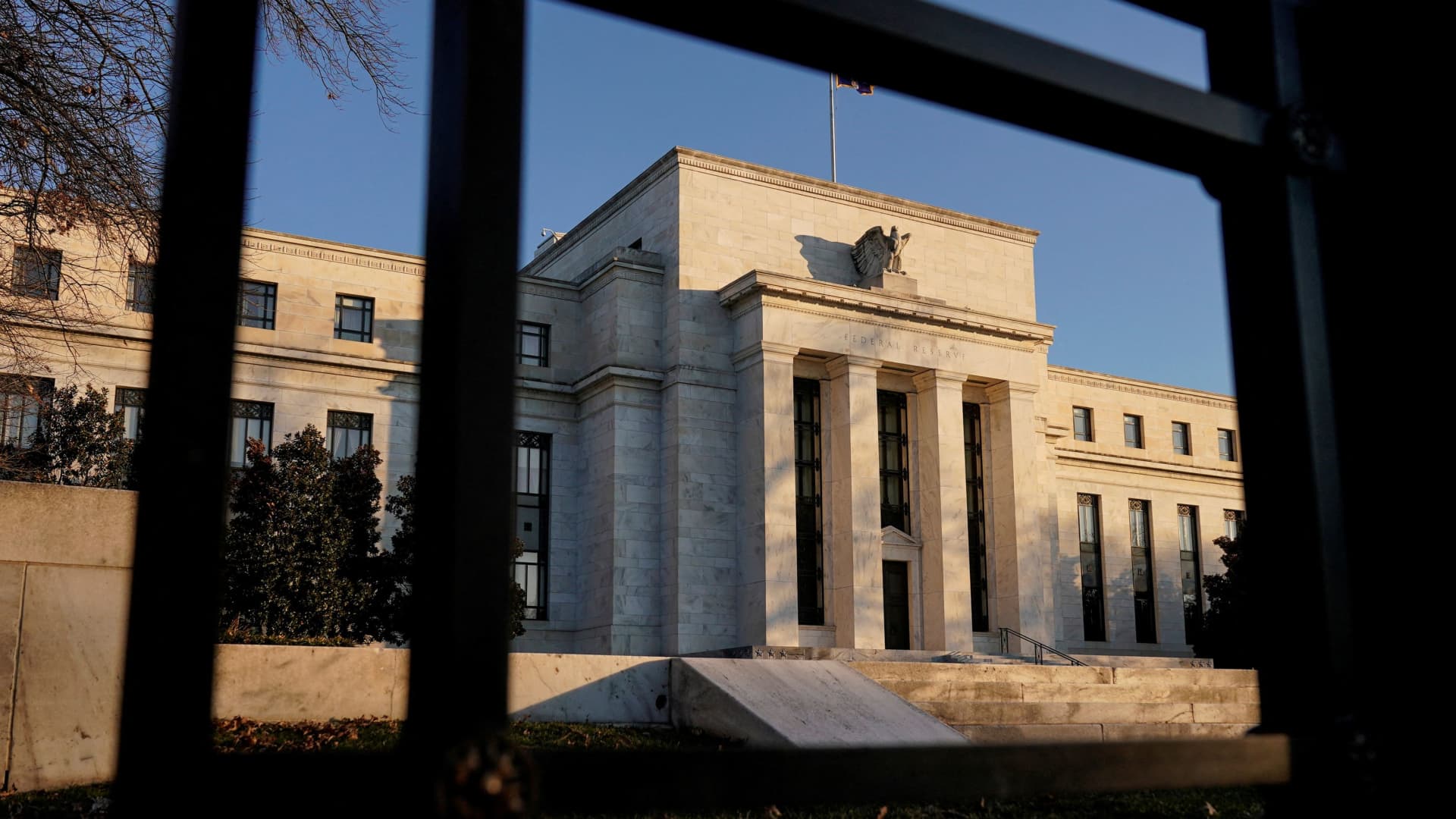
CAMELSGetty ImagesFor the first time in three decades, bank regulators in the U.S. are proposing to overhaul the CAMELS rating system — the confidential scorecard at the core of U.S. banking supervision. Proponents say the changes will modernize a framework that has not been updated since 1996. However, weakening the banking system’s qualitative safeguards could leave bank regulators less equipped to identify the next banking crisis before it arrives.Every bank in America carries a number that its depositors never see. Assigned by bank examiners after painstaking on-site exams and off-site review, the composite CAMELS score — ranging from 1 (sound) to 5 (failing) shapes nearly every important decision a bank can make. A downgraded rating can block mergers, constrain lending, trigger enforcement actions, and force costly remediation programs. Last week, the Federal Financial Institutions Examination Council proposed the most significant overhaul of this system since 1996, and the debate over what it means for banking safety has already begun.The proposal, published in the Federal Register on May 19, 2026 retains the familiar six-component structure: Capital adequacy, Asset quality, Management, Earnings, Liquidity, and Sensitivity to market risk. What changes is the philosophy underlying how those components translate into ratings. The guiding principle of the revised system is a sharp focus on material financial risk, the factors most likely to threaten an institution’s actual financial condition, rather than process deficiencies, documentation gaps, or examiner preferences.The CAMELS Framework—What Changes Under The ProposalMRVComponents highlighted in amber reflect the most significant proposed changes.The Management ProblemMORE FOR YOUThe most consequential change targets the Management (M) component. Under the existing framework, Management is given ‘special consideration’ when examiners assign a composite rating — language that regulators’ own data analysis shows has made it the single most influential component in determining overall scores, particularly in recent years. In practice, banks have repeatedly found that process-related findings from compliance, IT, or BSA/AML reviews — even when they pose no direct threat to financial condition — could drive Management downgrades that cascaded into composite score deteriorations, restricting lending and blocking expansionary activity.The proposal removes that ‘special consideration’ directive and establishes a material financial risk threshold for adverse Management ratings. Under the new framework, an institution would generally receive a rating of 3 or worse only when risk management deficiencies produce material financial risk — or when there is unreliable financial reporting, failure to safeguard assets, or significant legal noncompliance. It also trims the evaluation factors, eliminating criteria for management depth and succession planning, responsiveness to examiner recommendations, and willingness to serve community banking needs.“Ratings downgrades owing to process-related issues that are immaterial to financial condition have historically constrained financial institutions’ willingness or ability to engage in lending.”The agencies also propose limiting the influence of specialty examination findings — BSA/AML, CRA, trust, and information systems — to cases where those findings actually affect financial condition or pose material financial risk. Currently, a significant BSA finding can ripple through a Management rating regardless of whether it translates into any measurable financial exposure.The Balance Sheet: Pros and ConsWeighing the Proposal—Key Advantages and DisadvantagesMRVGreen cells indicate potential benefits; red cells indicate associated risks for each proposed change.Learning from 2023The proposal also carries unmistakable fingerprints of the 2023 regional banking stress, when Silicon Valley Bank and Signature Bank failed with alarming speed as depositors fled via mobile apps before bank examiners and supervisors could react. The revised Sensitivity to Market Risk component is expanded substantially to explicitly require evaluation of recent net interest income performance, expectations for NII based on balance sheet position, and exposure to interest rate volatility — gaps that proved fatal in institutions holding large portfolios of long-duration securities in a rising rate environment.The agencies further update terminology throughout the framework, replacing the outdated allowance for loan and lease losses standard with allowance for credit losses under the Current Expected Credit Loss (CECL) accounting standard adopted in 2023, and removing all references to reputation risk — consistent with parallel rulemakings by the OCC, FDIC, and Federal Reserve that have sought to strip reputational considerations from supervisory frameworks entirely.The Risks of Getting This WrongThe case for reform is real. Academic research cited in the proposal confirms that CAMELS downgrades materially suppress lending activity, and there is genuine evidence that process-related findings have driven composite score deteriorations with limited connection to actual financial risk. Regulators are right to want a more objective, transparent system. But the way this proposal pursues that goal introduces a distinct set of supervisory risks that merit serious scrutiny before the August 17 comment deadline.The risks of this redesign are substantial. The same academic research the agencies cite demonstrates that the current CAMELS framework is more informative about bank failure risk than balance sheet metrics alone — precisely because it captures qualitative signals that precede financial deterioration. Governance culture, management responsiveness, and compliance posture are leading indicators. By requiring that adverse Management ratings be tied to “material financial risk,” the proposal effectively converts these early-warning signals into lagging ones. Examiners who identify a deteriorating board culture, a passive audit committee, or systemic risk management gaps may find themselves unable to act until those weaknesses translate into measurable losses — by which point intervention is significantly more costly and less effective. The CAMELS system’s predictive power has historically derived from this forward-looking quality; the proposal risks trading it away in pursuit of consistency and predictability.Three specific risk categories deserve attention from commenters. First, the proposal’s decision to remove reputation risk from the CAMELS framework entirely — consistent with parallel OCC, FDIC, and Federal Reserve rulemakings — strips examiners of a tool that may be particularly relevant in an era of social-media-accelerated deposit runs. SVB’s collapse in 2023 was, at its immediate trigger, a reputational event: once confidence evaporated, $42 billion in deposits fled in a single day. A rating system that cannot formally account for reputational fragility may be structurally blind to one of the most destabilizing failure modes in modern banking. Second, limiting the weight of BSA/AML, cybersecurity, and information-systems findings to cases of “material financial risk” understates how those failures propagate: a serious AML breakdown rarely produces immediate financial losses, but it generates regulatory sanctions, civil money penalties, and operational disruptions whose financial consequences accumulate over years. Third, the elimination of management depth, succession planning, and responsiveness-to-examiner criteria removes evaluative tools that often signal institutional stress well before it appears on a balance sheet.This proposal does not exist in isolation. It accompanies significant capital requirement reductions for large banks, a narrowing of the ‘unsafe or unsound practices’ standard, and — by the Federal Reserve’s own account — a more than 30 percent reduction in supervisory staff. Each of these changes, viewed individually, carries a defensible rationale. Viewed together, they represent a substantial reduction in the depth of the supervisory safety net at a moment when the banking system is navigating elevated interest rate risk, commercial real estate stress, and the operational vulnerabilities of rapid fintech integration. Whether the revised CAMELS system delivers a more accurate picture of bank health — or simply a more comfortable one — may ultimately be determined not in the comment period, but in the next banking crisis. Stakeholders with views on that question should submit them by August 17, 2026.
Rewriting Banking’s Report Card: The Risks Of Changing CAMELS
Weakening the banking system’s qualitative safeguards could leave bank regulators less equipped to identify the next banking crisis before it arrives.
1,206 words~5 min read