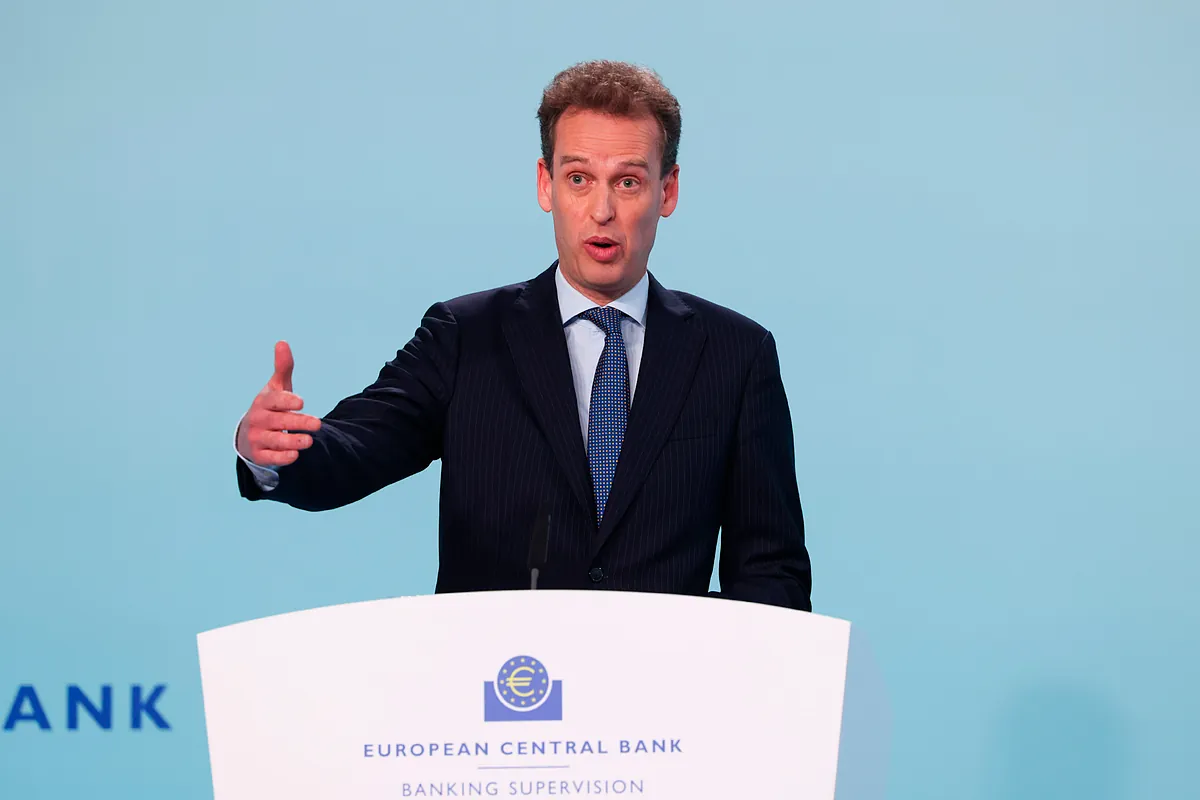
The European Central Bank is to urge banks to speed up work to protect their IT systems, having summoned lenders to a meeting on Tuesday to discuss cyber security risks exposed by the latest AI models.The ECB plans to stress the seriousness of the threat to the financial system revealed by Anthropic’s Claude Mythos Preview and similar AI models, while urging US banks that have been using the latest technology to share information with European rivals that lack such access.“There is a whole range of issues on cyber security that we have been engaging on with the banks for years which are all still valid, but given the progress in AI, they need to be dealt with faster,” Frank Elderson, vice-chair of the ECB supervisory board that oversees banks, told the FT.“In musical terms, I would say andante may have been good enough, but we need to go to presto,” he said in an interview. “We want to listen to banks’ assessments, we want to create the opportunity for them to share experiences, and we want to underline the importance of the issue.”The ECB’s hastily arranged meeting underlines how regulators around the world are rushing to tackle the risks that Mythos and other advanced AI models could pose to the global banking system by exposing weaknesses in lenders’ IT systems.European banks and regulators are feeling particularly exposed because they are being refused access to Mythos. Anthropic has only released Mythos to a limited number of organisations, mostly in the US, which are part of its “Project Glasswing” to test the model.Anthropic said last month that Mythos had “found thousands of high-severity vulnerabilities, including some in every major operating system and web browser”. It added: “The fallout – for economies, public safety and national security – could be severe.”The ECB supervises about 111 of the biggest banks in the Eurozone, including subsidiaries of the big Wall Street banks such as JPMorgan Chase that have been given access to Mythos.Elderson said banks needed to drastically speed up their deployment of software patches to fix vulnerabilities exposed by the new AI models.“It seems if one of the big software providers comes with a patch it is possible to reverse-engineer the vulnerability that the patch is supposed to patch, not in weeks but maybe in 30 minutes,” he said.“That means that once the patch is out, a bank needs to have processes in place to actually make sure that it applies these patches much faster than what is now seen as market practice.”Elderson said it was “unfortunate” that European banks lack access to Mythos, but he hoped the US banks attending Tuesday’s meeting would share lessons from testing the model with their Eurozone-based counterparts.“The fact that you don’t have access to this model is not an excuse for inaction,” he said. “Malicious actors might have access to this technology soon.”Anthropic has been flooded with requests from around the world for access to Mythos or briefings about what it can do. It has agreed to provide high-level briefings to some non-US organisations, such as the Financial Stability Board, which includes the finance ministry officials and central bankers of G20 countries, and the European Commission. The ECB often holds scheduled meetings with the banks; however, ad hoc meetings on specific issues like Tuesday’s are relatively rare.“This is something that is game-changing. We want banks to look into this seriously. The clock is ticking,” Elderson said. --Copyright The Financial Times Limited 2026
ECB summons banks to urge them to fix flaws exposed by latest AI models
Supervisor to stress seriousness of risks to financial system at hastily arranged meeting
575 words~3 min read