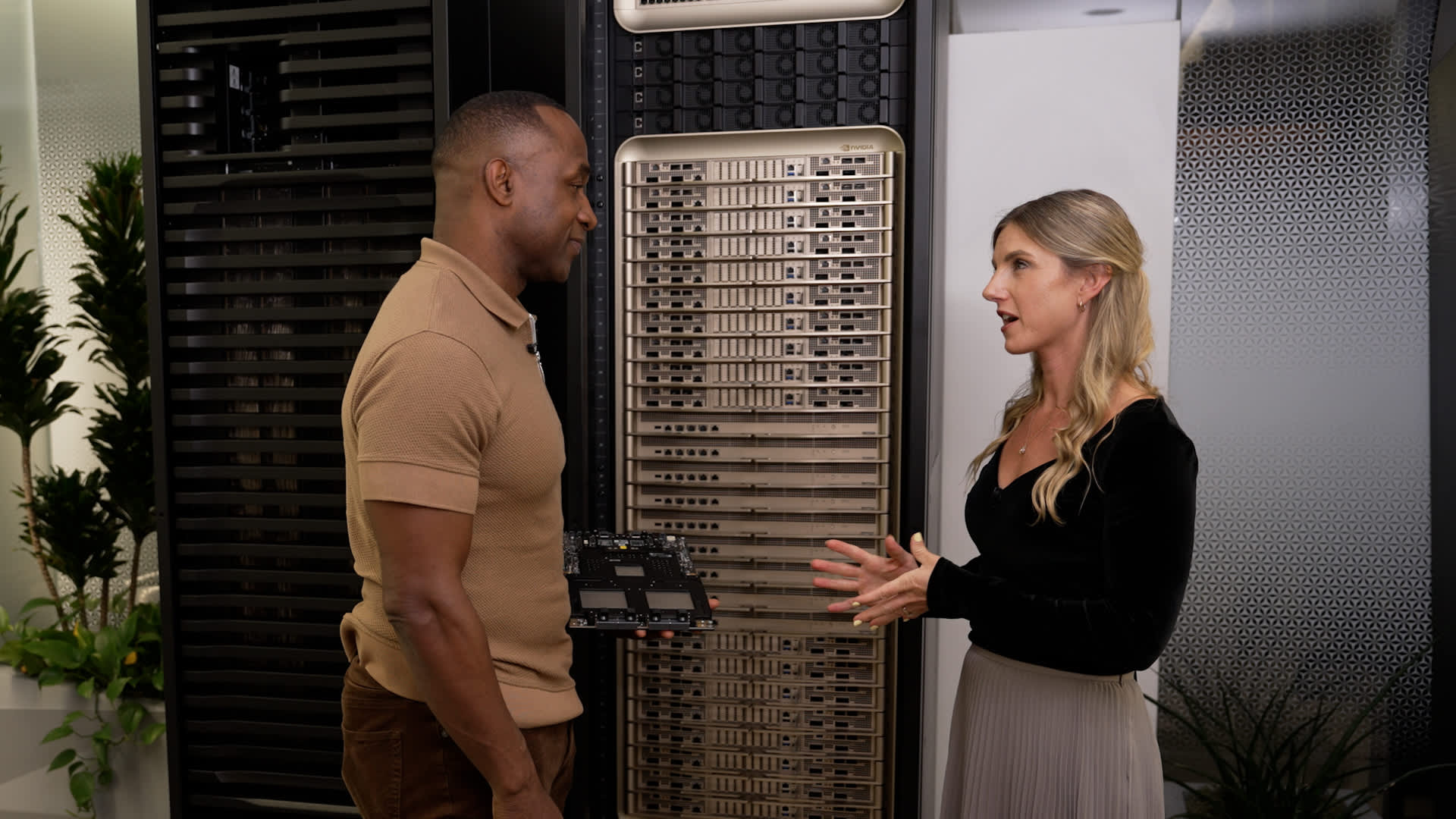
A handful of big tech companies operate a large, global network of massive AI data centers. Those companies, chief among them Meta, Amazon, Google, Microsoft, and Oracle, are often referred to as hyperscalers. As the top AI chipmaker, Nvidia provides the hardware for these hyperscalers, and in turn, the hyperscalers are the chip giant’s biggest customers. During the rise of the AI hype era, any investment made into AI infrastructure by these hyperscalers was met with market fervor, and any good news for these hyperscalers meant good news for Nvidia. But recently that dynamic has started to change. The hyperscalers’ financial commitments for the year topped $725 billion, a figure that has doubled since a year ago. Meanwhile, this AI commitment is still showing limited returns, causing investors to grow wary of this record AI spending and wonder if it is warranted or signifies a bubble. Earlier this year, Evercore analysts warned that the investment commitments could turn these tech giants’ cash flow negative, a fate that, if it came to pass, would certainly hit Nvidia’s profits as well. It seems to be a major reason why some experts think Nvidia’s revenue growth may be peaking.
This pressure may have been the driver of a major change in the way Nvidia reports its most valuable financial metric, data center revenue. In an attempt to prove revenue diversification to investors, Nvidia announced on Wednesday that, going forward, it will break down data center revenue into two: hyperscalers and “ACIE,” which stands for AI Clouds, Industrial, and Enterprise, aka a catch-all category that encompasses pretty much everything else.