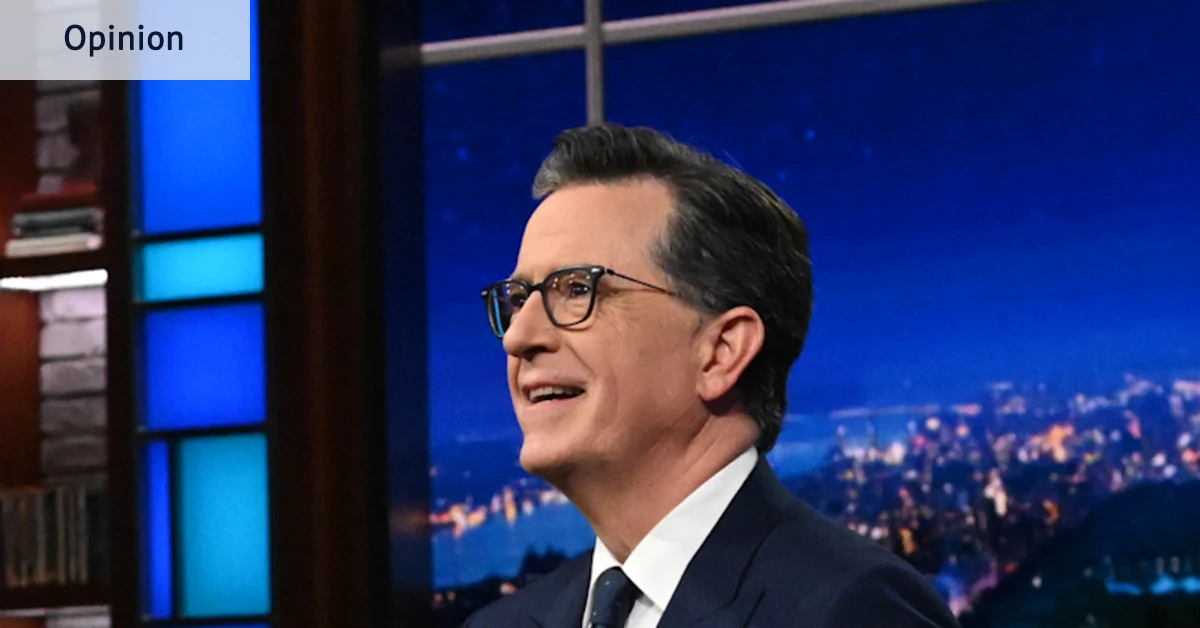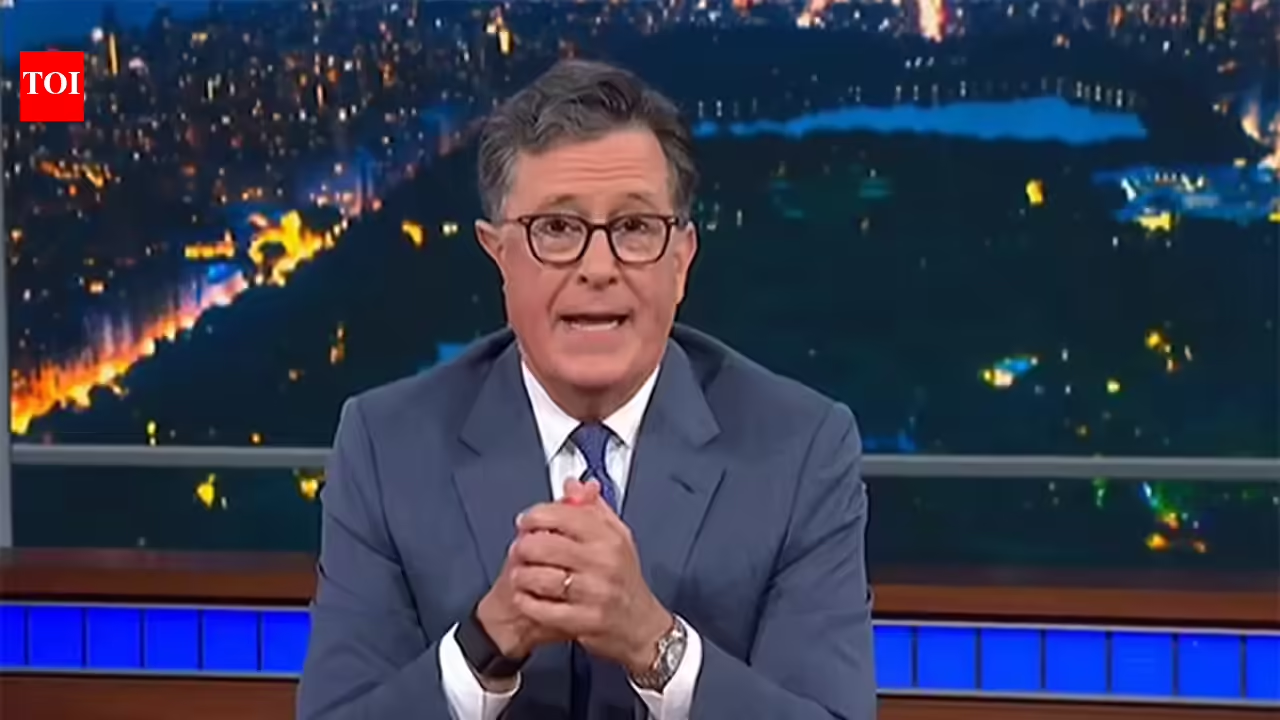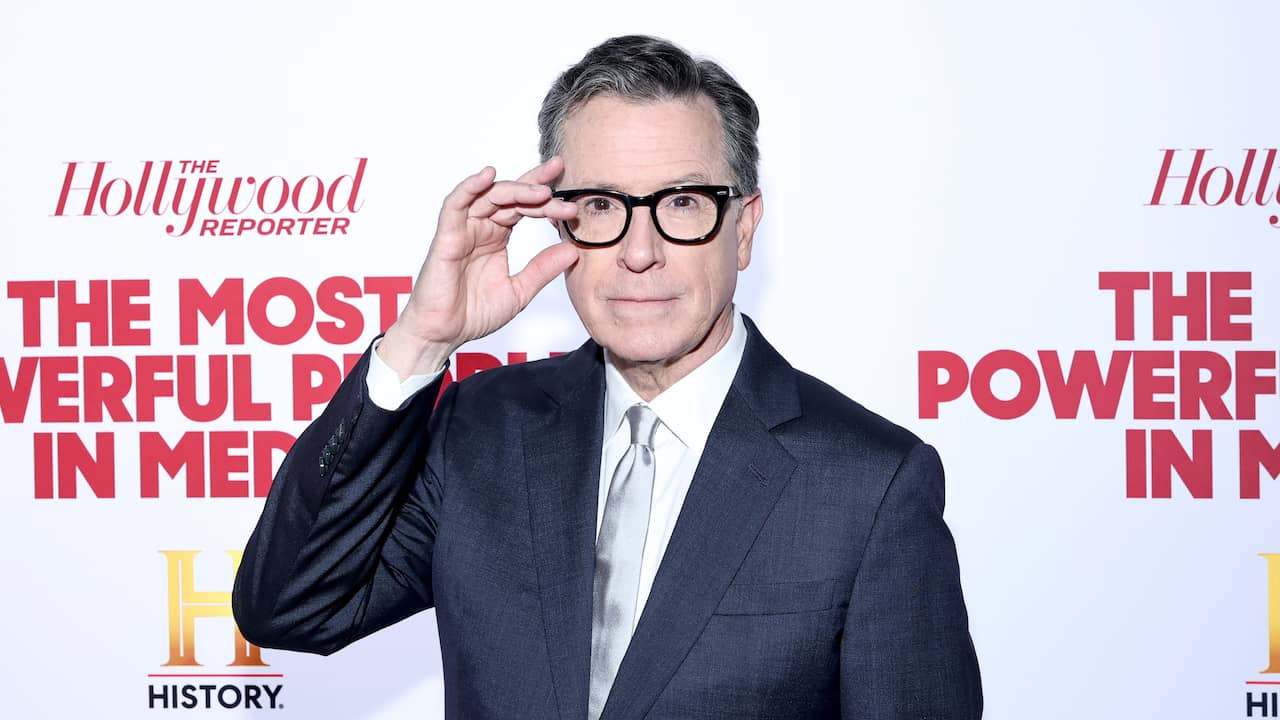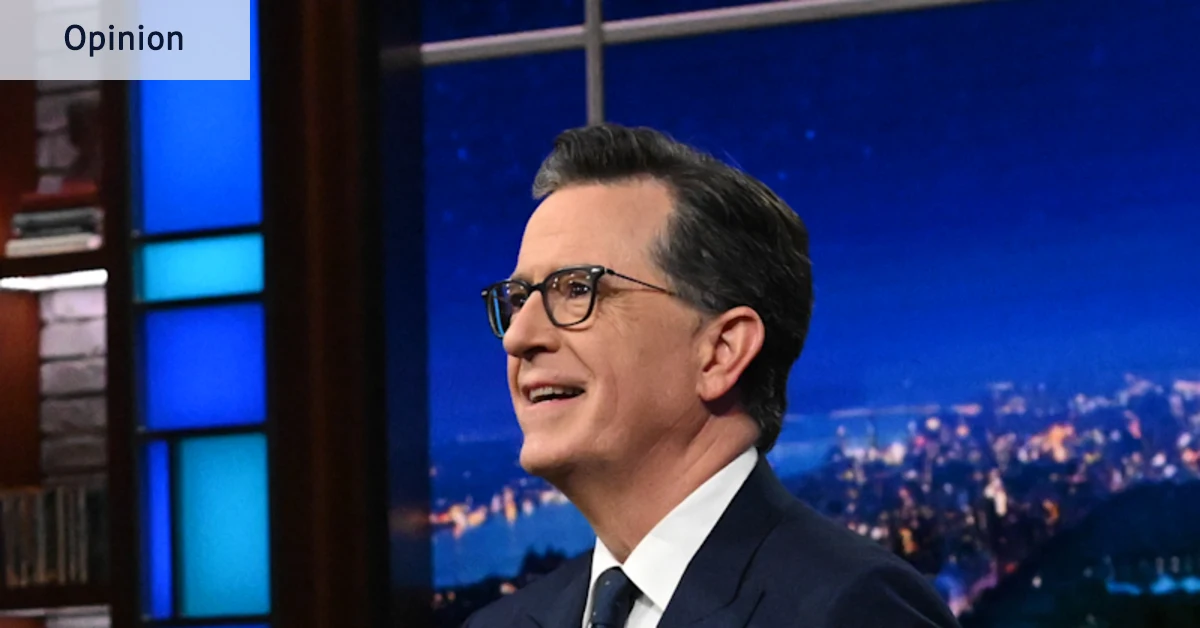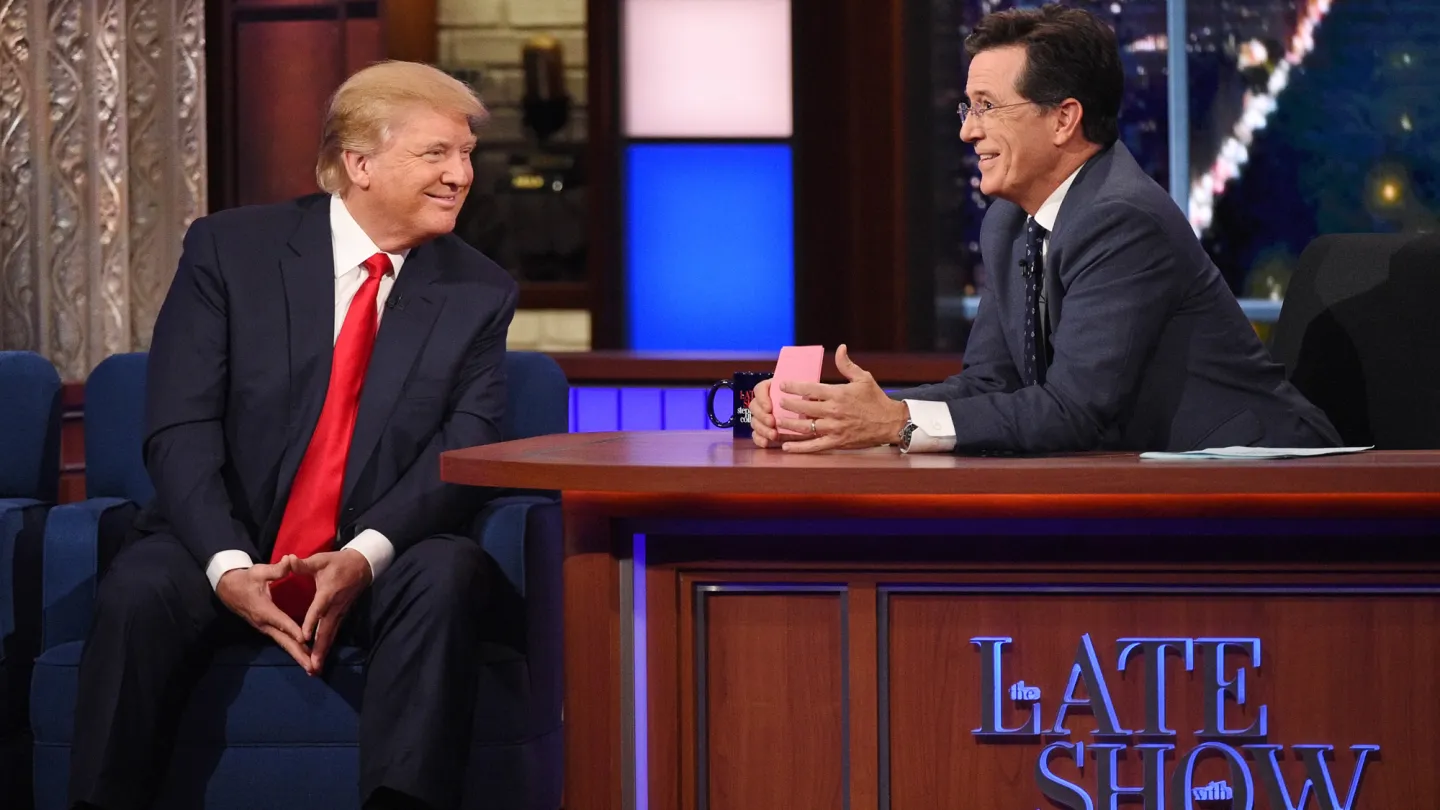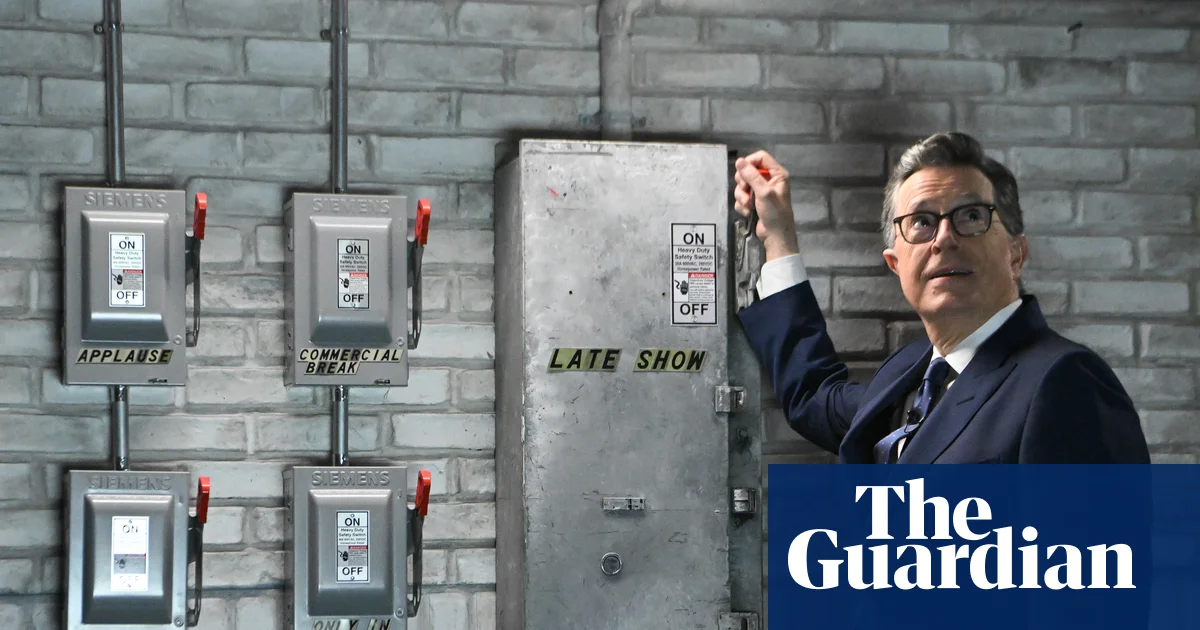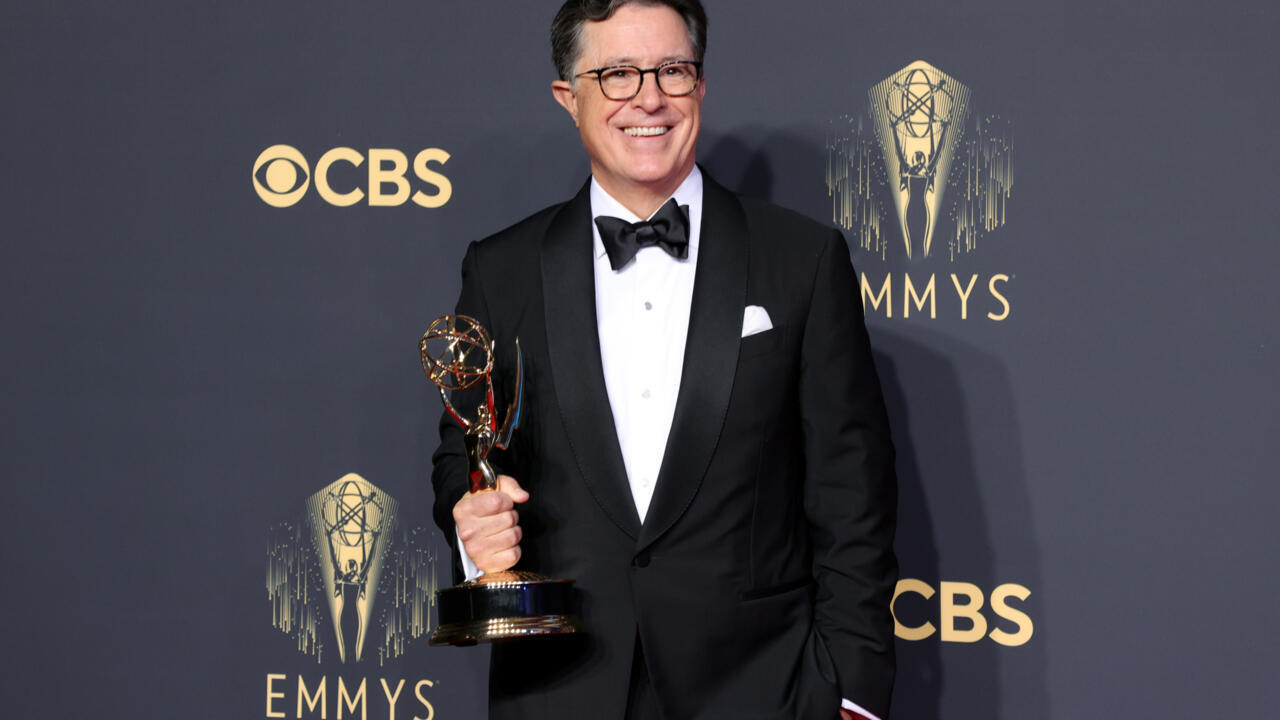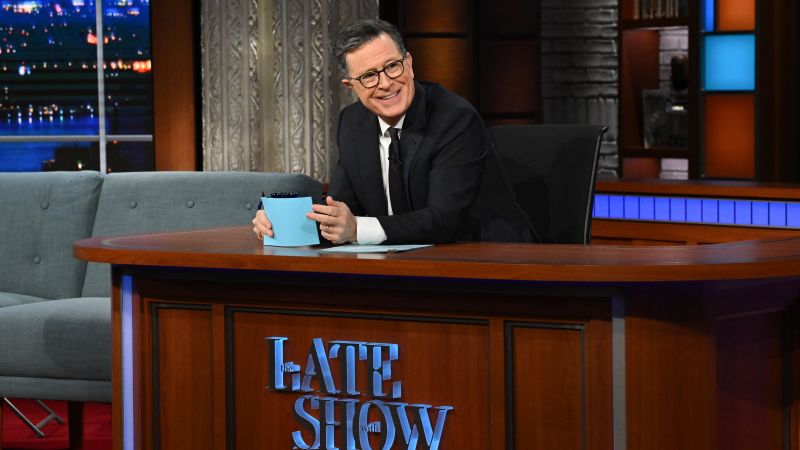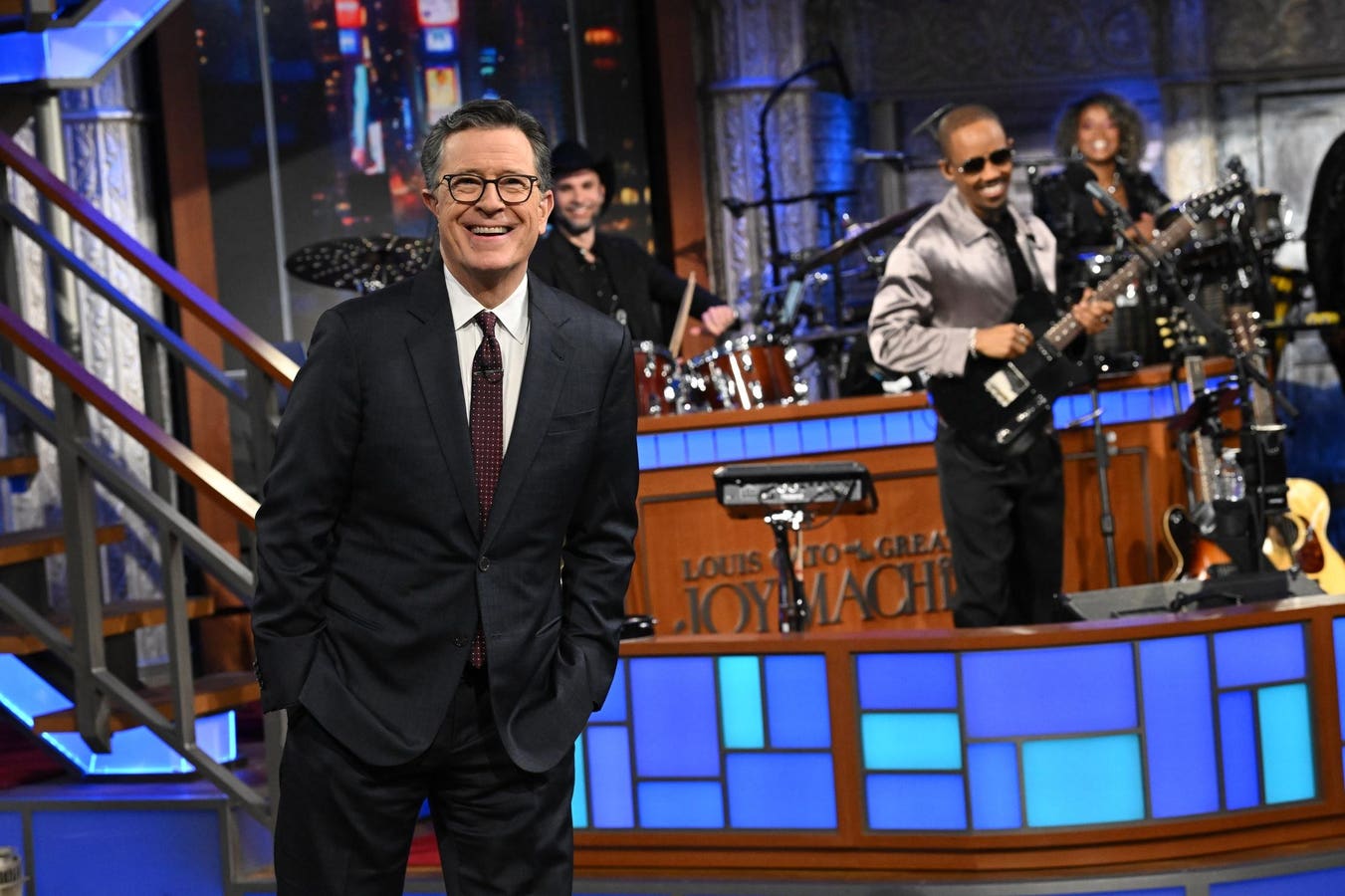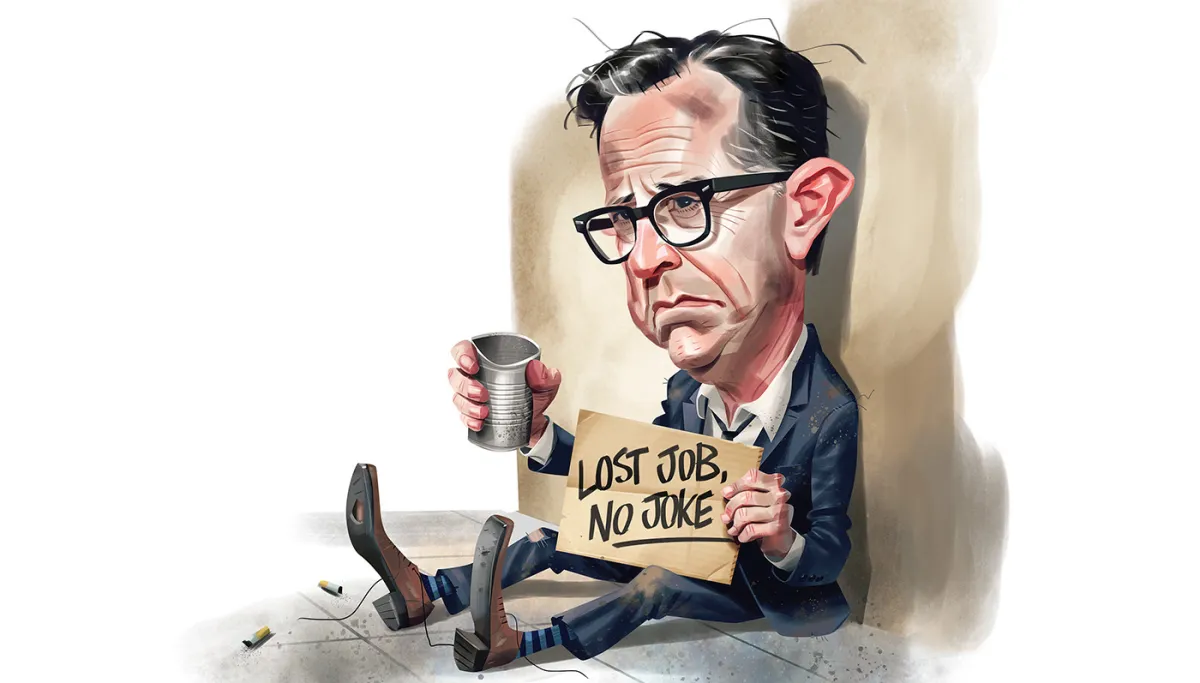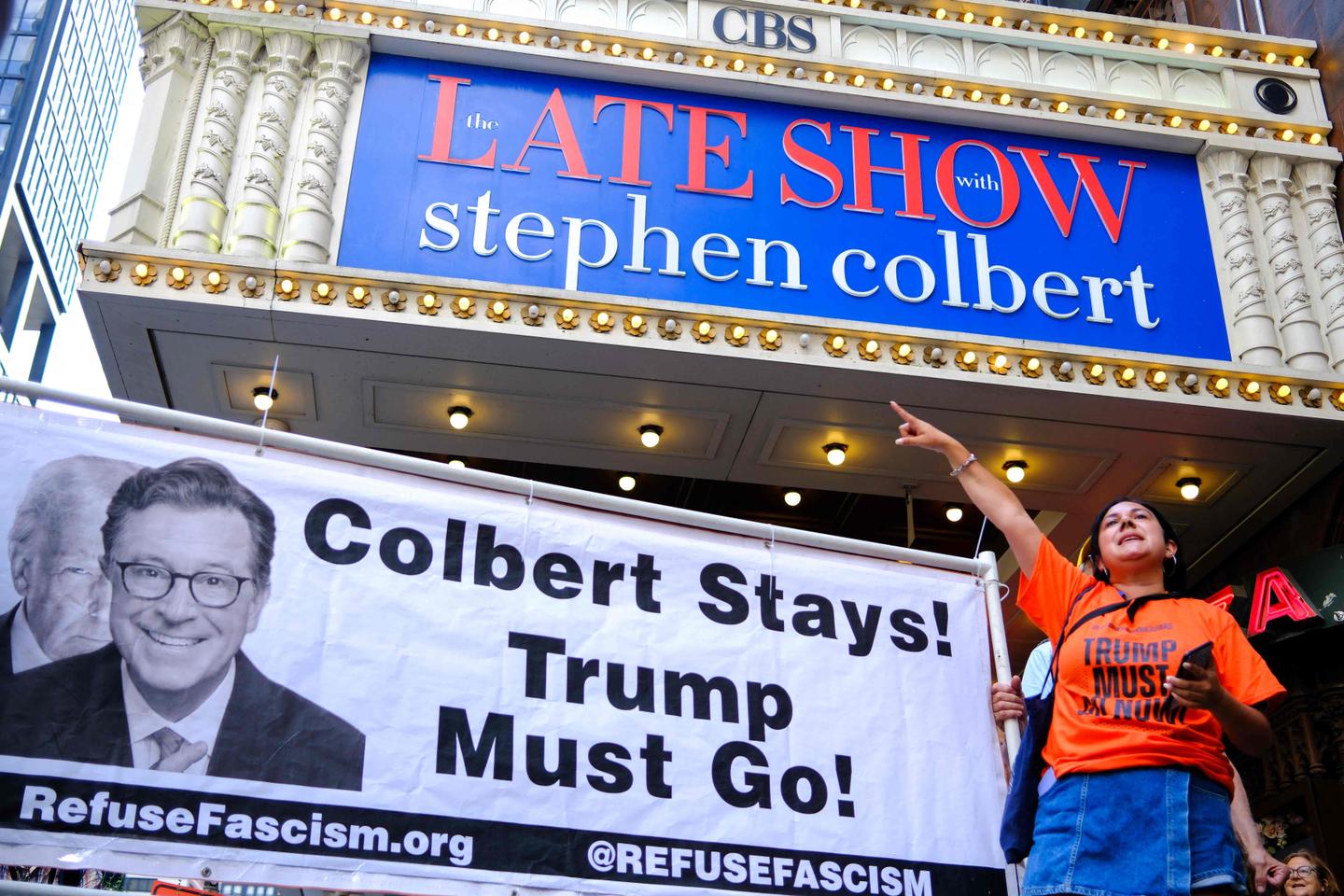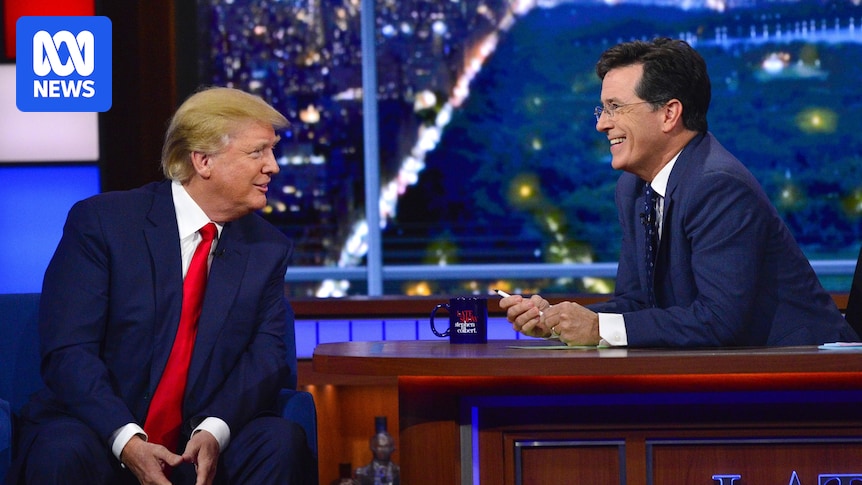
Like other checks and balances on presidential power, late-night talk shows — once ratings juggernauts, woven into the fabric of American culture — are being stress-tested.On Thursday, US time, Stephen Colbert will step onto the stage of the Ed Sullivan Theatre in New York for the final time, bringing an end to CBS's Late Show franchise, first helmed by David Letterman.He says his final sign-off is going to be "something simple".CBS's parent company, Paramount, says axing the program — a whip-smart, critically acclaimed hour of political comedy and conversation that regularly wins its time slot — is purely a financial decision, citing losses of up to $US40 million ($56 million) a year.Colbert's allies, including media critics, fellow late-night hosts and longtime industry observers, are sceptical."They don't share the books with me … [but] they're lying weasels," Letterman told The New York Times.Colbert and David Letterman enjoy a quiet moment in the audience on Friday's Late Show. (Getty Images: CBS/Scott Kowalchyk)The timing of the announcement was particularly suspect.It came in the middle of last year, right as Paramount was seeking approval from the Federal Communications Commission for a merger with Skydance, to create one of the largest entertainment companies in American history.Colbert, a fervent critic of President Donald Trump, had also just days earlier castigated CBS for settling a lawsuit filed by Trump against 60 Minutes for $US16 million, despite many legal experts believing the case had little chance of success (Colbert called the settlement a "big fat bribe")."I absolutely love that Colbert got fired. His talent was even less than his ratings. I hear Jimmy Kimmel is next!" the president wrote on social media in the days after the announcement.Just two months later, Trump's FCC chair successfully pressured CBS's rival network ABC (no link to Australia's national broadcaster) into suspending Jimmy Kimmel, its own late-night host and a face of the network.Kimmel, who hosts Jimmy Kimmel Live!, believes his own suspension (for a comment criticising the reaction of Donald Trump's MAGA movement to the assassination of Charlie Kirk) and Colbert's axing were part of the same phenomenon: a White House increasingly intent on intimidating domestic critics into silence."It seems like the FCC is using mob tactics to suppress free speech," he said upon his return to air.Free speech, insecurity and 'clapter'Trump's supporters tend to justify his hostility to late-night comedians as fair game — a response to the format's wall-to-wall attacks on the president.Gone are the days of Johnny Carson kicking off The Tonight Show with a few light-hearted cracks at each side of politics, then moving on to the rest of the monologue.In his place is a plethora of earnest liberals lecturing the audience from behind their desks, Trump's backers complain, often devoting entire monologues to cataloguing Trump's daily misdeeds (a feat that requires them to speak at a frantic pace).Jimmy Kimmel, Seth Meyers, John Oliver and Jimmy Fallon appear on The Late Show. (Getty Images: CBS/Scott Kowalchyk)Bill Carter, a former New York Times media reporter who has authored two books on late-night TV (one of which was adapted into a movie for HBO) says the president's supporters are right that late night has become overtly political — although he attributes this more to the president's "daily dalliance with outrage" than to its hosts' liberal views.But he says all of that is beside the point."I think given Trump's impact on our culture, the enormous damage he's done to norms in this country, there's definitely now an edge to the criticism [from late-night hosts] that wasn't there [with Carson]," he says."But it doesn't change the fundamental thing, which is that we are supposed to embrace that in this country."You have the right to say anything you want, and Trump just doesn't accept that. He thinks people who criticise him aren't talented, shouldn't be on television, and he's tried to kick them off TV."He has no right to do that, and I think fundamentally every American knows that."Every president has been mocked. It's part of the job."Watching late night transform from a light entertainment genre into the staging ground for America's battle for free speech has been both fascinating and unsettling for Carter.In addition to knowing many of the hosts personally, he also knows Donald Trump, having interviewed him many times during his tenure as host of The Apprentice (Trump was a "blowhard", he says, but it didn't matter — you weren't meant to take him seriously).Trump was once open to taking a joke — even allowing Jimmy Fallon to mess up his hair. (Supplied: NBCUniversal)Carter says there's a brutal irony to the fact that Trump is now lashing out at late-night hosts for making fun of him, because in the decades leading up to his entry into politics, he was a frequent guest on those same shows — and a frequent figure of fun."They would make fun of him. His swooping hair, his bald spots, his chasing models. It was all fair game, and he'd laugh along with it," he says."But as time has gone on, like everything about him as he's gotten older, his insecurity has become worse, has become more extreme. He hears the criticism now, and he can't take it."Carter is sympathetic to those who lament late-night's pivot to relentless criticism of the president — a reproach that has come not just from Trump's supporters, but also fans of the format who miss when hosts just tried to make people laugh.Conan O'Brien, for example, has often hinted at his distaste for "clapter" — a term, somewhat ironically, coined by current Late Night host Seth Meyers.Late-night expert Bill Carter, left, moderates a discussion with Conan O'Brien in 2005. (Getty Images: Brad Barket)O'Brien's own response to Trump's indiscretions has been to take the high road, sometimes by travelling to countries insulted by the president in an effort to mend fences.But, as Carter points out, O'Brien has also said he understands why late-night monologues have ended up the way they have."Trump has basically set himself up for this," Carter says."You can't do a normal monologue when the president is making fun of Rob Reiner's death … and [doing] the same for Bob Mueller."When he posts pictures of the Obamas as apes — how else does he think that is going to be received?"From cultural gatekeeping to fighting for scrapsIn some ways, it's a credit to the late-night format that people are now discussing whether it can withstand a full-on assault from the White House.For a long time, the more pressing question was whether the format could sustain itself — both artistically and economically.CBS's assertion that Colbert is running a $US40 million deficit is tricky to evaluate without, as Letterman points out, access to the books.But industry figures have noted that the network's claim would need to focus exclusively on advertising, ignoring a range of other revenue streams generated by the program, in order to come close to adding up.Colbert also says he wasn't approached by anyone from CBS about financial concerns in the lead-up to his cancellation, and points out he was being urged to sign a long-term contract as recently as 2023.Protesters picket the Ed Sullivan Theater after CBS announced The Late Show's cancellation last July. (Reuters: Ryan Murphy)There is broad agreement, though, that broadcast television is in trouble.The one-two punch landed by the internet — the exodus of advertisers from linear TV and the rise of streaming — has left networks scrambling to adapt to a world in which legacy programming is no longer a guaranteed meal ticket.Those viewers left are also, on average, significantly older (not least on CBS) than the 18-34 demographic sought-after by advertisers.In the meantime, it's cheaper than it has ever been, in the technical sense, to produce a late-night show. You just need a host, a desk, some digital cameras and a backdrop of New York (try searching the dumpster behind the Ed Sullivan Theatre on Friday).The upshot is that while there are now more late-night hosts than ever, they are competing for a smaller piece of a smaller pie — and have less cultural heft as a result.Johnny Carson shares a laugh with Joan Rivers on The Tonight Show in 1979. (Supplied: Carson Entertainment Group)While an "OK" sign from Johnny Carson on The Tonight Show, the pinnacle of American monoculture, could famously change the trajectory of an entertainer's career (one comic likened the experience of watching Carson's reactions to "poring over the Zapruder film"), today's guest appearances quickly become yesterday's YouTube Shorts."You just don't have the same pattern you used to, which is you watch your network shows, then the news, then 'Oh here's Johnny Carson', then Letterman. You laugh, you enjoy it, you go to bed," Bill Carter says."That was how people lived their lives. They just don't do that any more."Kimmel primed to take up torchDespite the multitude of challenges facing late night, Carter strongly believes the "crazy endurable" format will stick around in one form or another (he's also putting his money where his mouth is, having launched LateNighter.com in 2024).He points out that when Colbert has been on hiatus in the past, Kimmel has picked up roughly half of his audience — indicating there's appetite for anti-Trump-flavoured comedy at 11:30pm, no matter who is delivering it.Jimmy Fallon, for the record, who Trump calls "the Moron on NBC", typically experiences only a slight bump."I would expect Jimmy Kimmel to have a very strong show after [Colbert goes off air], and enough of an audience that maybe ABC will have to say, 'OK, we can make money on this," Carter says.Jimmy Kimmel has become one of the president's most vocal critics. (Getty Images: Disney/Michael Le Brecht II)Ironically, a more bankable Jimmy Kimmel with a chip on his shoulder — provided ABC is able to resist pressure from the FCC on its affiliate stations — could be Trump's worst nightmare.While Colbert has always been known as a political comic, Kimmel's conversion to the cause came later in his career, when his newborn son required emergency heart surgery just months into Trump's first term in 2017.Previously known for his blue-collar, everyman style of comedy (he hosted The Man Show in a former life), Kimmel stood onstage after his son's operation and spoke from the heart, delivering a powerful monologue condemning America's for-profit healthcare system for excluding those with less wealth from the same level of care."No parent should ever have to decide if they can afford to save their child's life," he said, fighting back tears.The timing was particularly relevant, coming amid an ultimately unsuccessful push from Republicans to roll back the protections afforded Americans by the Affordable Care Act, otherwise known as Obamacare."He was emotional, he cried. It was incredible TV, and it had real political impact," Carter says."He was coming at it from a human decency point of view, and a lot of people believe he tipped the balance [against repealing the act]. And Trump has never forgotten that."If he thinks he lost to someone, he will go after that person to his last breath … Jimmy Kimmel has become the true bête noire for Donald Trump."With almost three more years still to go in this presidential term — and Kimmel promising not to retire until Trump does — the prospect of a pitched battle between an enraged president and his newly minted chief critic may yet breathe new life into a struggling genre.It's small comfort for Carter, who, as a citizen first, seems mostly dismayed his commander in chief seems to have unlimited time to watch late-night TV."It's midnight, he's awake and he's angry. He's the president of the United States, he has more power than any other president in history — a Supreme Court that's doing his bidding, and a DOJ that will never go after him — and he's angry at being criticised," he says."What I think a lot of Americans think is that somebody has to stand up to him. Harvard hasn't, big law firms haven't, big corporations haven't — and [now these comics are] saying 'No, I won't go along with this.'"The final episode of The Late Show with Stephen Colbert will air in Australia at 10:40pm Friday on Channel Ten.
Can late-night talk shows survive a vindictive Trump administration?
Like other checks and balances on presidential power, late-night talk shows — once ratings juggernauts, woven into the fabric of American culture — are being stress-tested. Orange make-up jokes alone won't be enough to save them.
2,026 words~9 min read