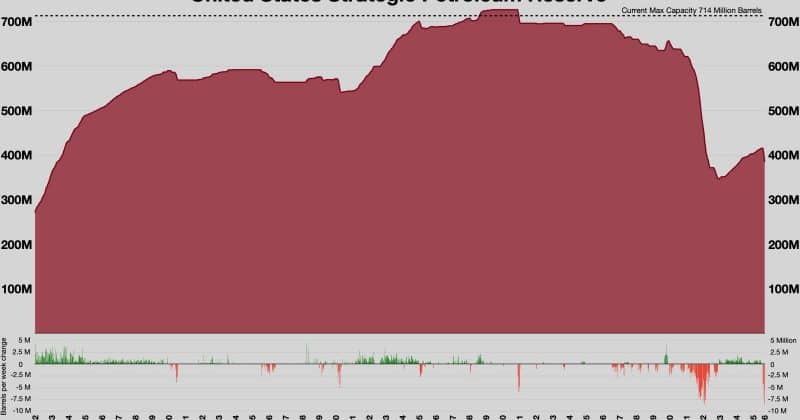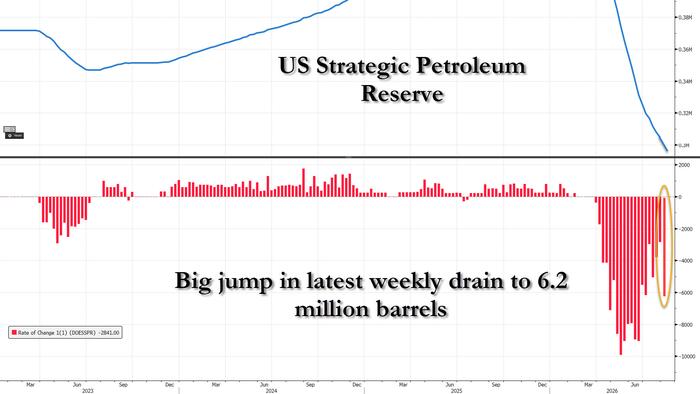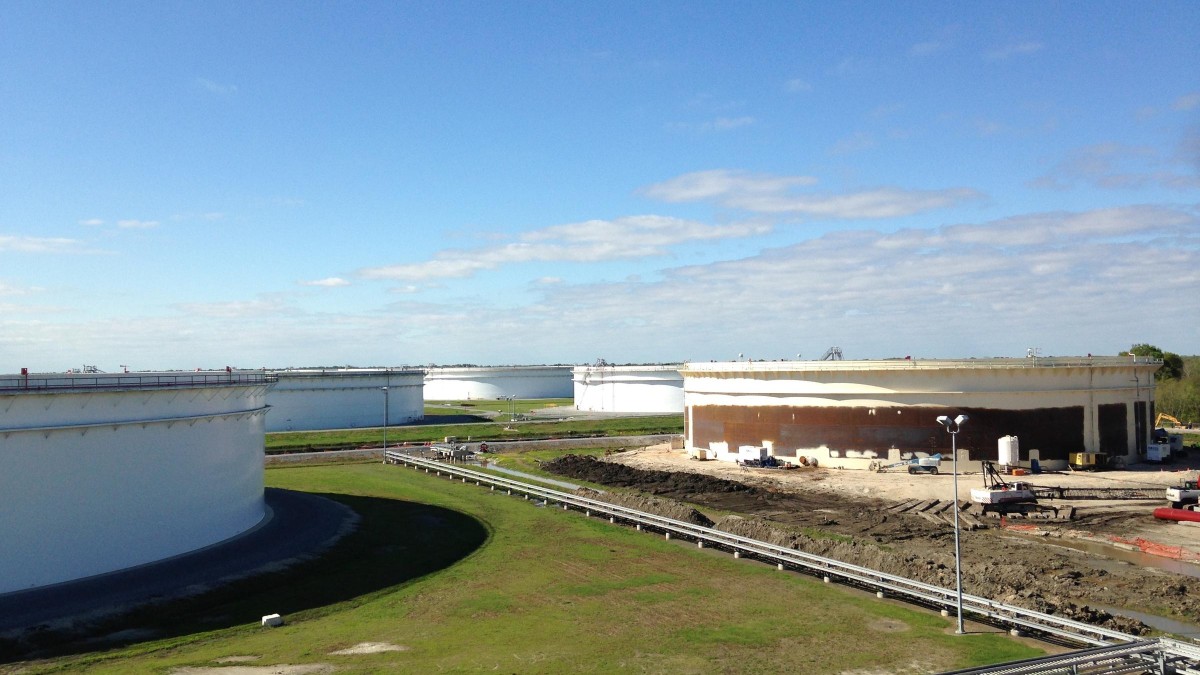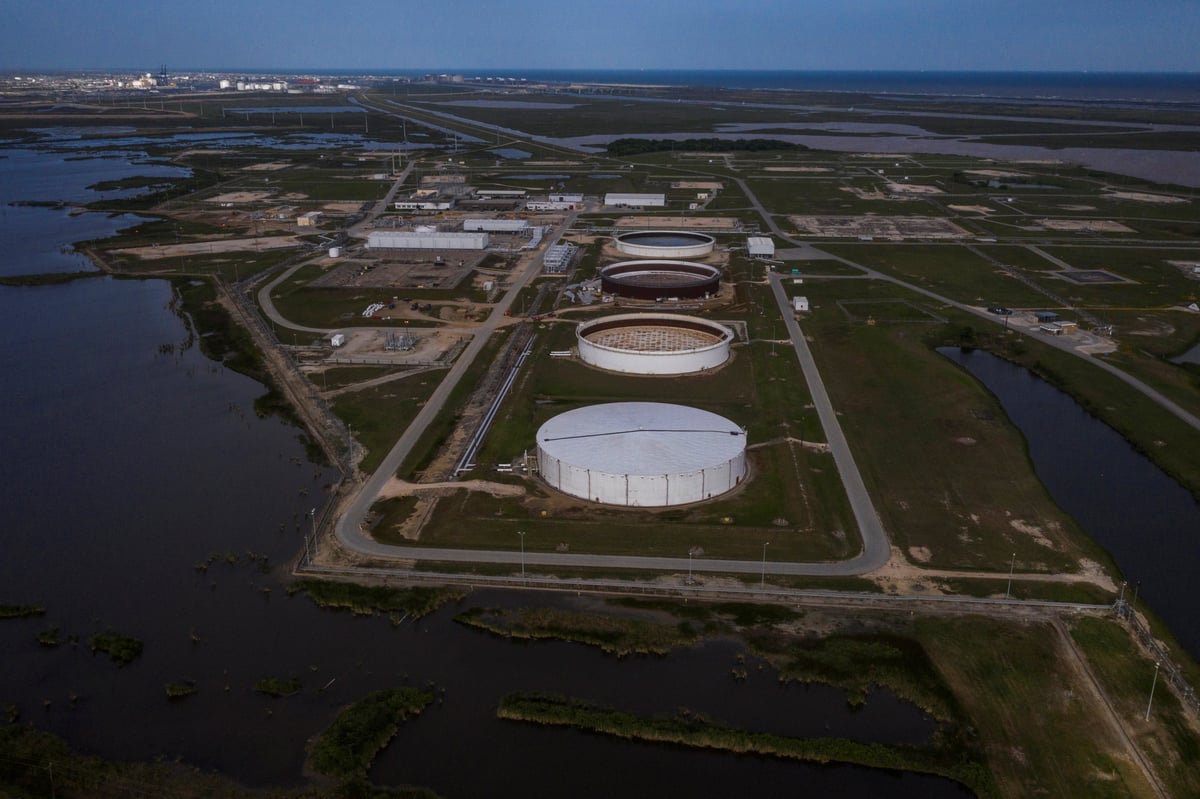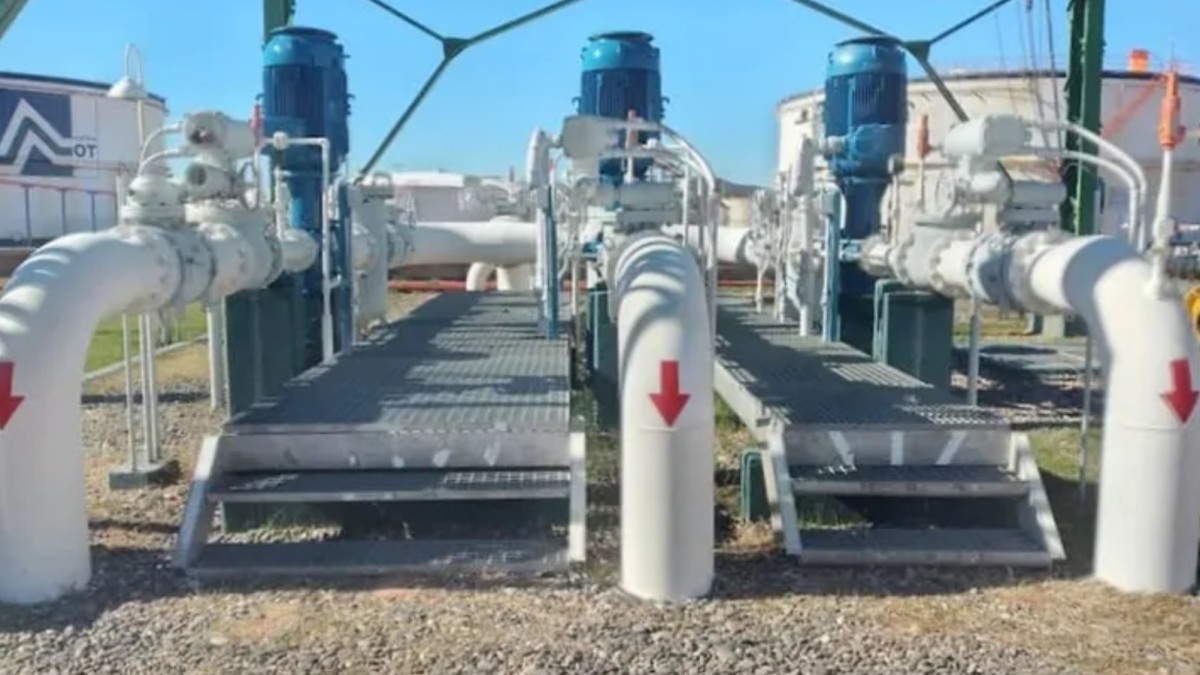
Back in March, the 32 member countries of the International Energy Agency (IEA) unanimously pledged a record-breaking release of 400 million barrels of crude oil from their Strategic Petroleum Reserves (SPR) shortly after Iran’s blockade of the Strait of Hormuz triggered oil price spikes, more than double the 182.7 million barrels released during the 2022 response to the Ukraine war. As usual, the United States shouldered the lion’s share of the release, committing to 172 million barrels. For the first batch, the Department of Energy (DOE) awarded contracts to eight companies for the sale of 45.2 million barrels from sites in Texas and Louisiana on March 20. And now commodity analysts at Standard Chartered have reported that the pace of withdrawals from the U.S. Strategic Petroleum Reserve has accelerated sharply, with the latest data revealing the largest weekly decline on record.According to StanChart, U.S. SPR inventories fell by 9.9 million barrels (mb) in the week ended 15 May, following a decline of 8.6 mb the previous week, taking total SPR volumes down to 374 mb and quickly approaching operational stress limits. The physical infrastructure of the SPR limits withdrawal capacity to a maximum rate of 4.4 mb/d, while the operational minimum is a statutory limit of 150 mb.The analysts note that the current programme is being executed much more rapidly and alongside a larger global emergency response. However, StanChart says that many of the numerous mechanisms implemented to reduce the near-term supply/demand imbalance are only temporarily viable, implying that near-term dampening of physical oil prices is only temporary with a resumption of the imbalance likely to pull financial contracts higher.Oil prices continue to be largely headline-driven, taking direction from escalation and de-escalation in the US-Iran conflict in the near term. Oil prices moved sharply lower on Wednesday after U.S. President Donald Trump announced that the United States is in the "final stages" of negotiations with Iran to end the conflict. Brent crude for July delivery fell 5.9% to trade at $104.71 per barrel at 14.00 m ET on Wednesday, while the corresponding WTI crude contract declined 6.1% to trade at $97.90/bbl.There has been some rotation in the forward curve, with Brent for delivery in five years falling by $0.69/bbl w/w to $72.22/bbl. However, Trump continues his characteristic mixed messaging, making it hard to decipher Washington's next move, “We’ll see what happens,” Trump said, before adding that “we’re going to do some things that are a little bit nasty, but hopefully that won’t happen.”Previously, StanChart predicted that the recent dramatic collapse in physical crude oil premiums may be short-lived, with prompt physical barrels likely to regain large premiums. Indeed, StanChart has reported that w/w price escalations in Dated Brent (the primary physical benchmark for crude oil in the North Sea) outpaced the front-month Brent futures contract this week, rising by $9.52/bbl (9.12%) to a weekly settlement high. According to the analysts, physical oil cargo premiums have collapsed--with some grades dropping 90%--due to a combination of intentional buyer restraint, increased reliance on inventory, and increased supplies from non-disrupted regions. As the conflict escalated and Iran blocked the Strait of Hormuz, oil buyers scrambled to secure immediate, non-Middle Eastern "prompt barrels", driving up the spot price premiums for available cargoes. North Sea Forties crude spiked to nearly $150 a barrel by mid-April, exceeding the 2008 peak. Many commodity experts predicted that oil futures would eventually trade up to the physical; however, we have lately been seeing just the opposite, with the physical trading down to the futures. Whereas physical prices still indicate market tightness, they have recently returned to a more normal range. The sharp fall in the price of physical oil can be chalked up to buyers remaining hopeful the Iran conflict would be resolved rapidly, at least in terms of the Strait of Hormuz blockades, and were dissuaded from purchasing cargoes at extremely elevated prices. High volatility and regular price swings in excess of $10/bbl in a day (front-month Brent traded in a $35/bbl intraday range on 9 March ) have increased the risk of a VaR shock i.e., an acute increase in Value at Risk. Deferring purchases in the near term has also allowed buyers to benefit from strategic reserve and inventory drawdowns, reduced refinery run rates (and adjustments to maintenance schedules), and alternative supply sources, which have cushioned oil price spikes. StanChart says physical prices are likely to rise again once purchases can no longer be deferred, refinery runs pick up, and strategic reserve releases are complete, unless a deal to end the conflict can be agreed. This will likely eventually pull futures prices up towards elevated physical benchmarks.By Alex Kimani for Oilprice.comMore Top Reads From Oilprice.comIndonesia Tightens Grip on Key Commodity ExportsThree Supertankers Carrying 6 Million Barrels Exit Strait of HormuzUK Eases Some Russian Oil Sanctions as Fuel Prices Soar
StanChart Says Record SPR Withdrawals Are Tightening U.S. Oil Buffers | OilPrice.com
Standard Chartered warns the rapid SPR drawdowns and other emergency measures are only temporary fixes, with physical oil market tightness likely to return once reserve releases end.
802 words~4 min read