Self-reported questionnaire data predicted difficult-to-treat depression, even in patients who weren't considered treatment-resistant, observational data showed.
In a sample of 550 hospitalized patients -- including those who had or had not failed multiple trials of antidepressant medications -- higher scores on the Difficult-to-Treat Depression Questionnaire (DTDQ) correlated with Remission from Depression Questionnaire (RDQ) total discharge scores (r=0.28), reported Mark Zimmerman, MD, of South County Psychiatry in North Kingstown, Rhode Island.
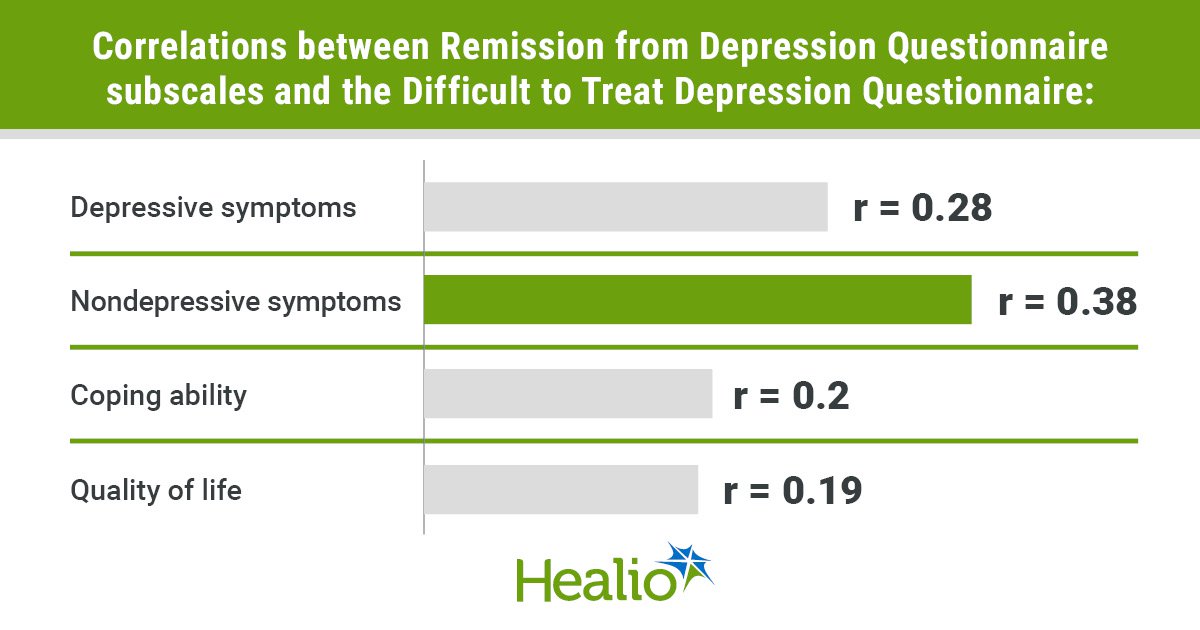
Every RDQ subscale measure correlated with DTDQ scores, he explained at the American Psychiatric Association annual meeting. These included:Greater depressive symptoms (r=0.28)Greater non-depressive symptoms (r=0.38)Worse coping ability (r=0.20)Less positive mental health (r=0.19)More functional impairment (r=0.17)Poorer quality of life (r=0.19)
The DTDQ score was also correlated with the number of failed antidepressant trials (r=0.44, P<0.001). In addition, the association between the DTDQ and total RDQ scores remained significant even after adjusting for the number of failed medication trials (r=0.25), suggesting the questionnaire may capture factors beyond prior treatment failure.